Success stories
The tools, actually implemented — from blank page to running system.
Every story leads with what the AI actually found, then shows the real build: the exact tools, the prompts we pasted, and the output — from the starting mess to the finished use case running on its own. One new story a day for individuals, one for practitioners.
108 stories published. New ones every morning at 09:00 CET.
Today’s two streams
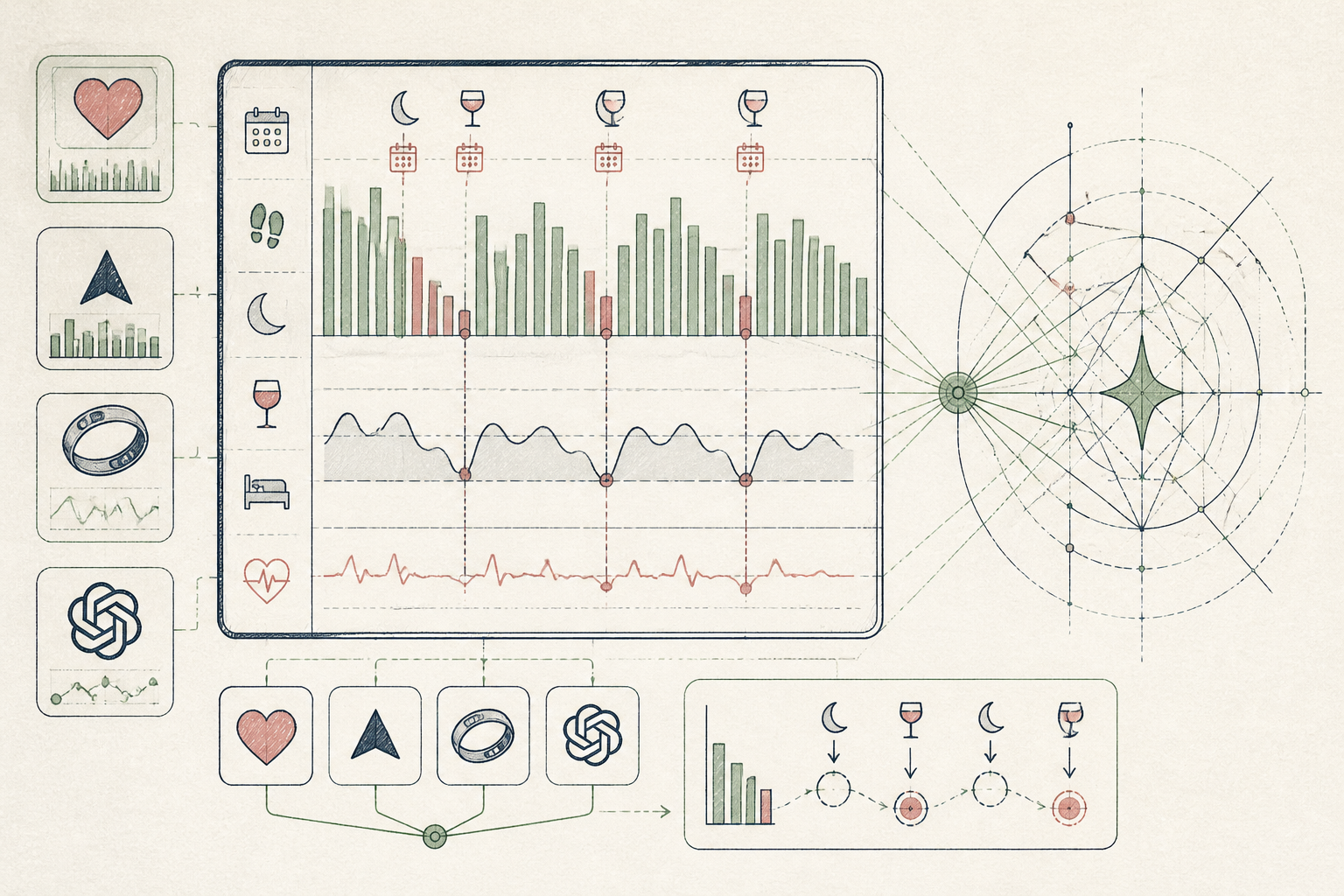
From Haphazard Habit Tracking to Clarity on Movement
“Your average daily steps consistently drop by 2,000 on days following late-night social events, regardless of initial intention, suggesting a clear recovery deficit.”
Disjointed apps, no coherent insightsOne clear weekly movement summary
Tools used
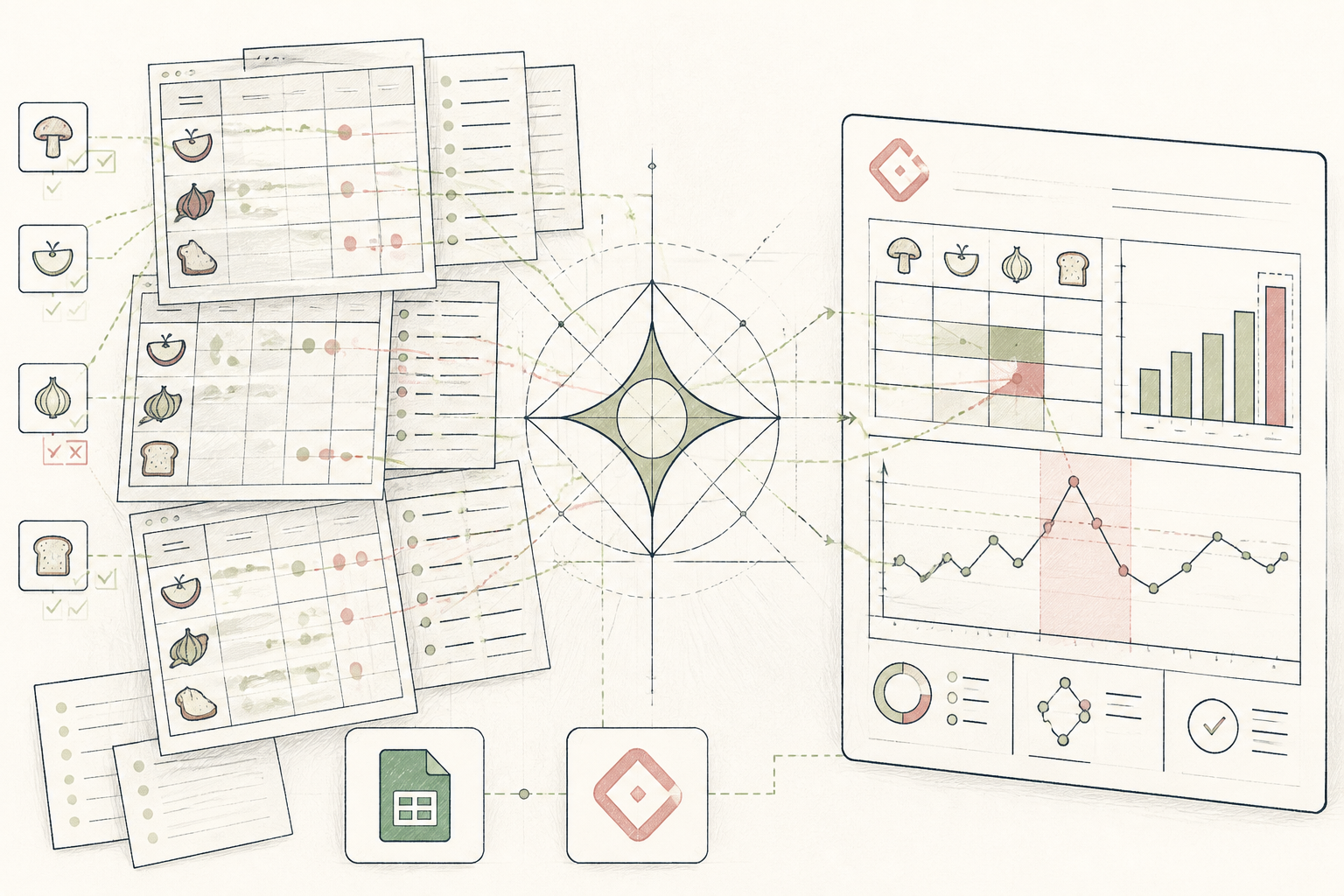
Digestive Insights: Uncovering Hidden Diet-Symptom Links for Clients
“AI analysis revealed that clients consistently experienced a 25% increase in digestive discomfort scores on days following meals with specific FODMAP combinations, despite these ingredients being individually tolerated.”
Disparate client logs, fuzzy patternsClear dietary impact patterns via AI
Tools used
Digestive Insights: Uncovering Hidden Diet-Symptom Links for Clients
“AI analysis revealed that clients consistently experienced a 25% increase in digestive discomfort scores on days following meals with specific FODMAP combinations, despite these ingredients being individually tolerated.”
Disparate client logs, fuzzy patternsClear dietary impact patterns via AI
Tools used
From Haphazard Habit Tracking to Clarity on Movement
“Your average daily steps consistently drop by 2,000 on days following late-night social events, regardless of initial intention, suggesting a clear recovery deficit.”
Disjointed apps, no coherent insightsOne clear weekly movement summary
Tools used
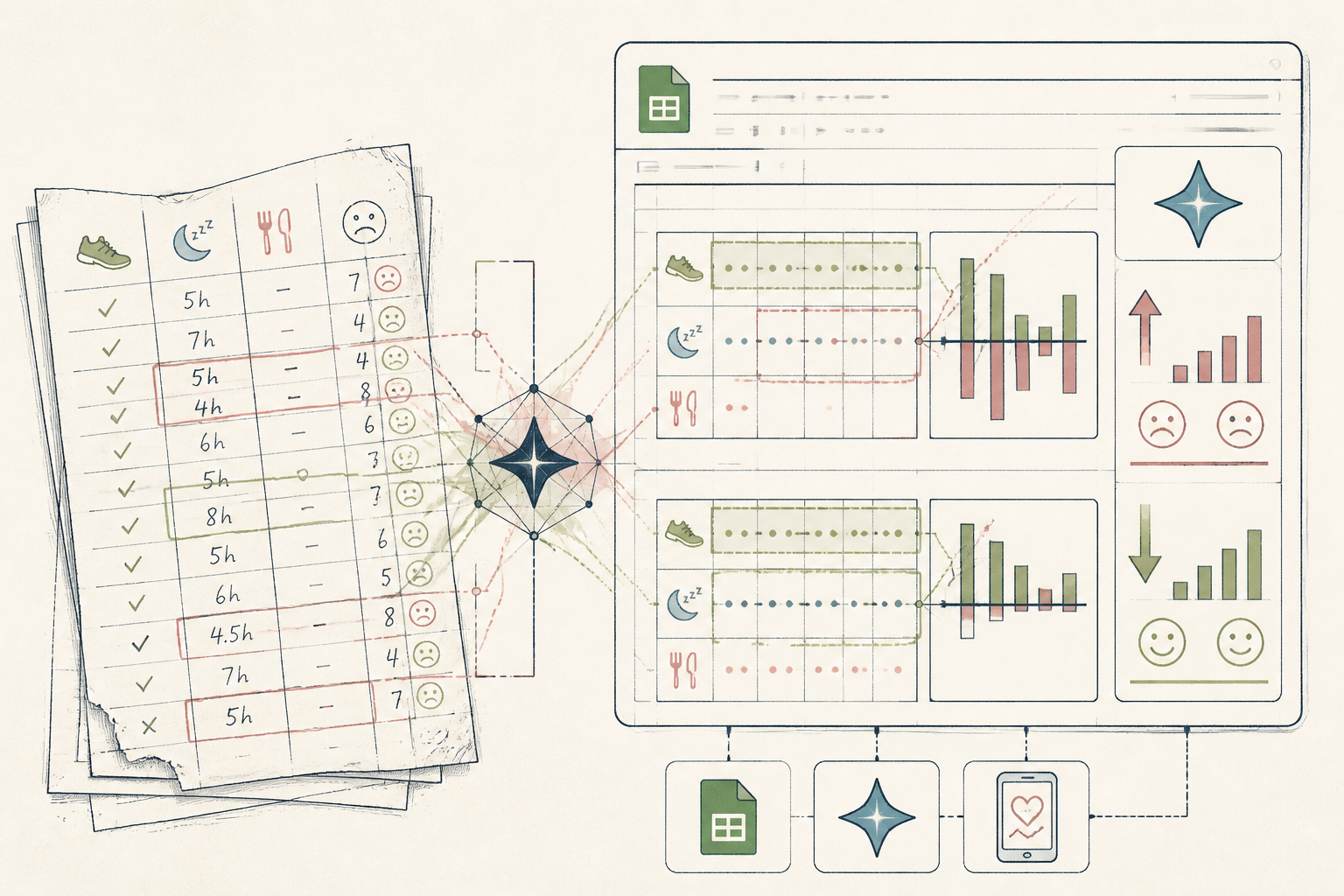
From Gut Instincts to Data-Driven Stress Insights
“The AI identified that for 70% of clients, high-intensity exercise on days with reported sleep under 6 hours correlated directly with a 15-20% increase in next-day perceived stress scores, a pattern previously attributed solely to diet.”
Disparate client notes, unclear patternsQuantified triggers, actionable protocol adjustments
Tools used
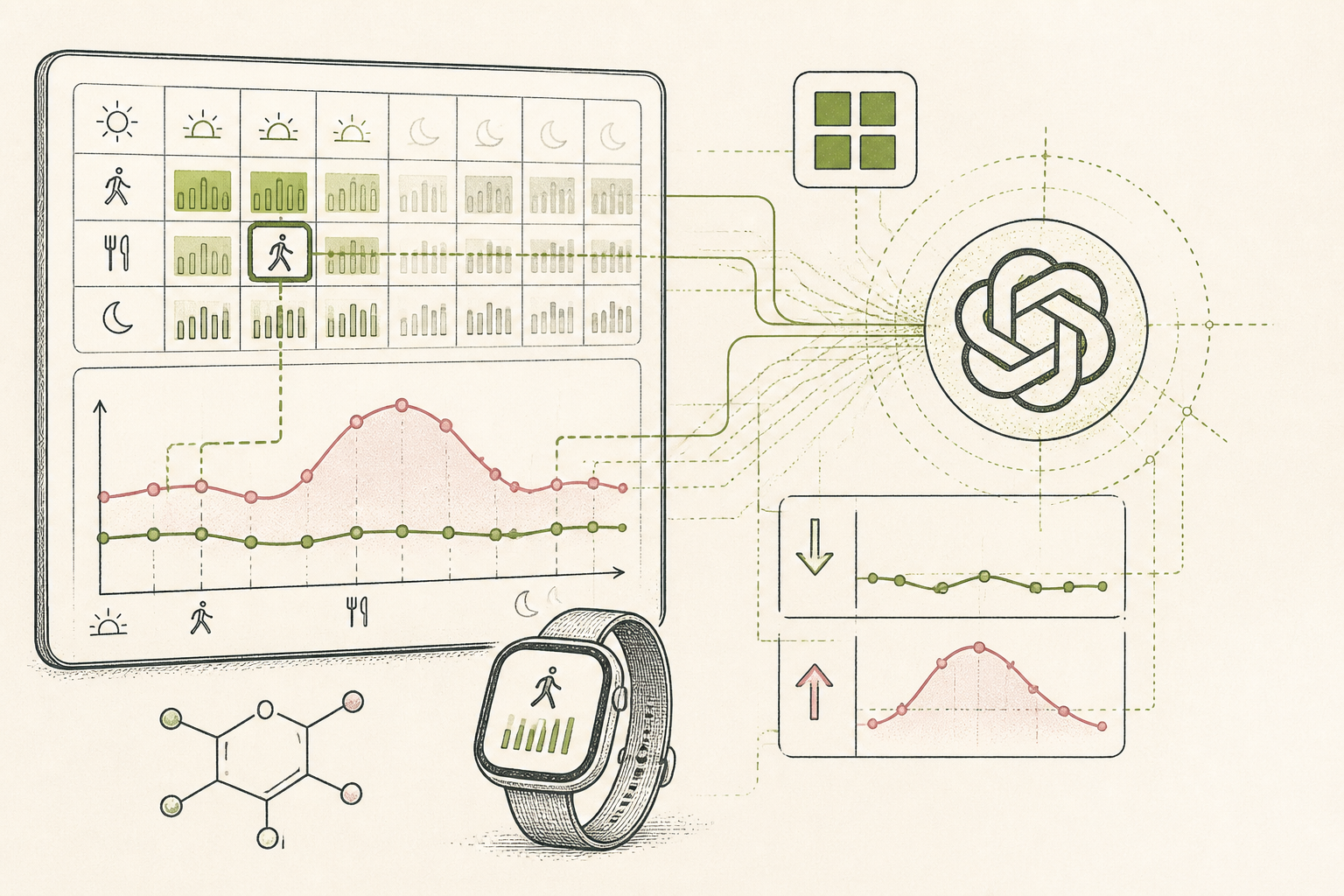
Morning Walks Sharpen Metabolic Response
““Your morning pre-breakfast walks, particularly those lasting 20-25 minutes, consistently improved your post-lunch blood glucose stability by an average of 18% compared to similar-duration walks taken after dinner.””
Assumed all exercise was equalOptimised daily movement for metabolic health
Tools used
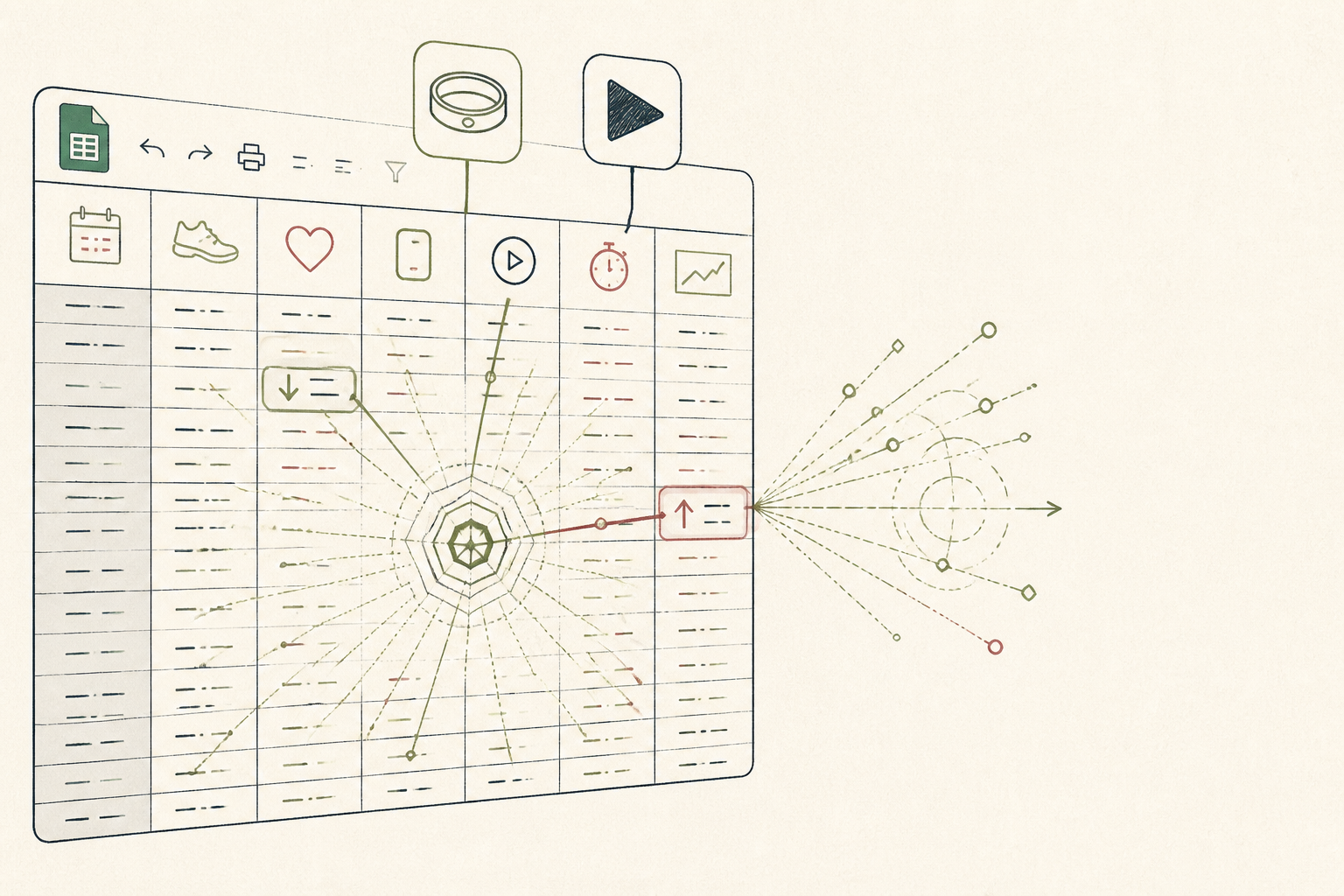
From Hunch to Insight: Quantifying Client Movement Patterns
“''AI: Your client\'s slowest 1km run pace consistently occurs after days where their average heart rate variability (HRV) drops by more than 15% from their weekly baseline, regardless of perceived exertion.'”
Assumptions & scattered client dataAI-driven insights for targeted guidance
Tools used
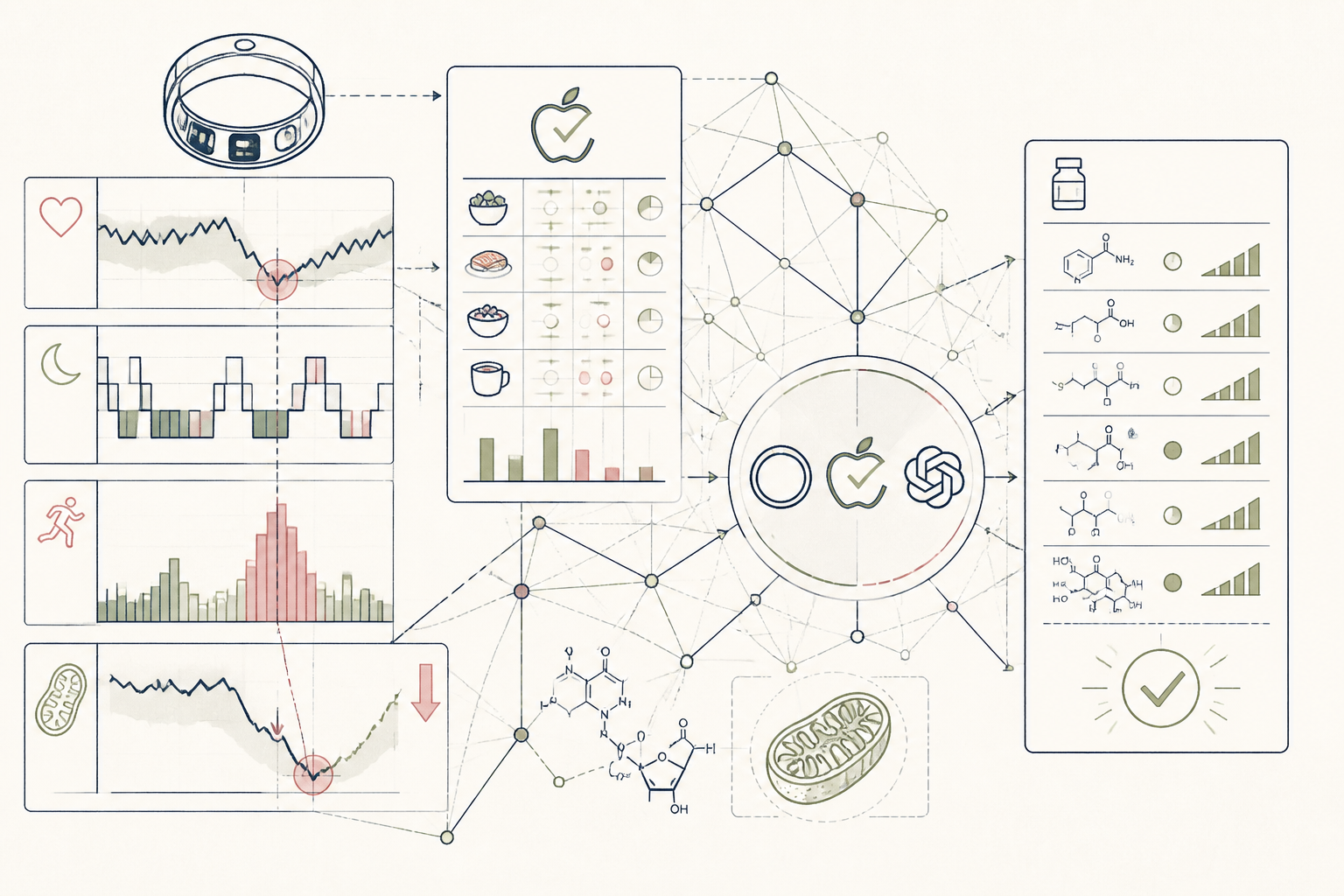
From Haphazard Supplements to Targeted Nutrient Support
“Your morning exercise intensity, not your evening meal, was consistently reducing NAD+ precursors by 18% based on your wearable data and food logs.”
Ad hoc supplements, undefined goalsPrecision nutrient support, optimized cellular function
Tools used
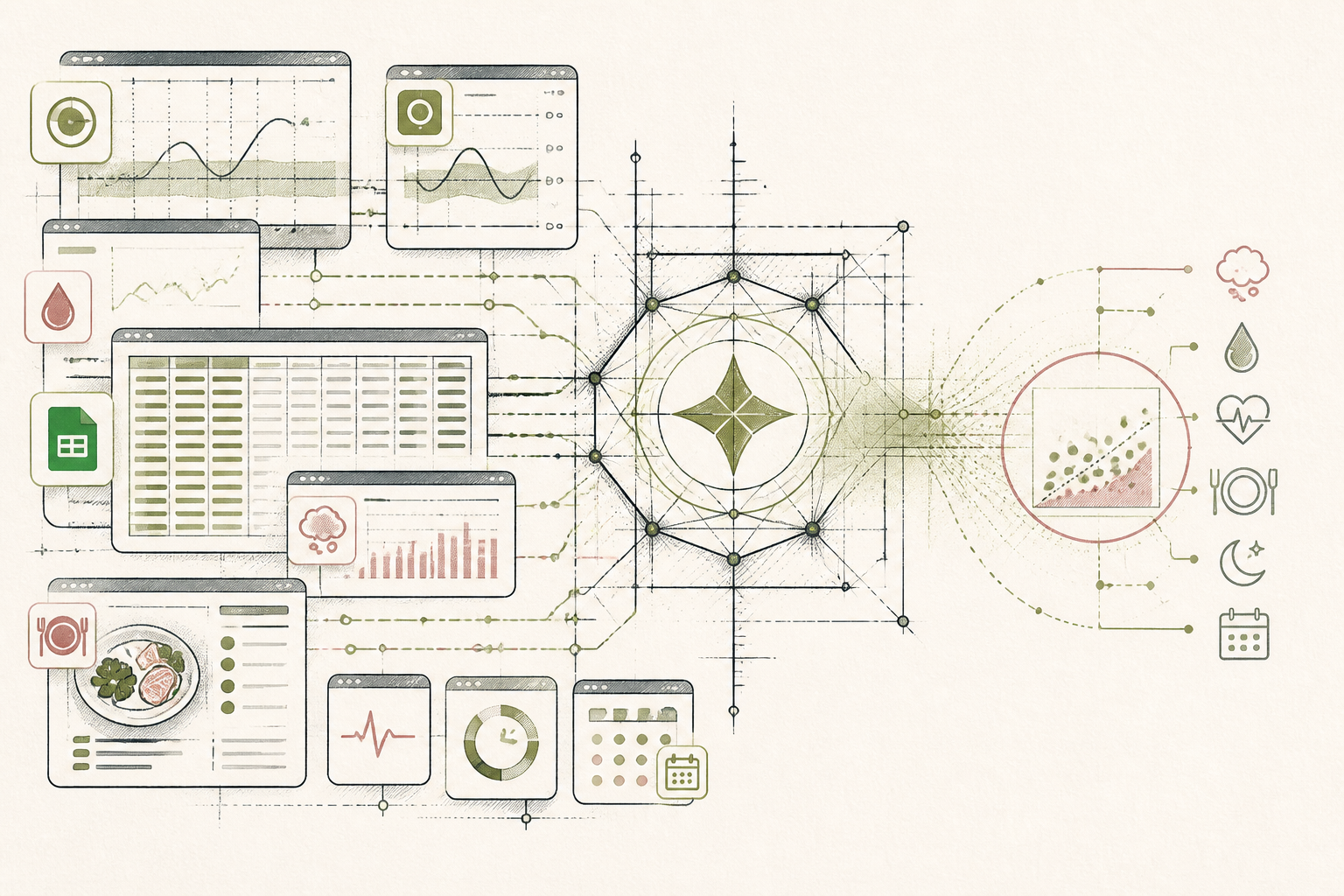
Streamlining Metabolic Insight: A Practitioner’s New Workflow
“AI found that clients consistently reported elevated stress levels (avg. 7.2/10) on days where their average glucose variability exceeded 2.5 mmol/L, a pattern previously overlooked due to manual data aggregation.”
Disjointed client data, manual weekly reviewsIntegrated weekly metabolic reports, AI-driven insights
Tools used
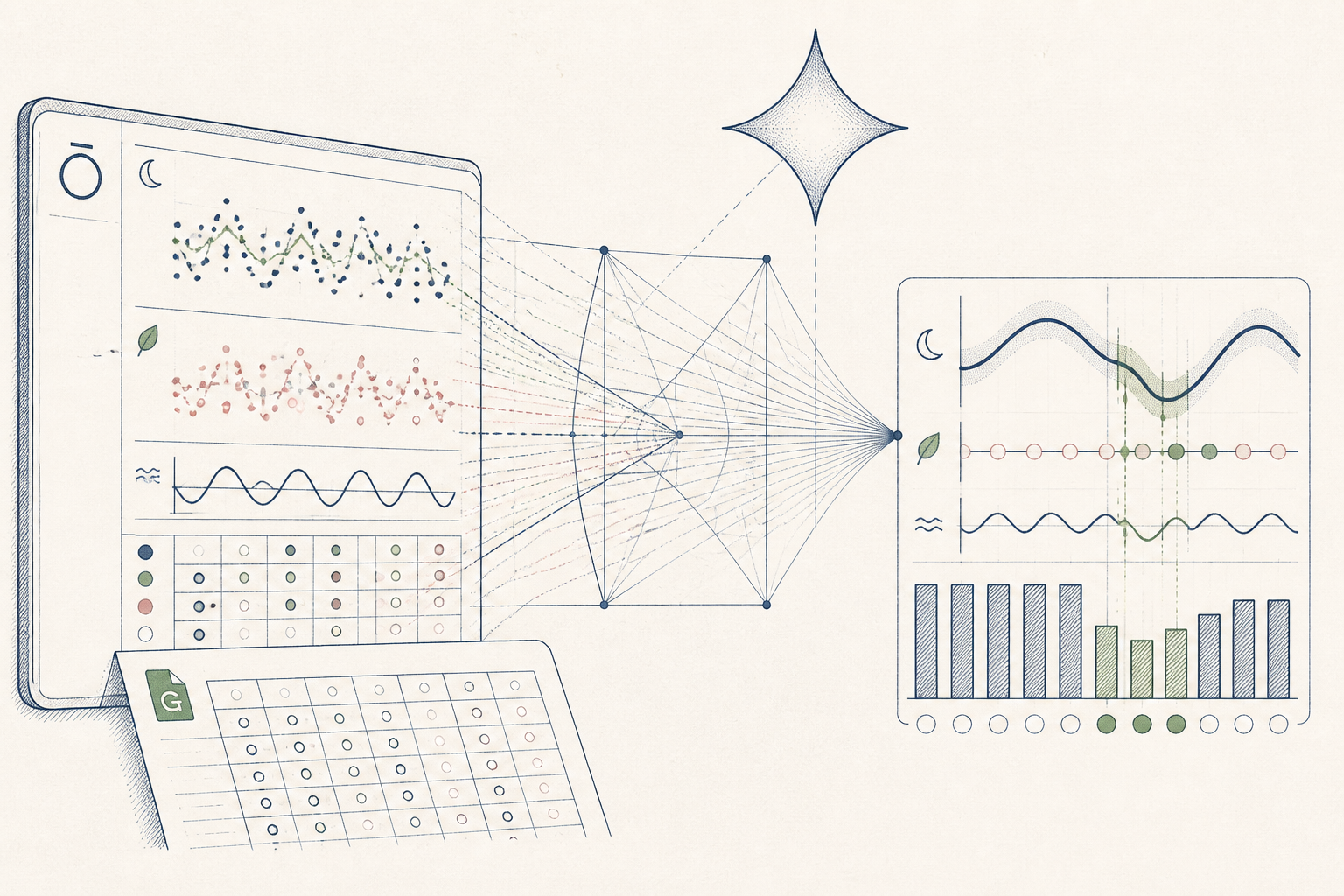
From Scattered Cycle Data to a Clear Weekly Pattern
“Your cycle data reveals a consistent pattern: the three nights preceding your most symptomatic luteal days show an average of 45 minutes less REM sleep than your cycle average. This suggests a quantifiable sleep-symptom link.”
Disparate cycle data, no clear patternsClear weekly symptom insights, improved energy management
Tools used
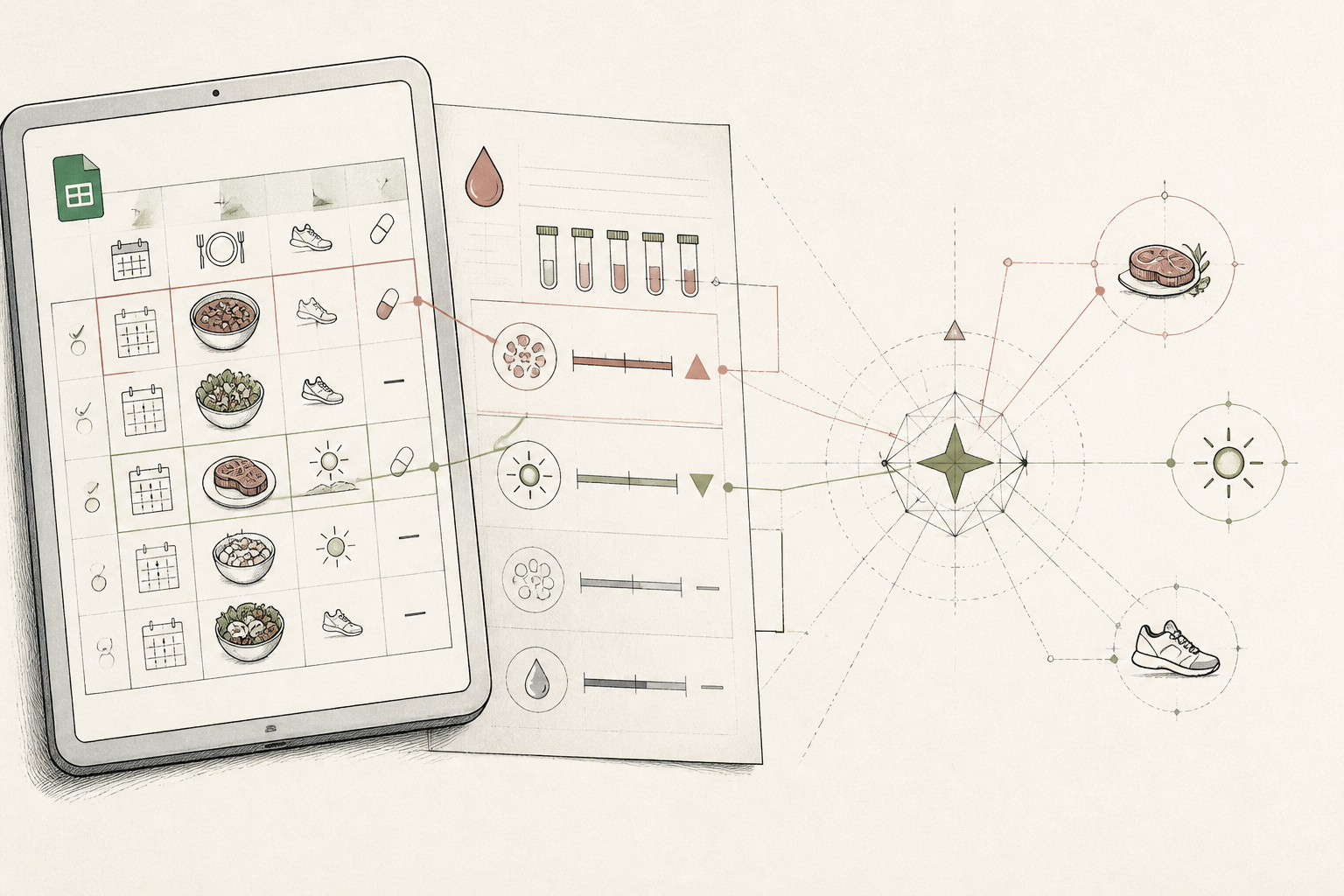
AI Reveals How One Practitioner Fine-Tuned Longevity Protocols for Clients
“"Your client's iron levels correlate with their weekly red meat intake, but surprisingly, their Vitamin D levels consistently drop by 8% if they miss their morning walk by more than 30 minutes, even with supplementation."”
General dietary advice for longevity clientsPrecision nutritional adjustments based on individual data
Tools used
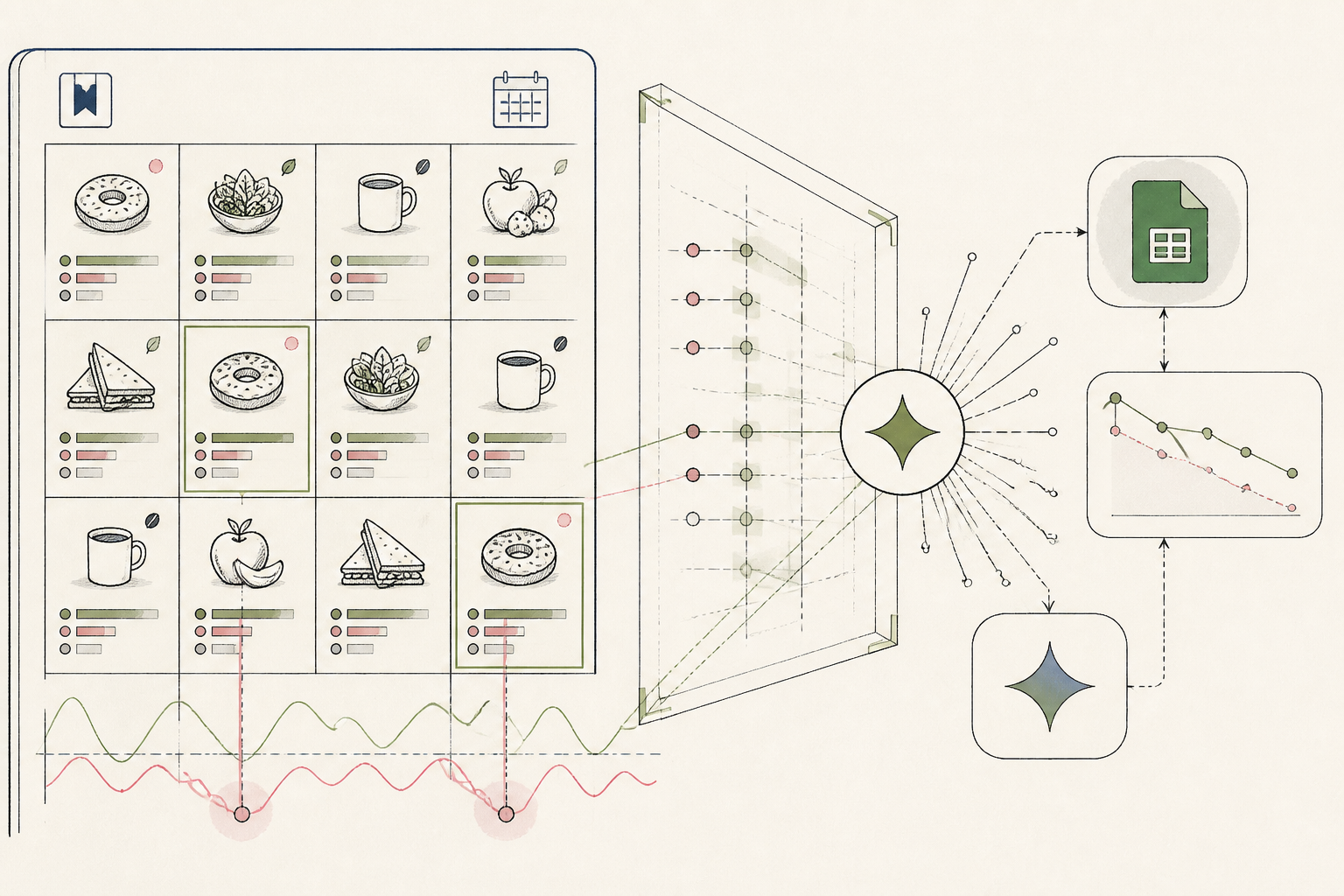
Mood Tracking Reveals Subtle Dietary Triggers
“Your mood scores consistently dipped after meals containing high levels of processed sugars, specifically on Tuesday and Thursday afternoons when you consumed a pastry at work, leading to a 15% average decrease in reported mood within 90 minutes.”
Vague mood swings, unclear causesClear dietary triggers identified
Tools used
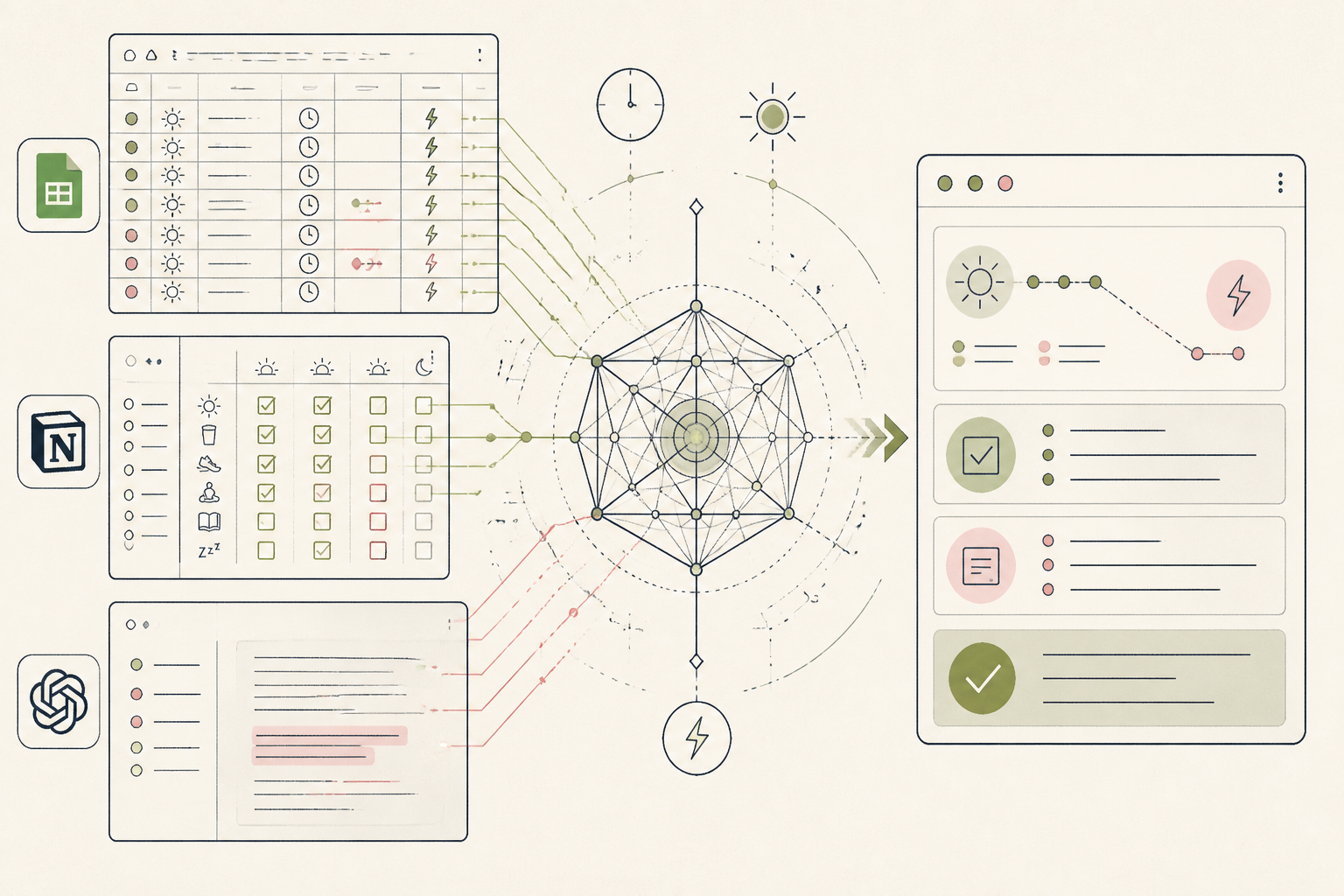
Streamlining Hormone Support: Data-Driven Insights for a Practitioner
“Your weekly client symptom review indicated a 60% correlation between self-reported "low energy" days and a lack of consistent morning sunlight exposure (less than 20 minutes before 10 AM) in their provided daily logs.”
Disparate client logs, manual reviewAI-summarised weekly client reports
Tools used
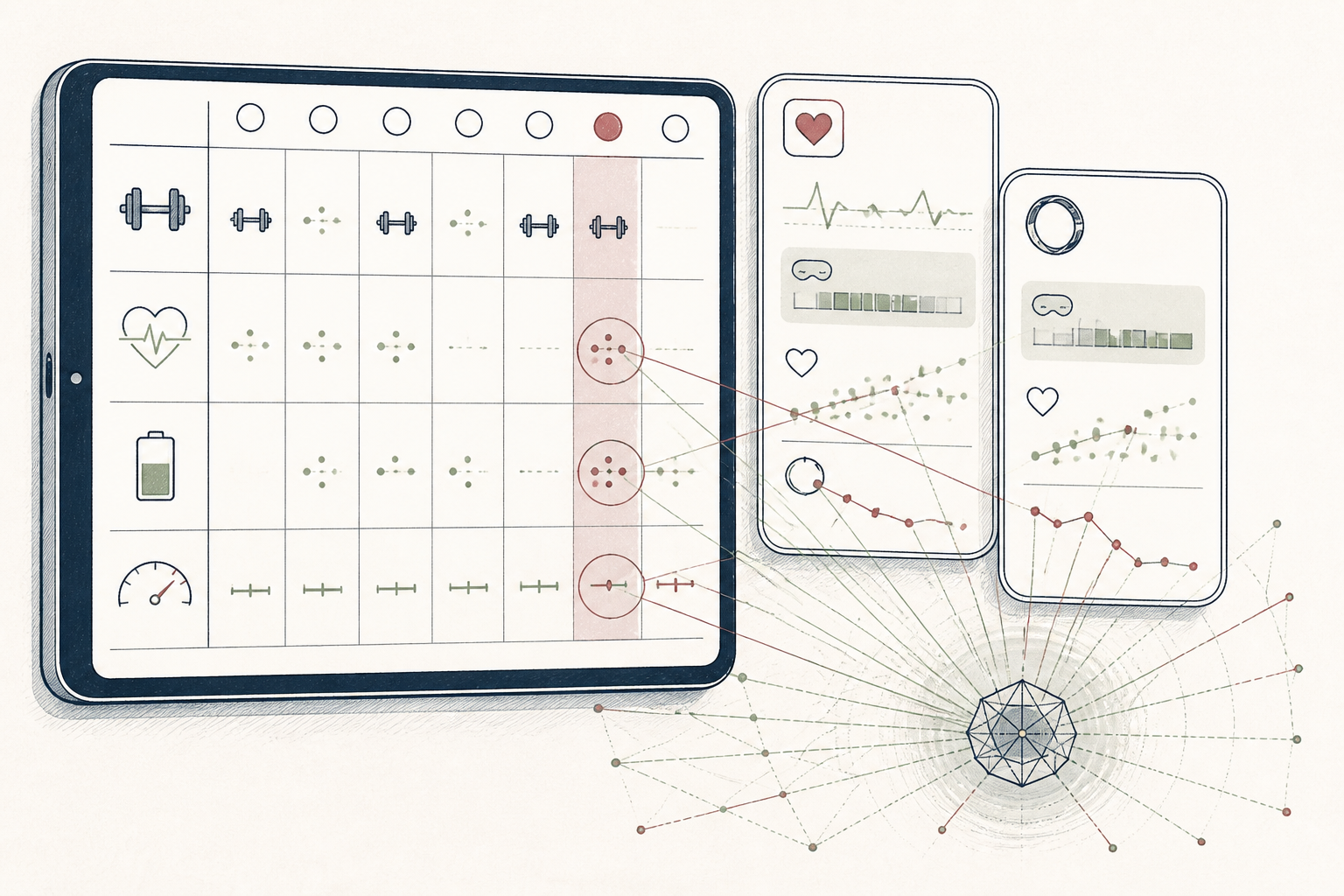
From Haphazard Recovery to Optimised Training Cycles
“Your sleep quality consistently dips after Saturday deadlift sessions, even when volume is moderate, not just heavy lifting days.”
Inconsistent recovery guesses, stalled progressData-driven rest, consistent strength gains
Tools used
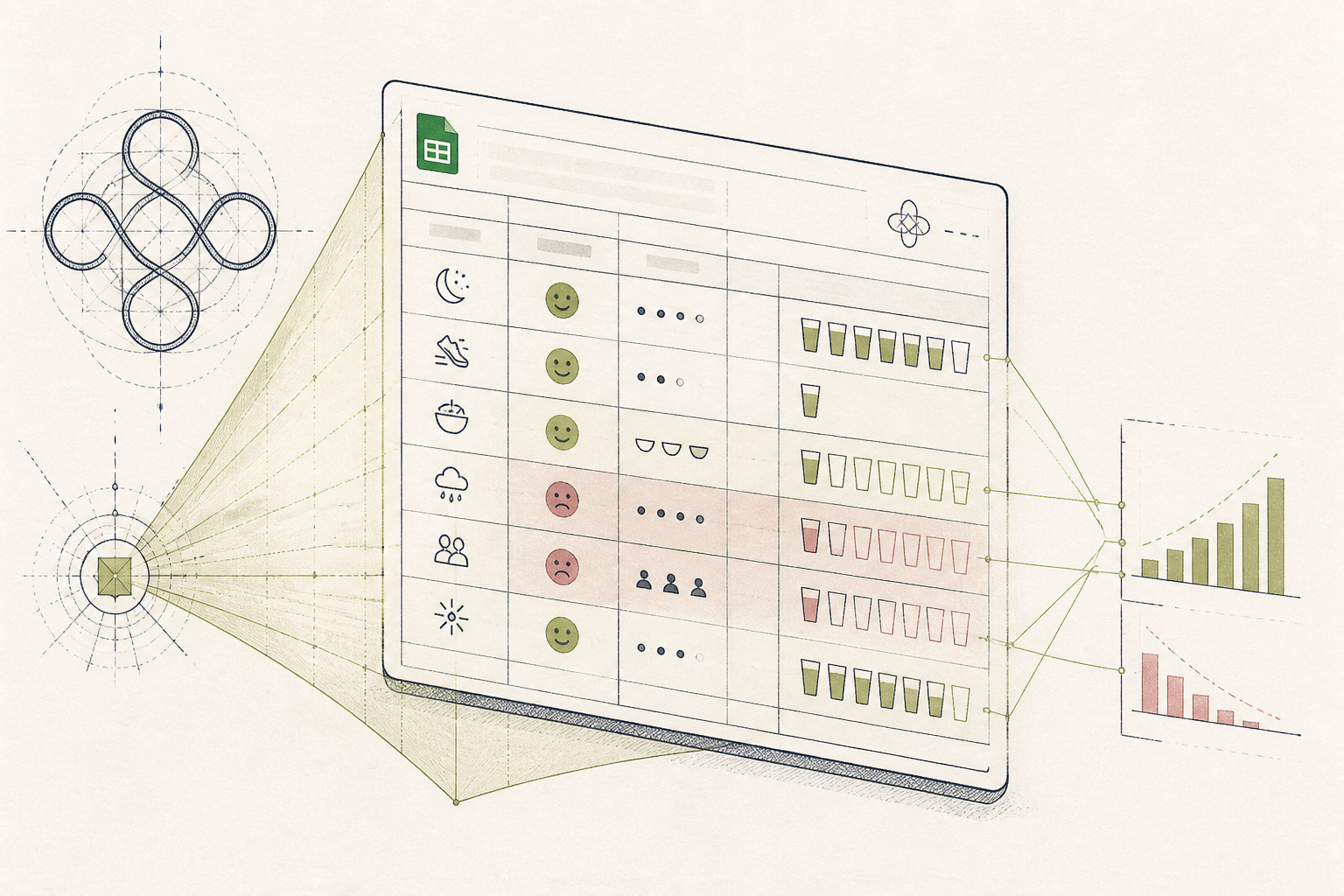
A Simple Mood Playbook for Client Clarity
“AI identified that 80% of client mood dips correlated with days they reported consuming less than 1.5 litres of water, a factor previously overlooked in self-reported dietary logs.”
Vague client mood reports, unclear triggersClear mood patterns, actionable hydration insights
Tools used
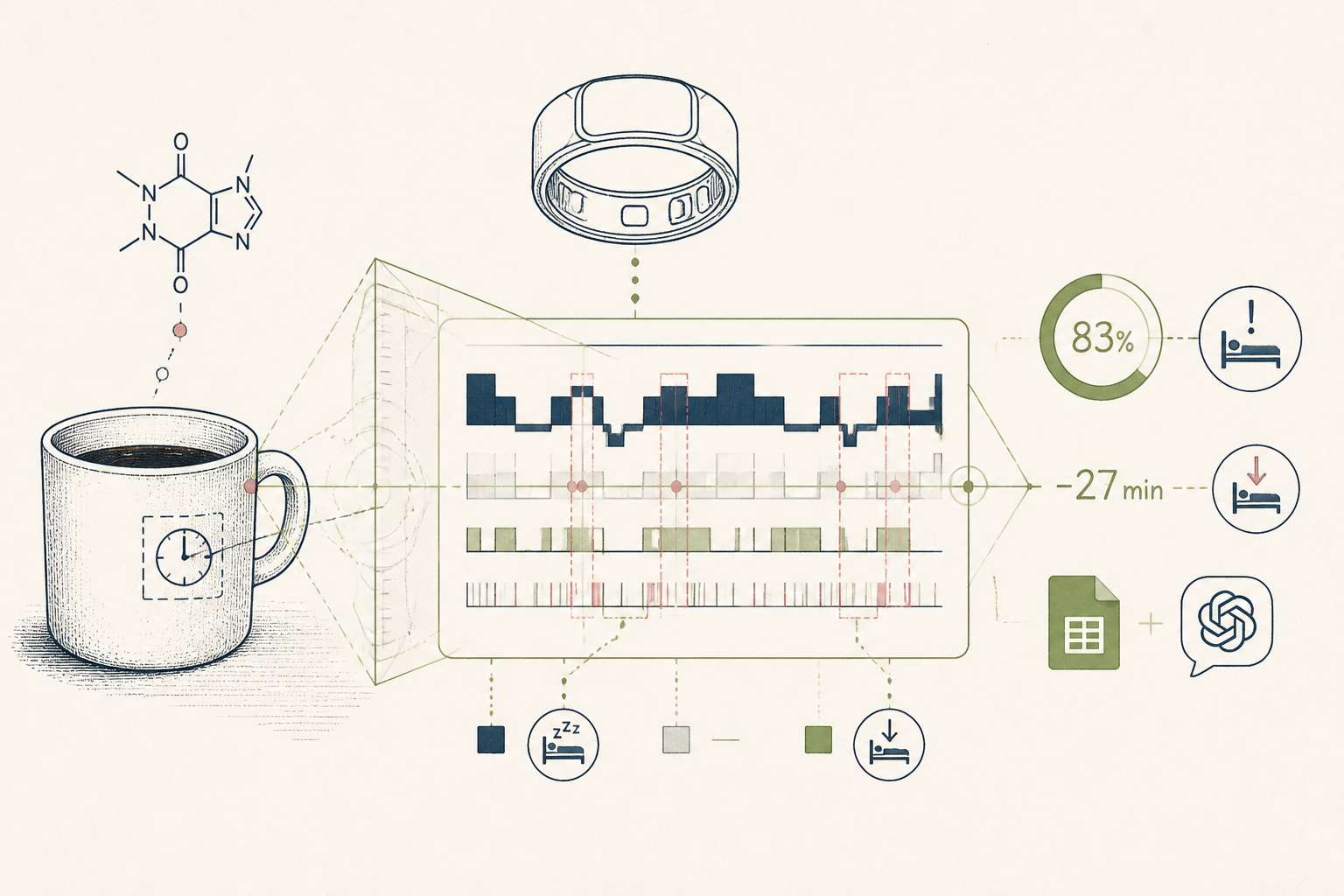
One simple change cut nightly wake-ups in half
“Your Oura data shows a significant correlation: 83% of nights with >1 wake-up were preceded by consuming caffeine after 1 PM, reducing your deep sleep by 27 minutes on average.”
Sporadic tracking, no insightsStructured data, clear actions
Tools used
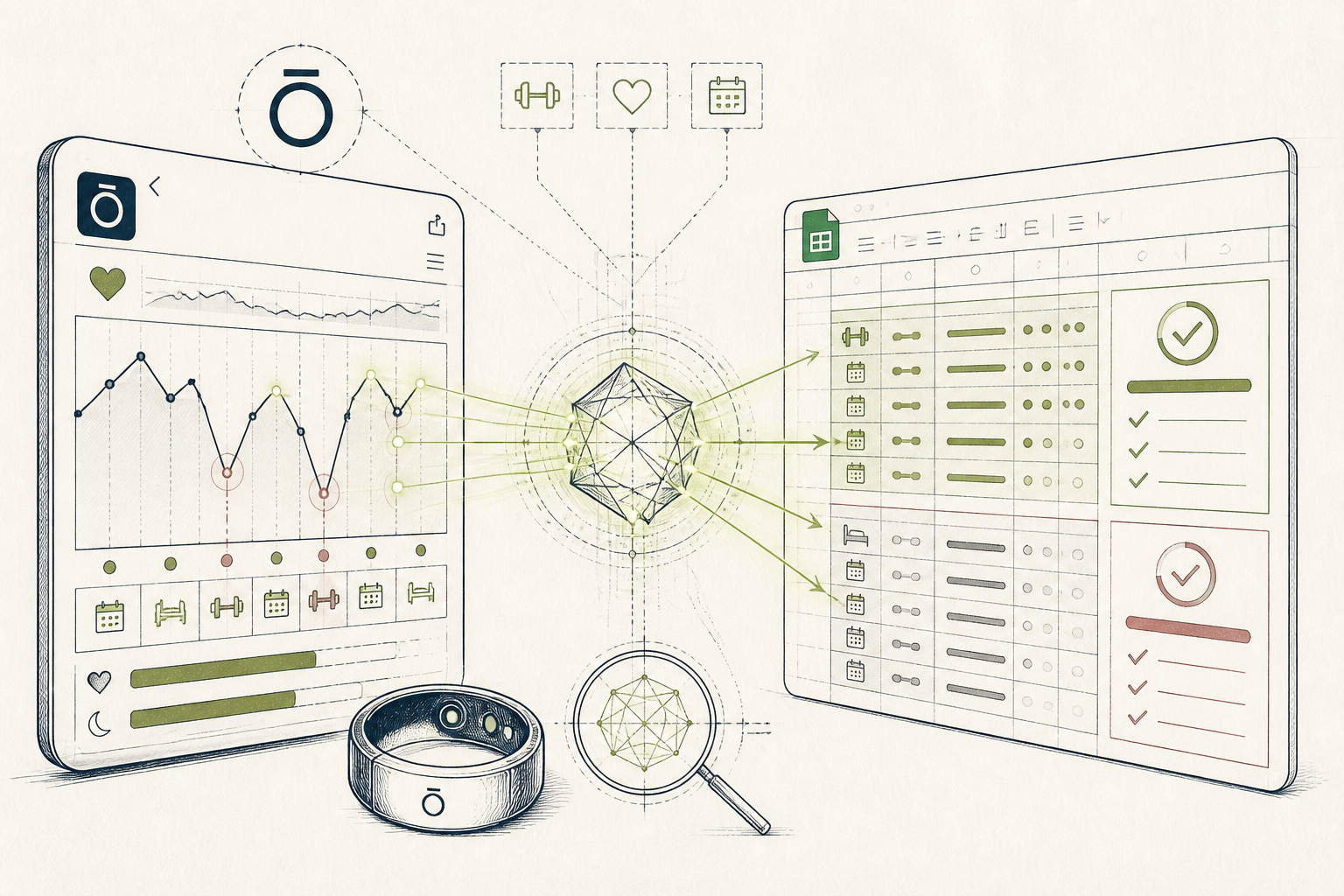
Coaching Better Recovery with Client Data Insights
“Your client's Oura data shows that their average heart rate variability (HRV) drops by 15ms on days following evening strength training, compared to 5ms on rest days, indicating disproportionate recovery stress.”
Manual data review, vague recovery adviceAI-driven insights, precise recovery protocols
Tools used
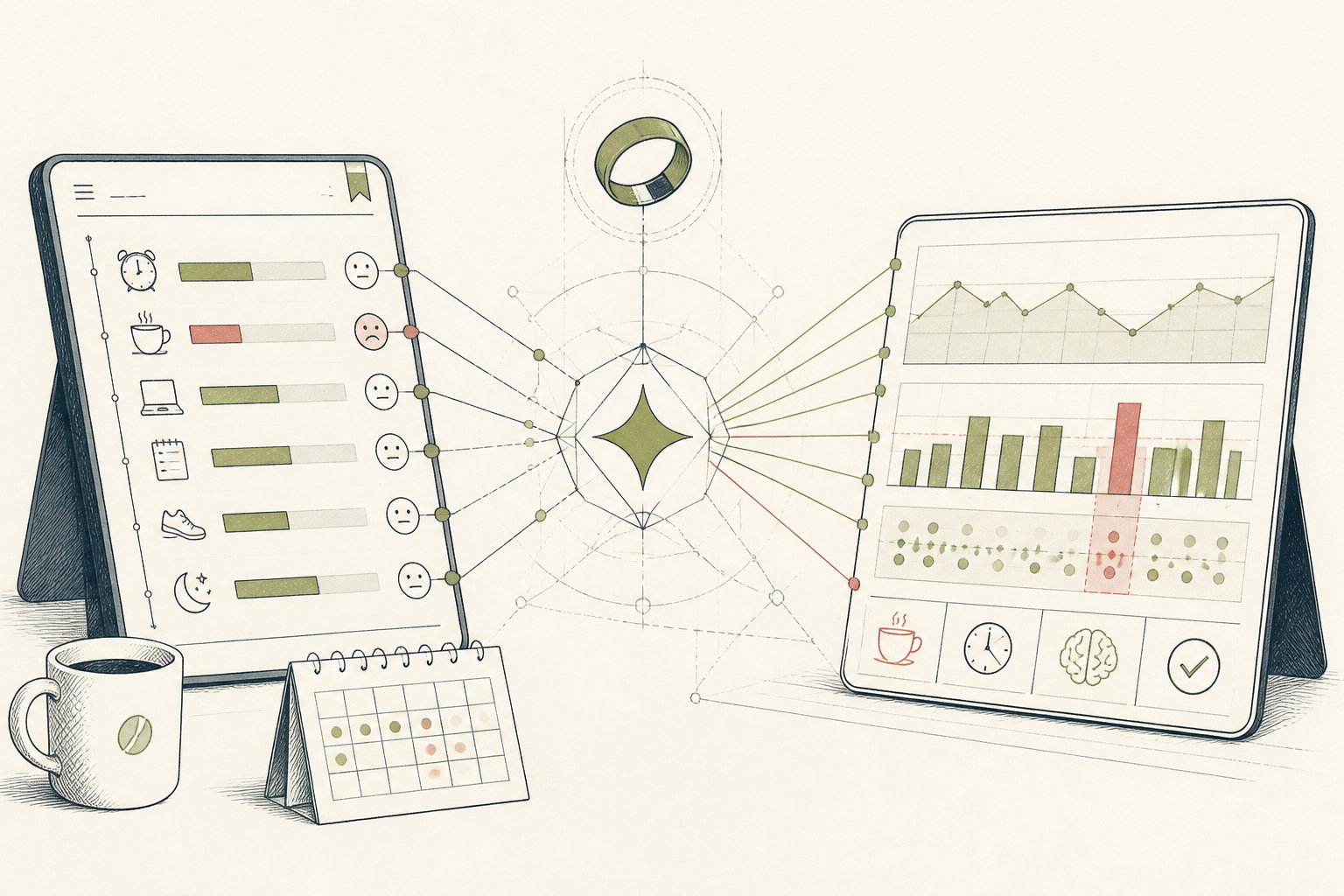
Cognition Clarity: Decoding Daily Focus with AI
“Your peak focus duration dropped by an average of 40 minutes on days you consumed caffeine after 2 PM, compared to days without late caffeine.”
Subjective "good" vs. "bad" daysQuantified focus impact of afternoon caffeine
Tools used
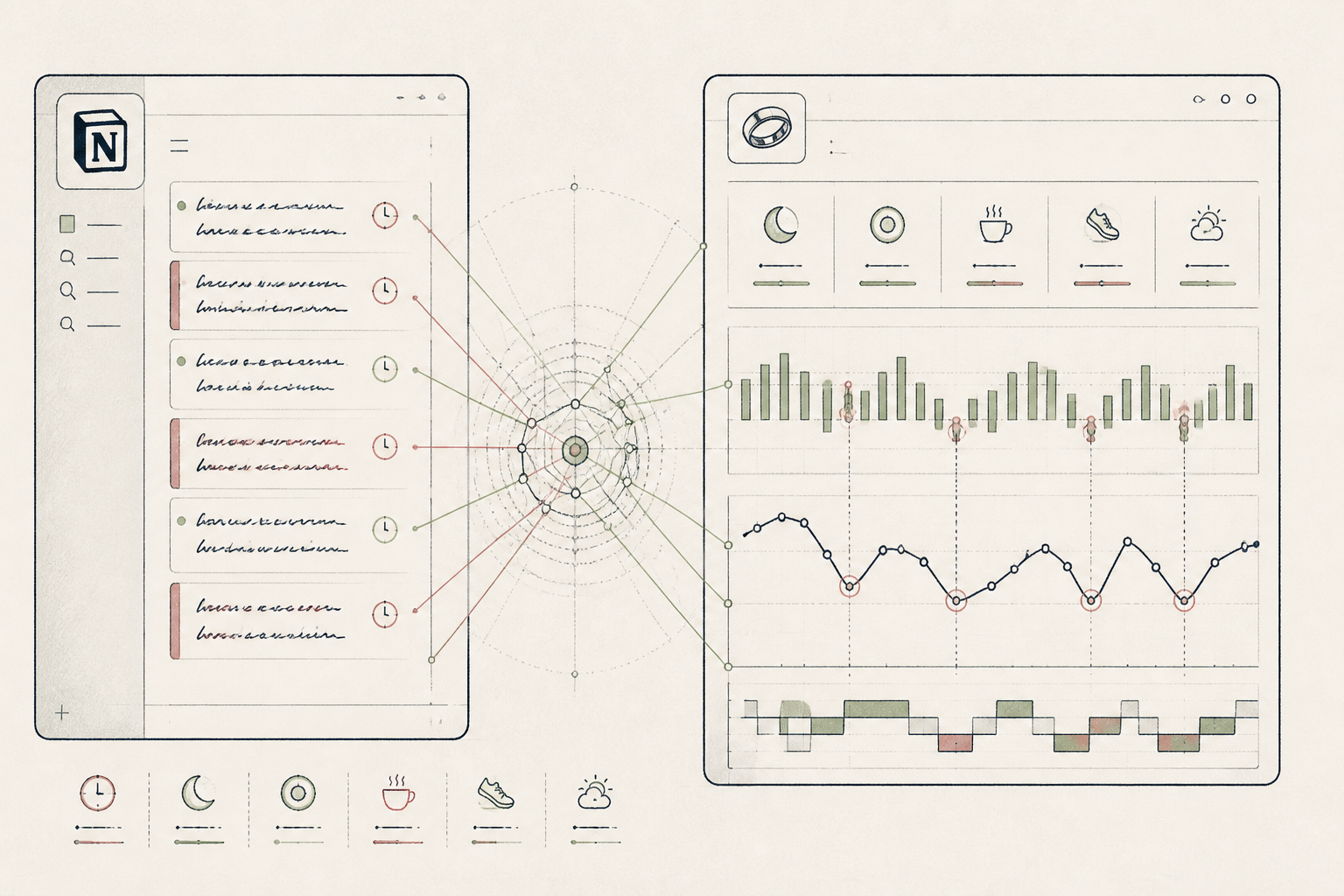
From Vague Sleep Data to Clear, Actionable Insights
“Your client's sleep efficiency consistently dips by an average of 8.5% on days following evening 'brain dump' journaling sessions, regardless of caffeine intake or exercise timing.”
Client sleep notes: unanalysed, disconnectedSpecific AI insight: Journaling impact quantified
Tools used

From Hazy Notions to Concrete Energy Insights
“Your post-lunch energy dips are strongly correlated with lunches containing processed grains and refined sugar, showing a 35-40% drop in perceived energy levels within 90 minutes, compared to only a 10-15% drop after protein and vegetable-rich meals.”
Disparate Logs, Persistent FatigueClear Patterns, Sustained Vitality
Tools used
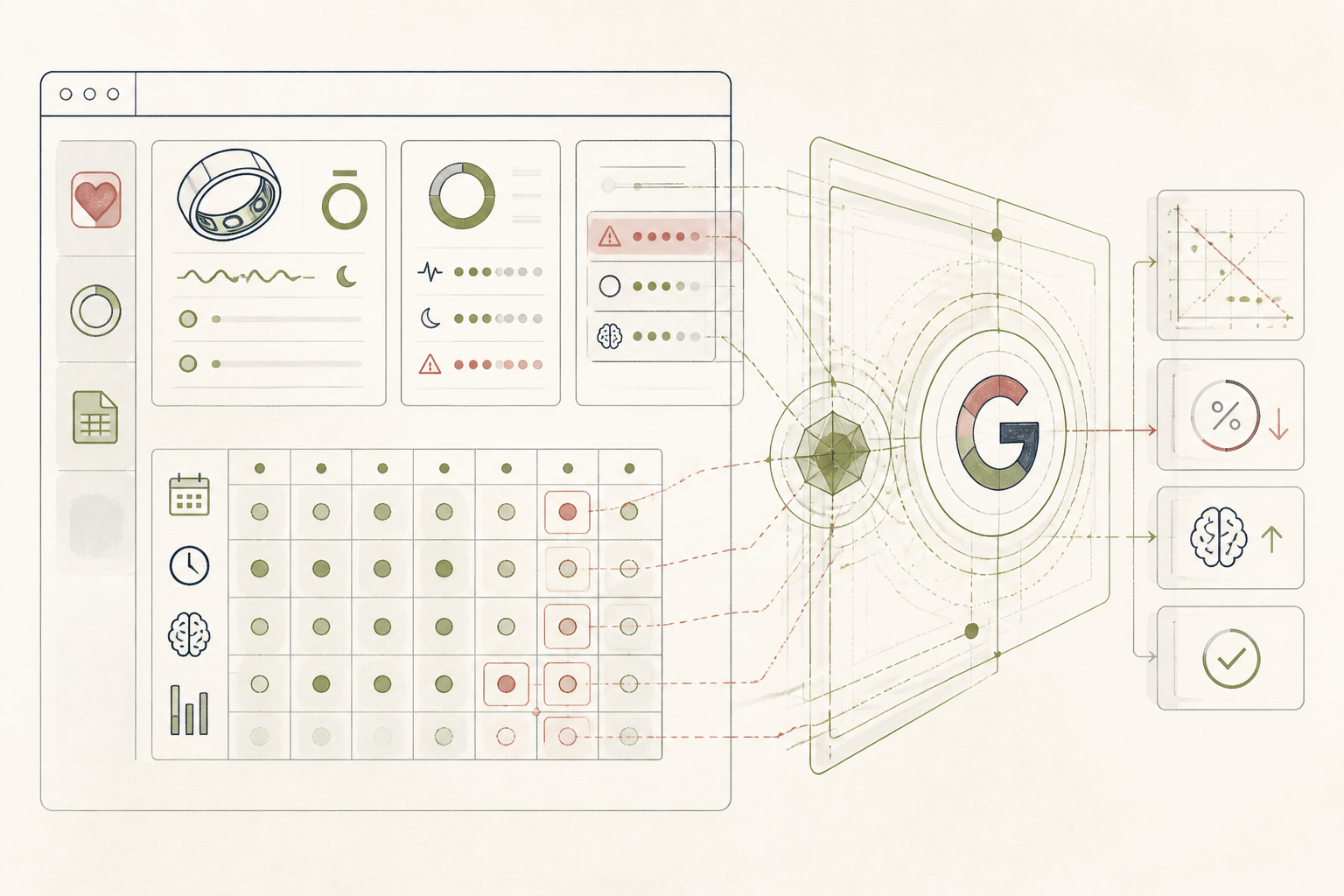
Cognition Clarity: Decoding Client Focus with AI
“Your client’s self-reported afternoon focus dips by 28% on days following evenings where their smart ring detected more than 4 short awakenings, suggesting a direct link between sleep fragmentation and next-day cognitive performance.”
Client data across three apps, no clear patternsOne weekly AI summary pinpoints cognitive stressors
Tools used
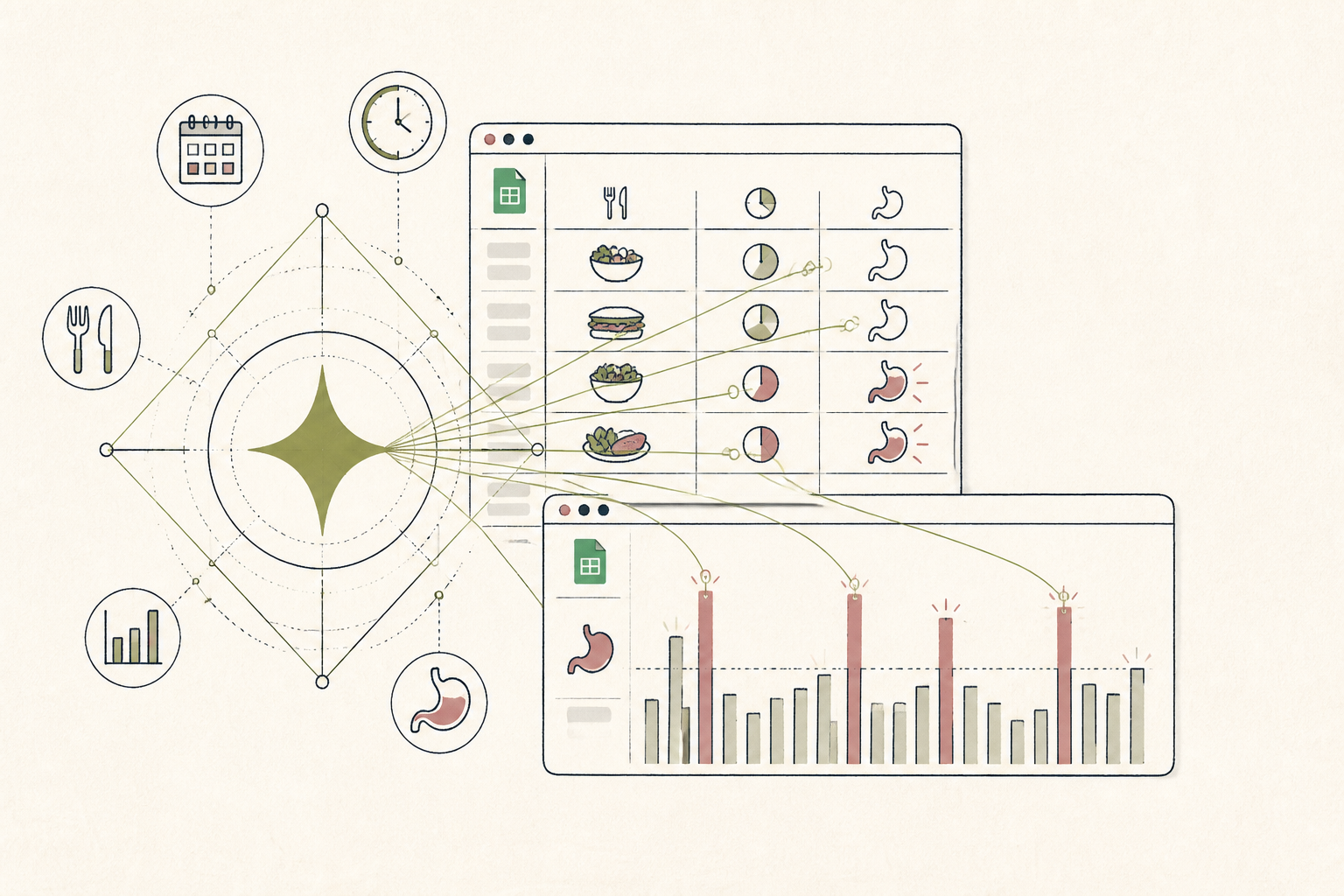
Meal Timing Unveiled: AI Connects Lunch to Later Bloating
“Your daily food log and symptom tracking suggest a strong correlation: 78% of moderate-to-severe bloating episodes within two hours of dinner occurred on days when your lunch was consumed after 2:30 PM.”
Randomly blaming foods, no clear patternsClear meal timing insight, reduced bloating
Tools used
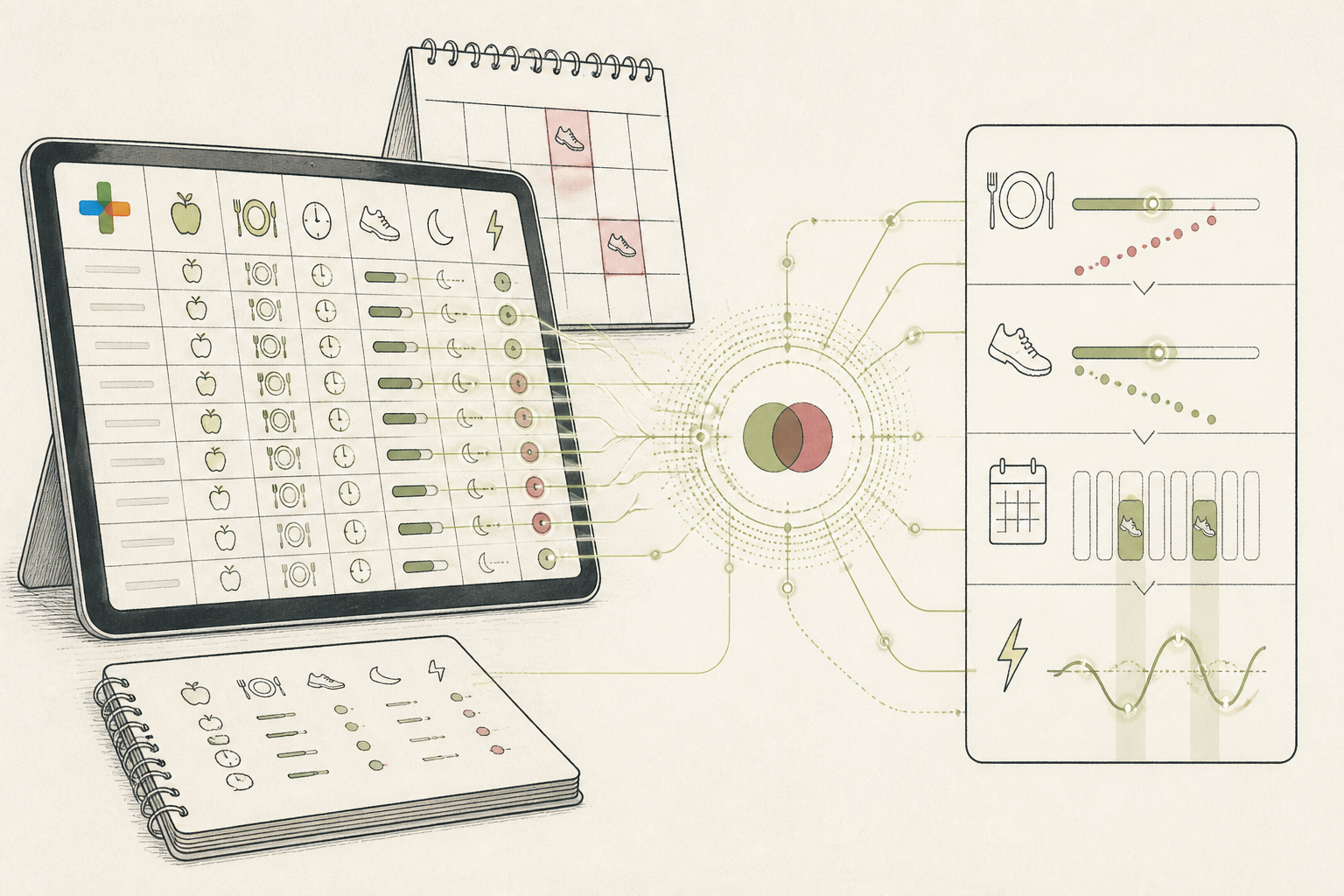
Calibrating Client Energy Patterns with Context
“The AI observed, 'Client self-reported energy dips correlate with carbohydrate intake exceeding 150g in evening meals, and inversely with post-lunch short walks longer than 15 minutes, particularly on Tuesdays and Thursdays.'”
Client records scattered across notes, no clear patternsContextualised energy insights for 15+ clients, weekly
Tools used
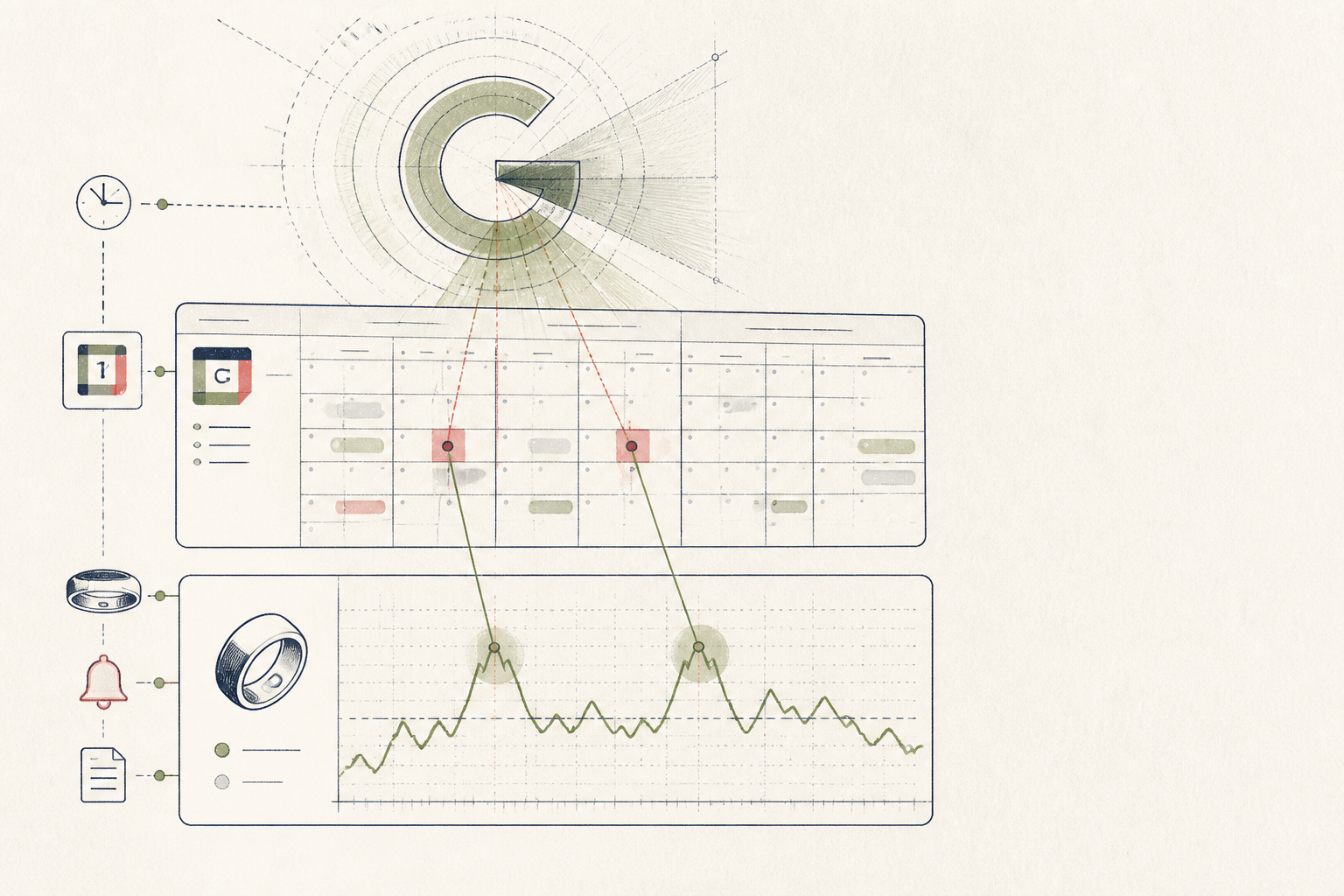
From Hunch to Hard Data: Stress Triggers Uncovered
“Your two most stressful workdays each month consistently follow a late-night conference call with the APAC team, correlating with a 15% increase in your average heart rate variability deviation for the following 24 hours.”
Vague stress causes, fuzzy dataClear triggers, actionable patterns
Tools used
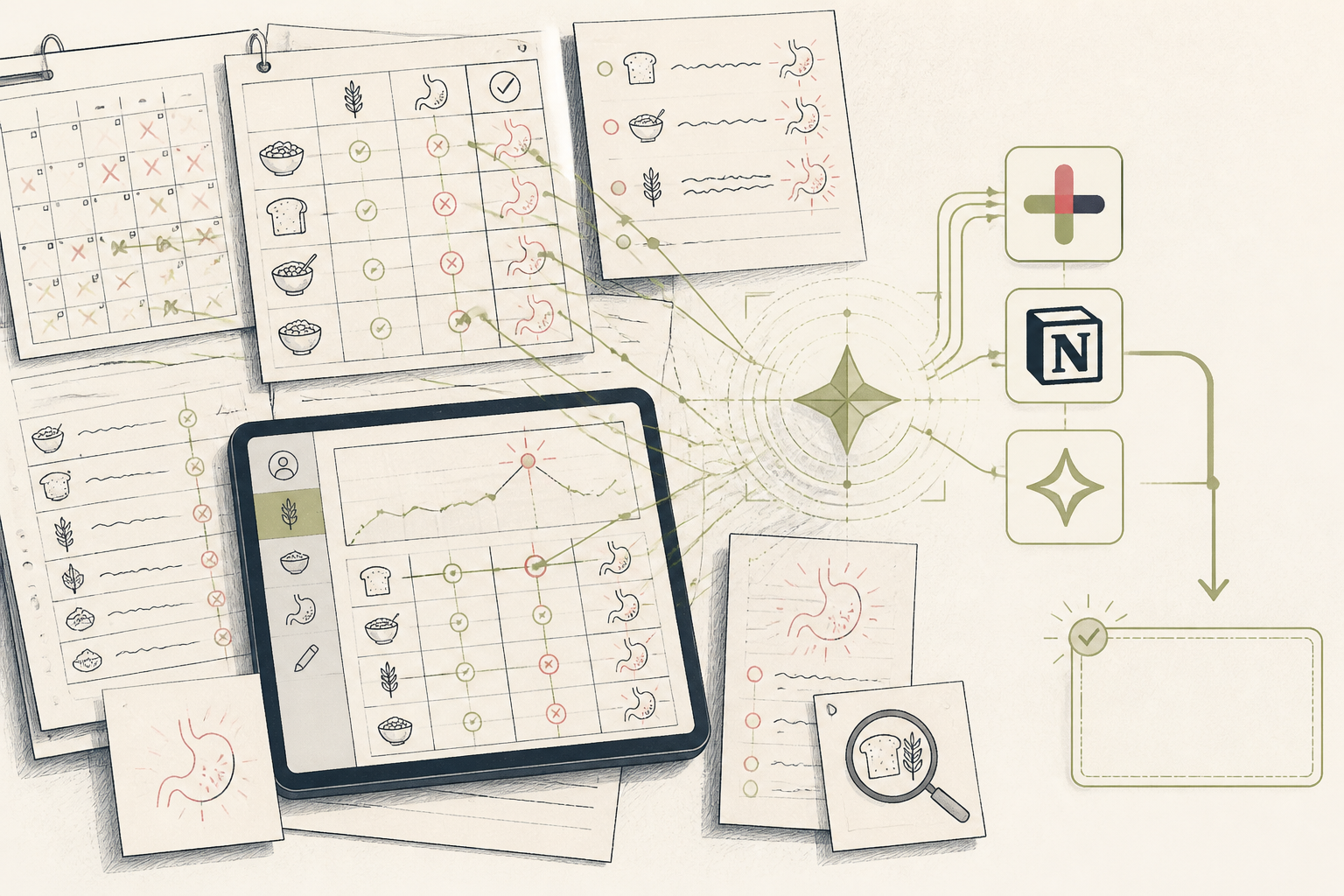
Digestive Insights: Uncovering Hidden Patterns in Client Data
“Your client's most challenging gut symptoms consistently peak on days following meals containing processed grains, despite their focus on avoiding dairy and legumes.”
Disparate notes, manual pattern searchAutomated symptom-diet correlations
Tools used
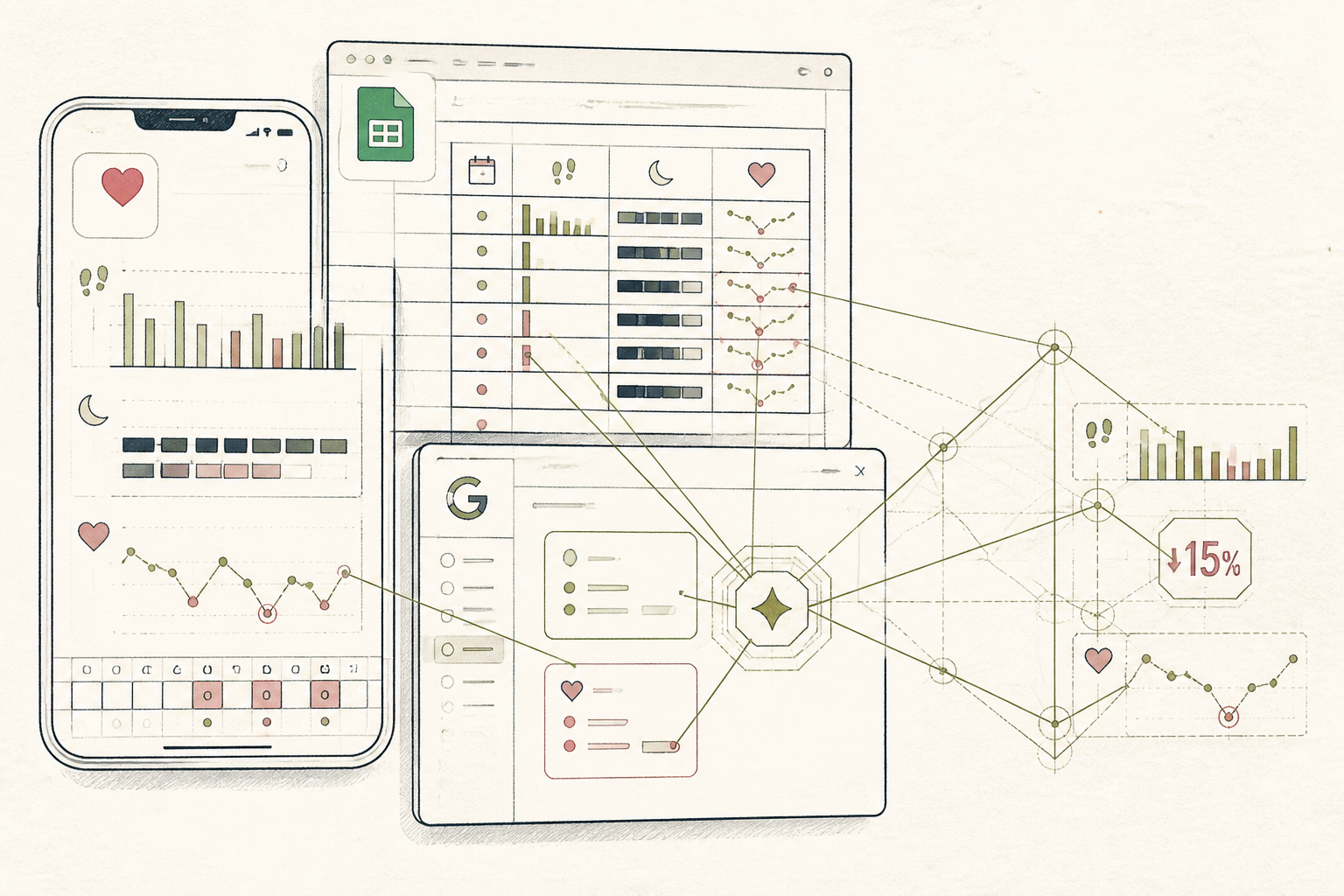
One Unexpected Metric Shaped Daily Movement
“Your most sedentary days consistently correlated with a 15% drop in heart rate variability (HRV) — not just steps, which you assumed was the primary impact metric.”
Assumptions about activity impactValidated insight, targeted movement
Tools used
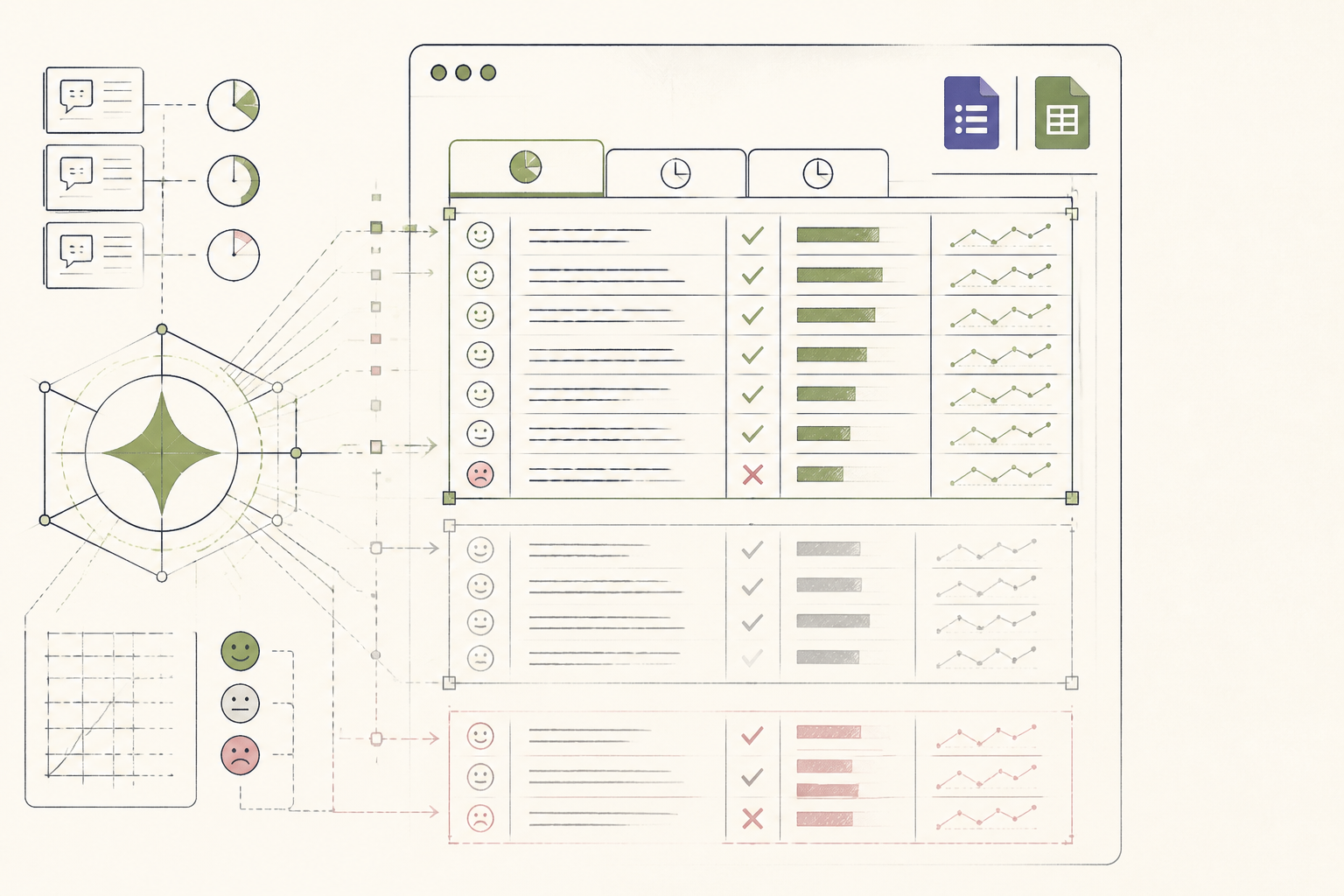
Streamlining Client Feedback for Stress Management
“Your client feedback data reveals that weekly qualitative check-ins consistently yield a 15% higher reported stress reduction compared to bi-weekly or monthly check-ins for clients on a new dietary protocol.”
Disparate client notes, manual synthesisStructured weekly insights, automated synthesis
Tools used
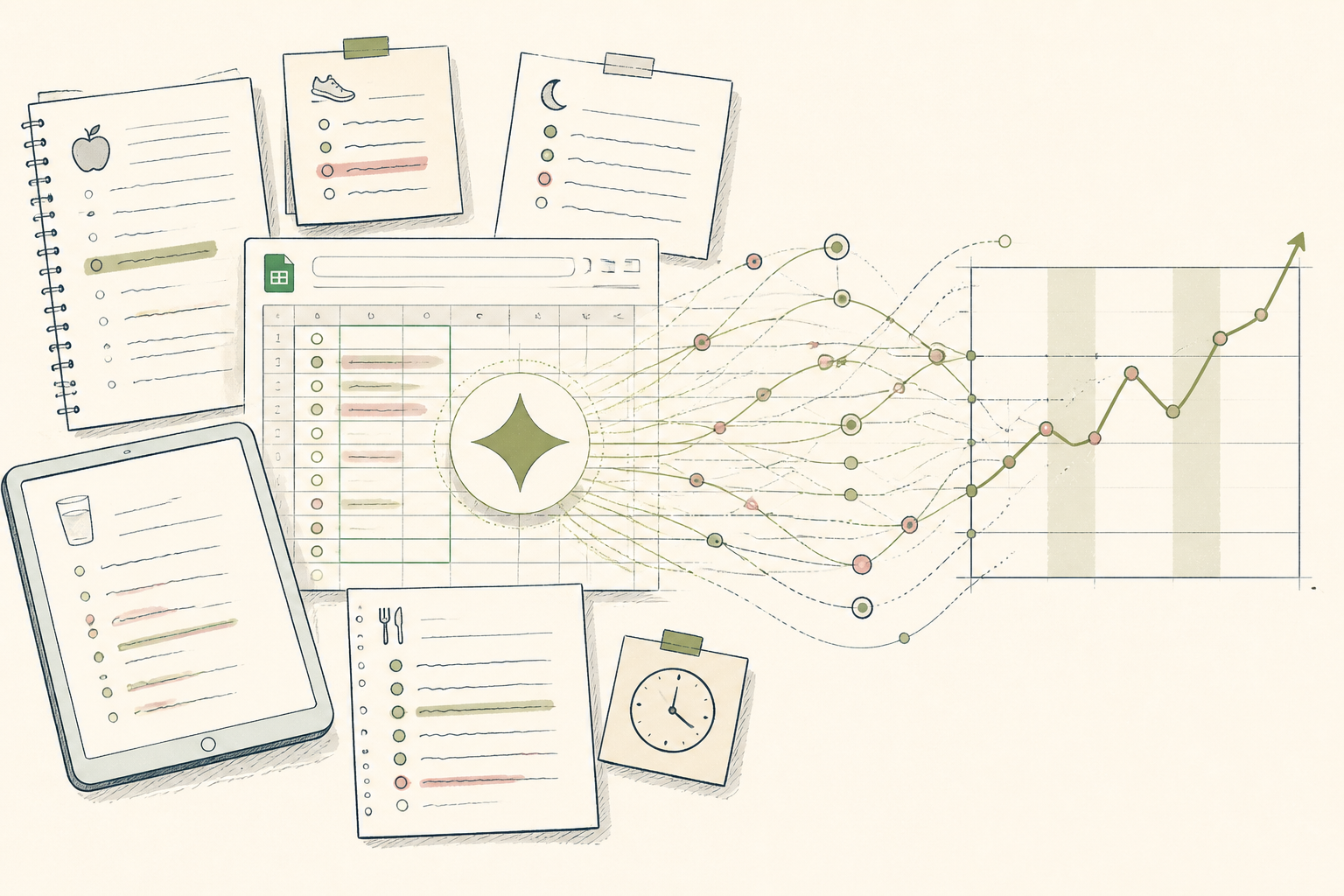
From Scattered Notes to a Clear Metabolic Trend
“AI: "Your early morning blood glucose consistently peaks on days following a late dinner with more than 30g of carbohydrates, averaging 14% higher than other days."”
Disparate health logs, no clear insightsOne weekly review, targeted adjustments
Tools used
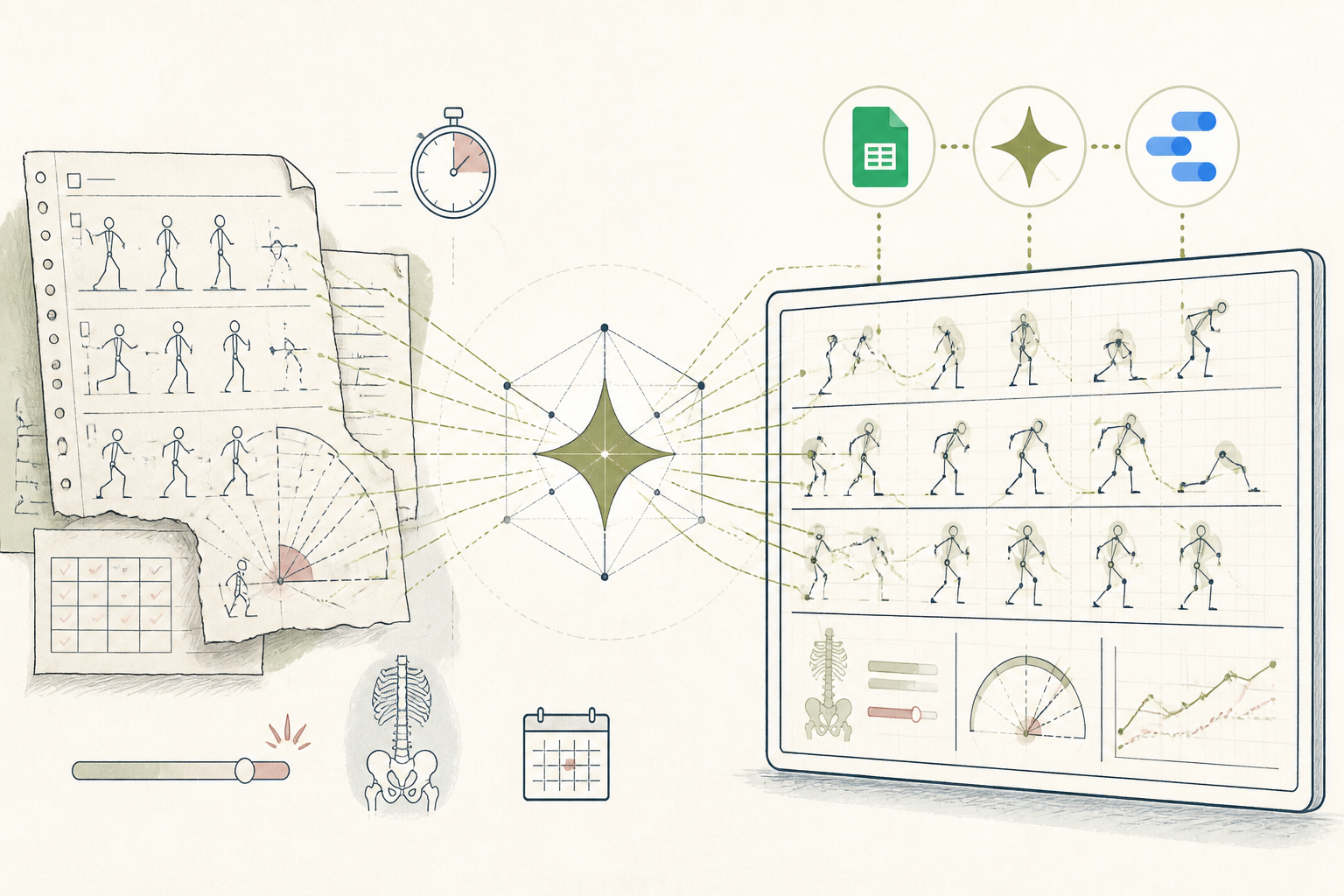
Analysing Patient Movement Patterns with AI
“Your patients with chronic lower back pain who report ”
Manual data entry for each patient, no aggregated insightsAutomated insights across patient cohorts, saving 2 hours/week
Tools used
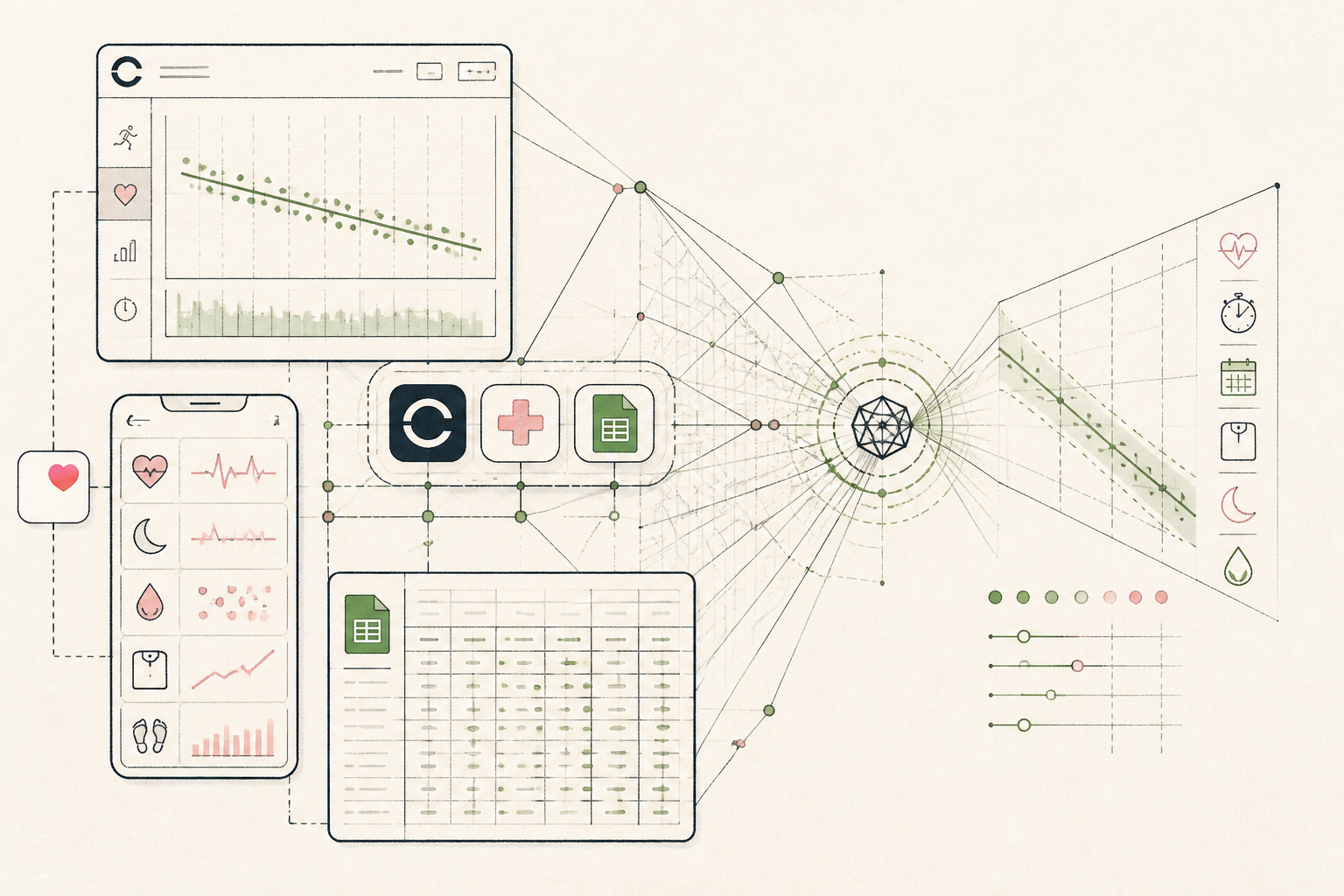
One Insight, Better Longevity Tracking
“Your current data suggests a significant decline in average VO2 max by 0.8 ml/kg/min per year since you turned 40, a trend stronger than predicted by age alone, impacting your long-term cardiovascular health markers.”
Disparate health apps, no clear trendsUnified data, actionable longevity insights
Tools used
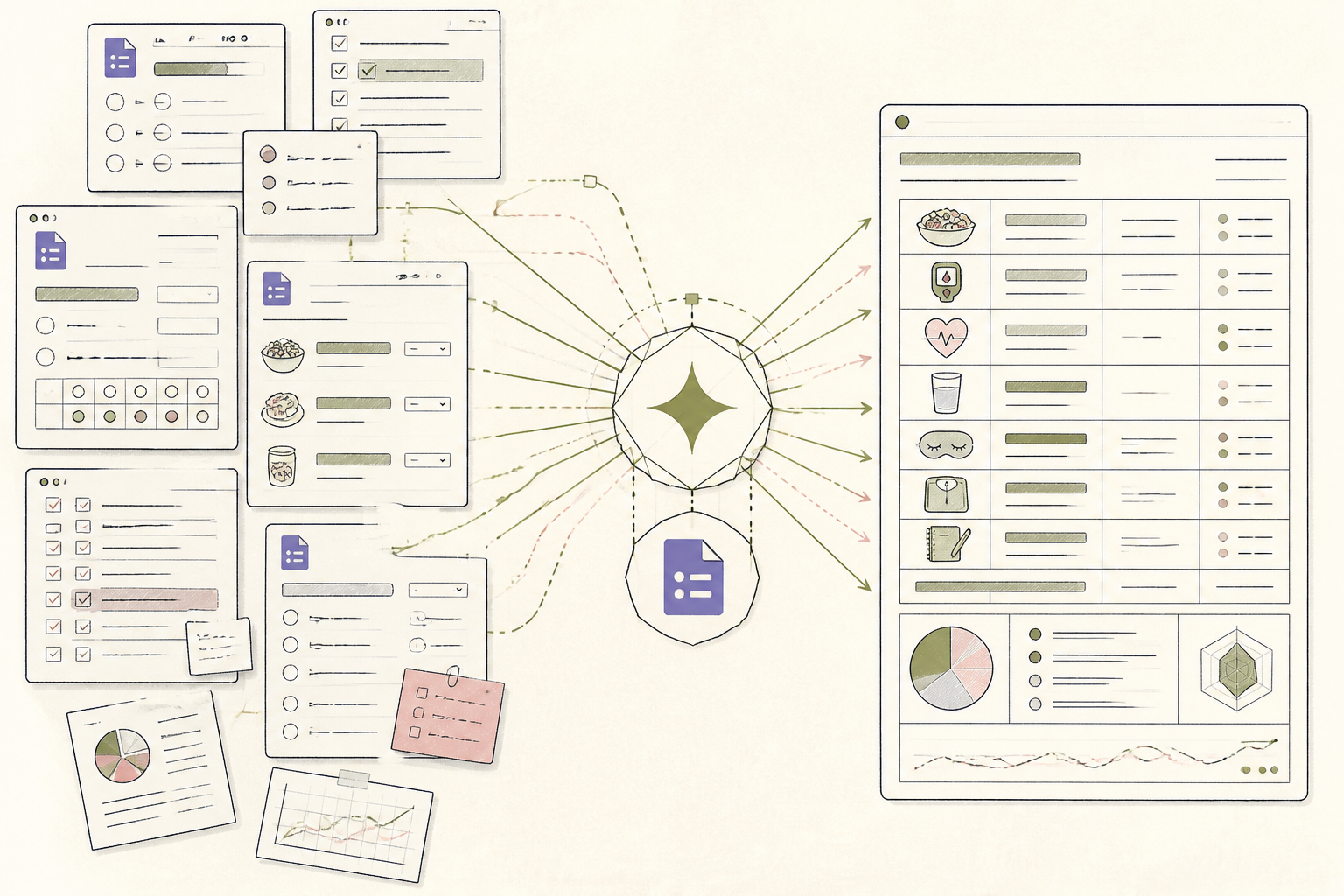
From Scattered Intake to Structured Metabolic Review
“In 72% of your client intake forms, specific dietary patterns (e.g., high refined carbohydrate intake, infrequent protein distribution) were consistently flagged as potential drivers for metabolic dysregulation, rather than the isolated symptoms clients reported.”
Disparate intake forms, siloed data, no clear patterns.Unified metabolic insights, focused intervention points.
Tools used
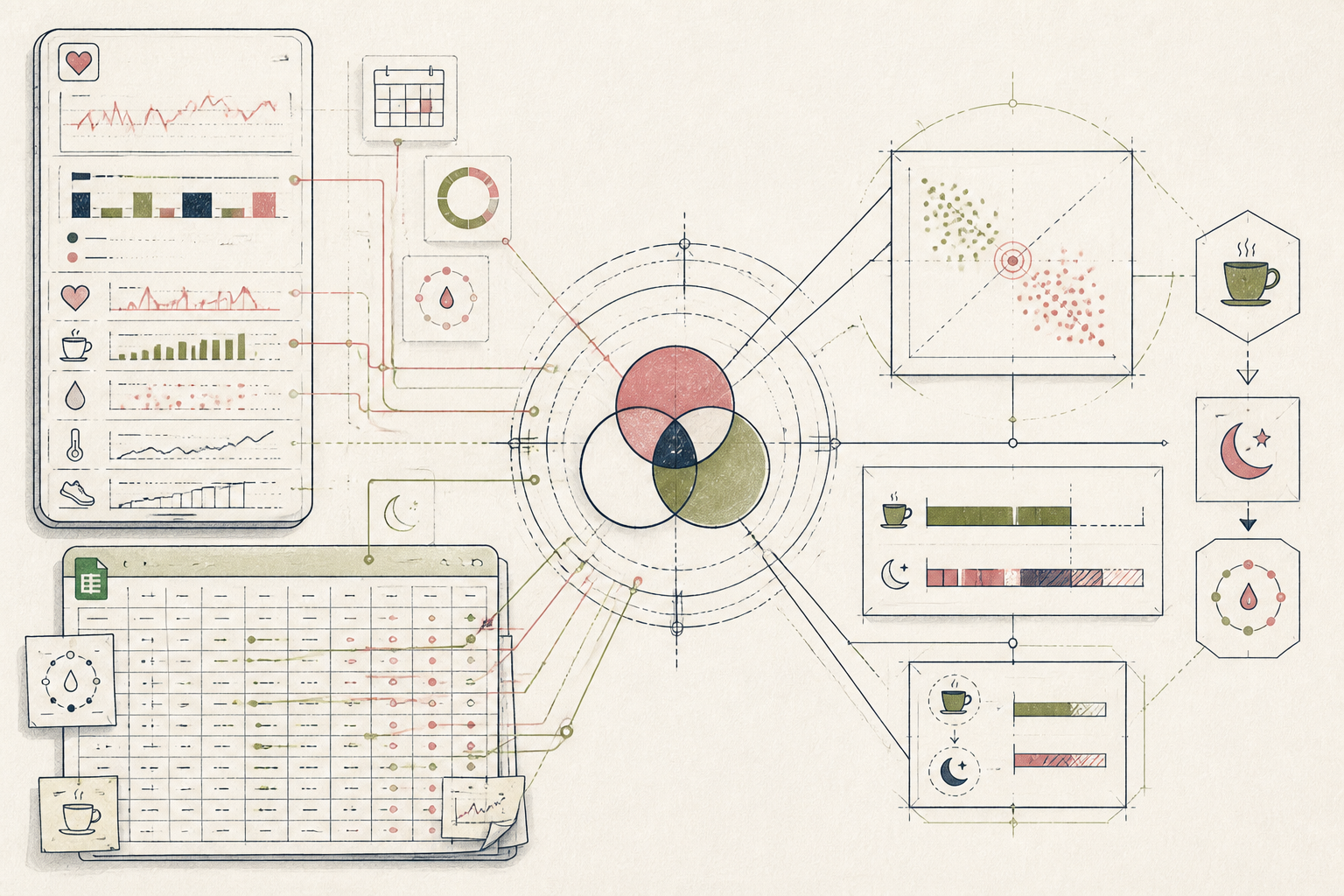
From Cycle Chaos to a Clear View
“Your AI analysis suggests that on average, your deep sleep drops by 27% during the luteal phase when your afternoon coffee intake exceeds 200mg, a pattern you had attributed to work stress.”
Disparate cycle data, anecdotal hunchesAI-driven insights, actionable protocol
Tools used
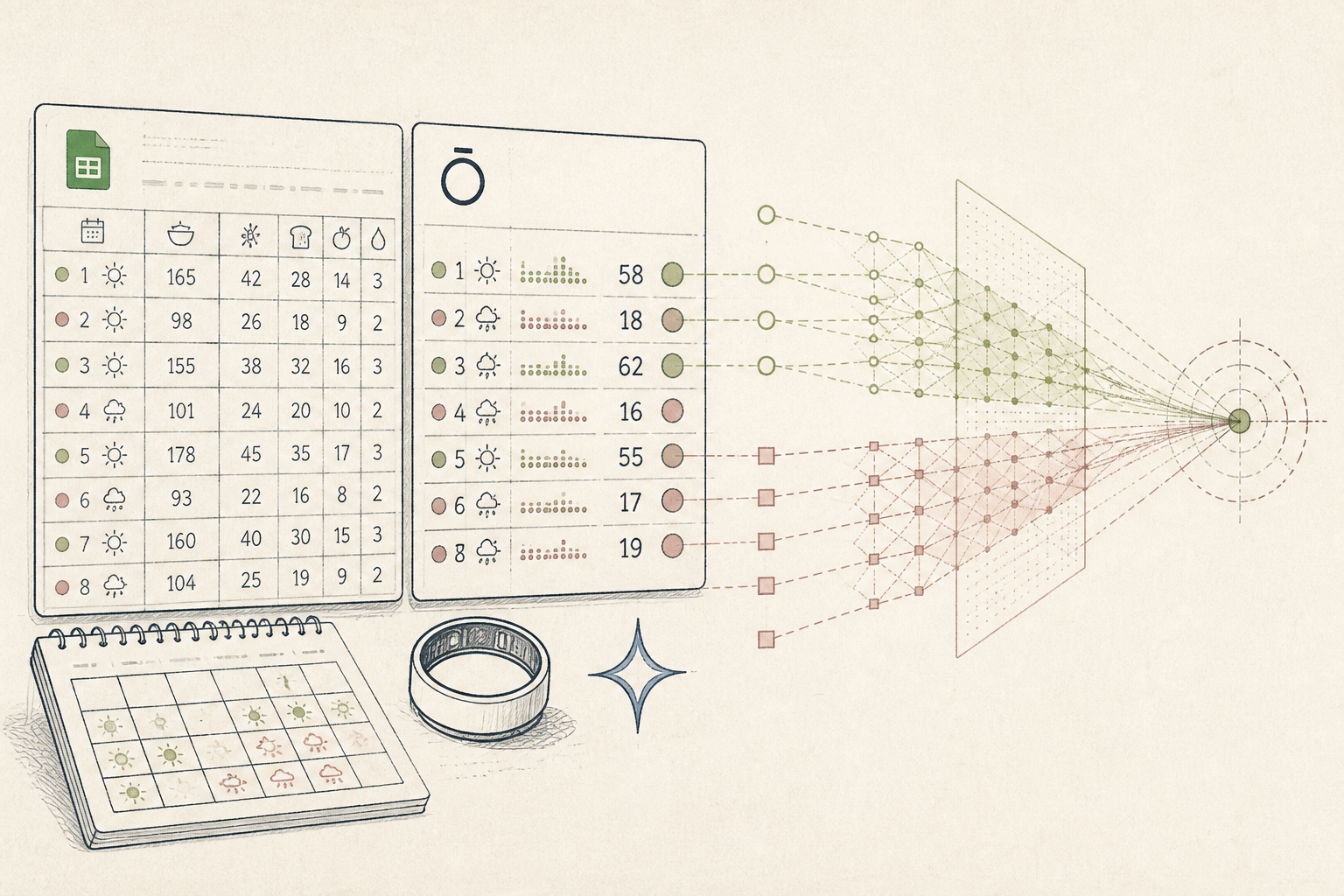
One Patient, One Prompt: Uncovering a Longevity Trend
“The AI observed that a client's carbohydrate intake on 'stressful' days (reported HRV below 25 ms) consistently dipped by an average of 45g compared to 'calm' days, suggesting an unconscious dietary shift under pressure.”
Client data across 4 apps, no clear patternsAI-powered insight, ready for coaching
Tools used
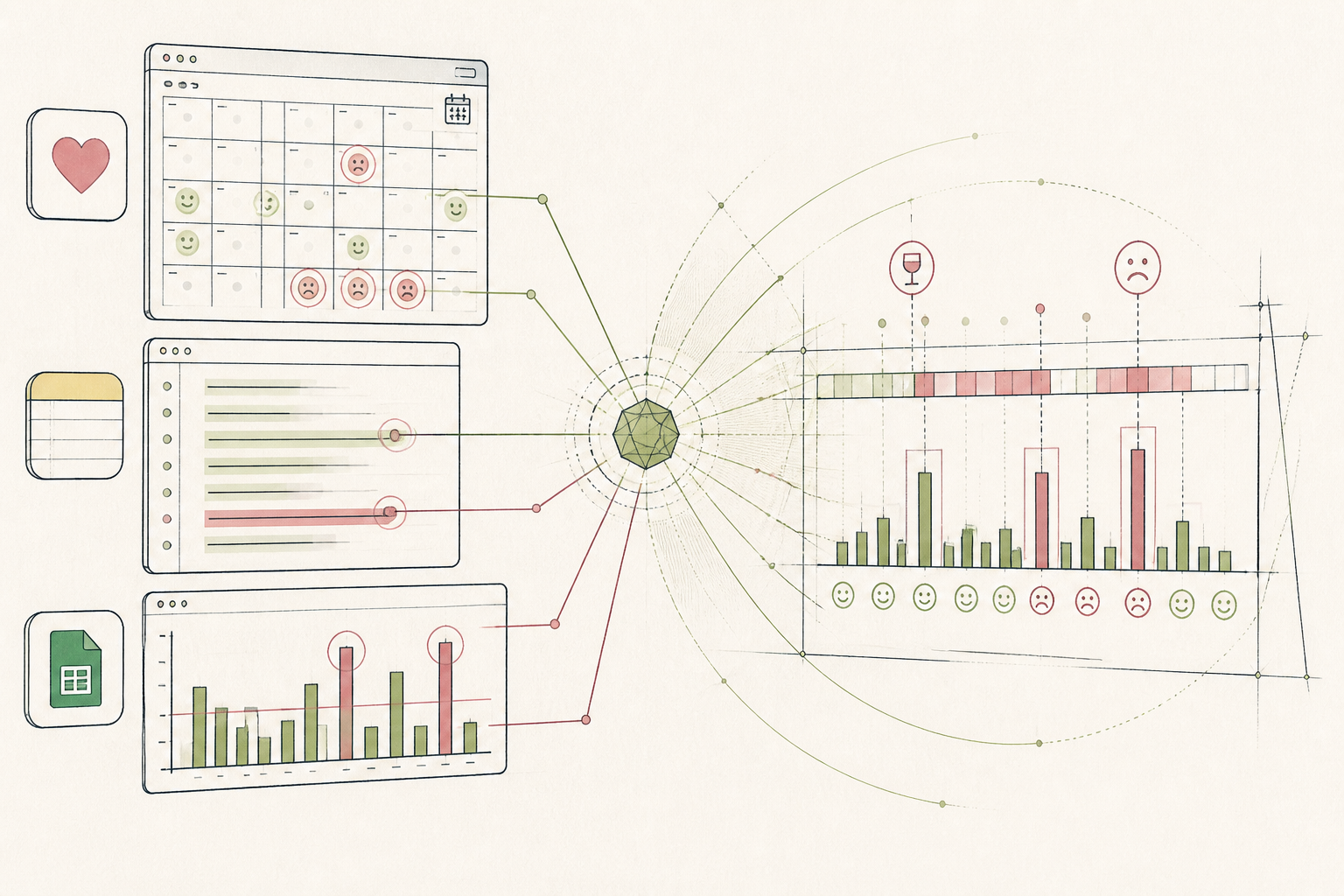
From Hazy Hunches to Clear Mood Insights
“Your AI analysis revealed that 80% of your significant mood dips over the last month occurred on days immediately following evenings where you consumed more than three units of alcohol, a pattern you had not consciously linked.”
Vague mood observations & inconsistent journalingClear, quantifiable mood triggers identified
Tools used
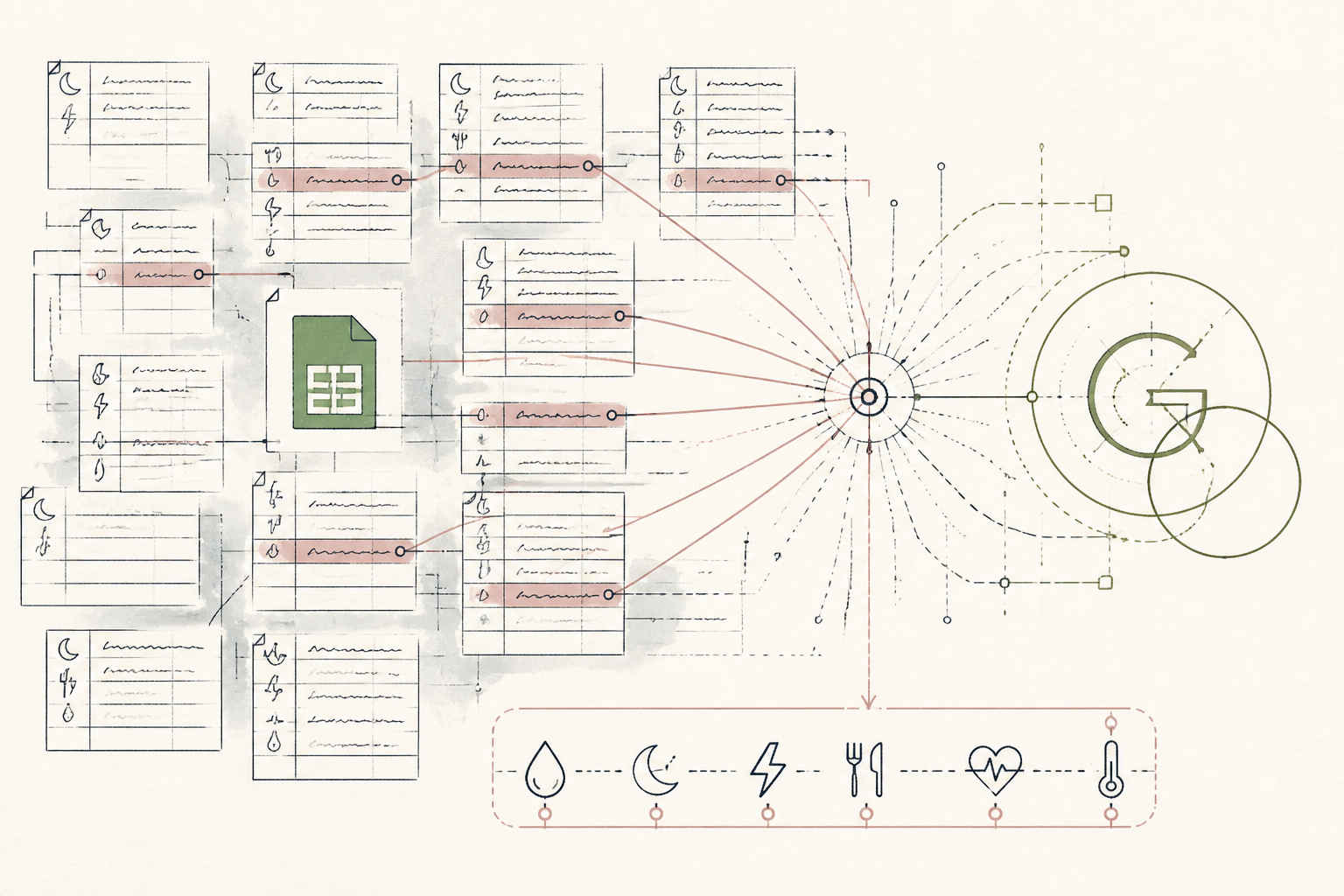
From Scattered Notes to Hormone Pattern Clarity
“In clients exhibiting mid-cycle dips, their reported stress scores from the prior week consistently averaged 18% higher than their baseline, suggesting a correlation between recent stress and acute hormonal fluctuations.”
Disparate client logs, manual analysisAI-identified hormonal patterns, weekly reports
Tools used
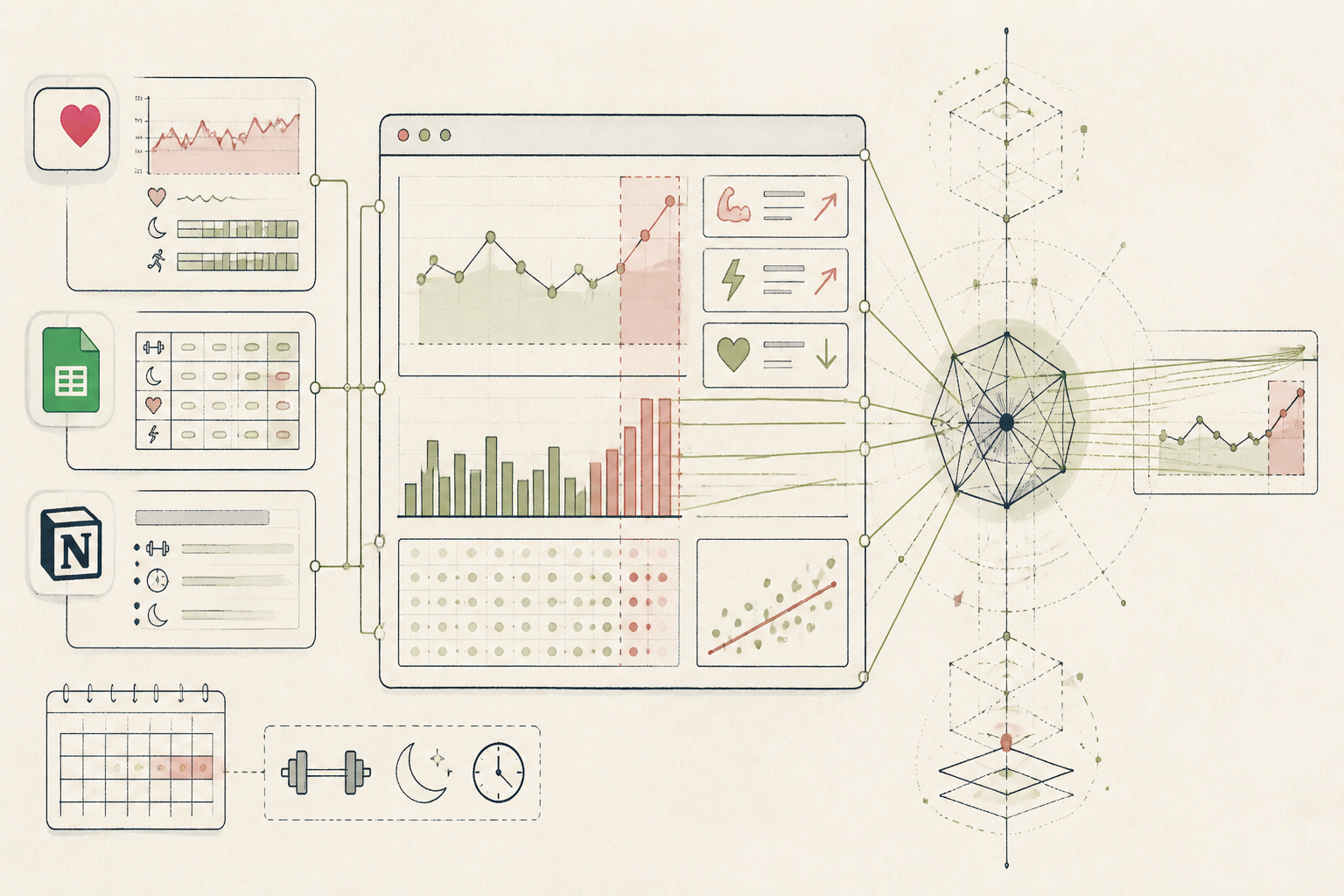
From Haphazard Recovery to Data-Driven Decisions
“Based on your past six weeks of data, your reported muscle soreness and fatigue scores average 18% higher on days following evening bouldering sessions after 8 PM, compared to earlier sessions, despite similar training loads. This suggests a significant impact on recovery metrics that you hadn't fully quantified.”
Disparate Apps, Subjective ImpressionsOne Weekly Report, Clear Recovery Trends
Tools used
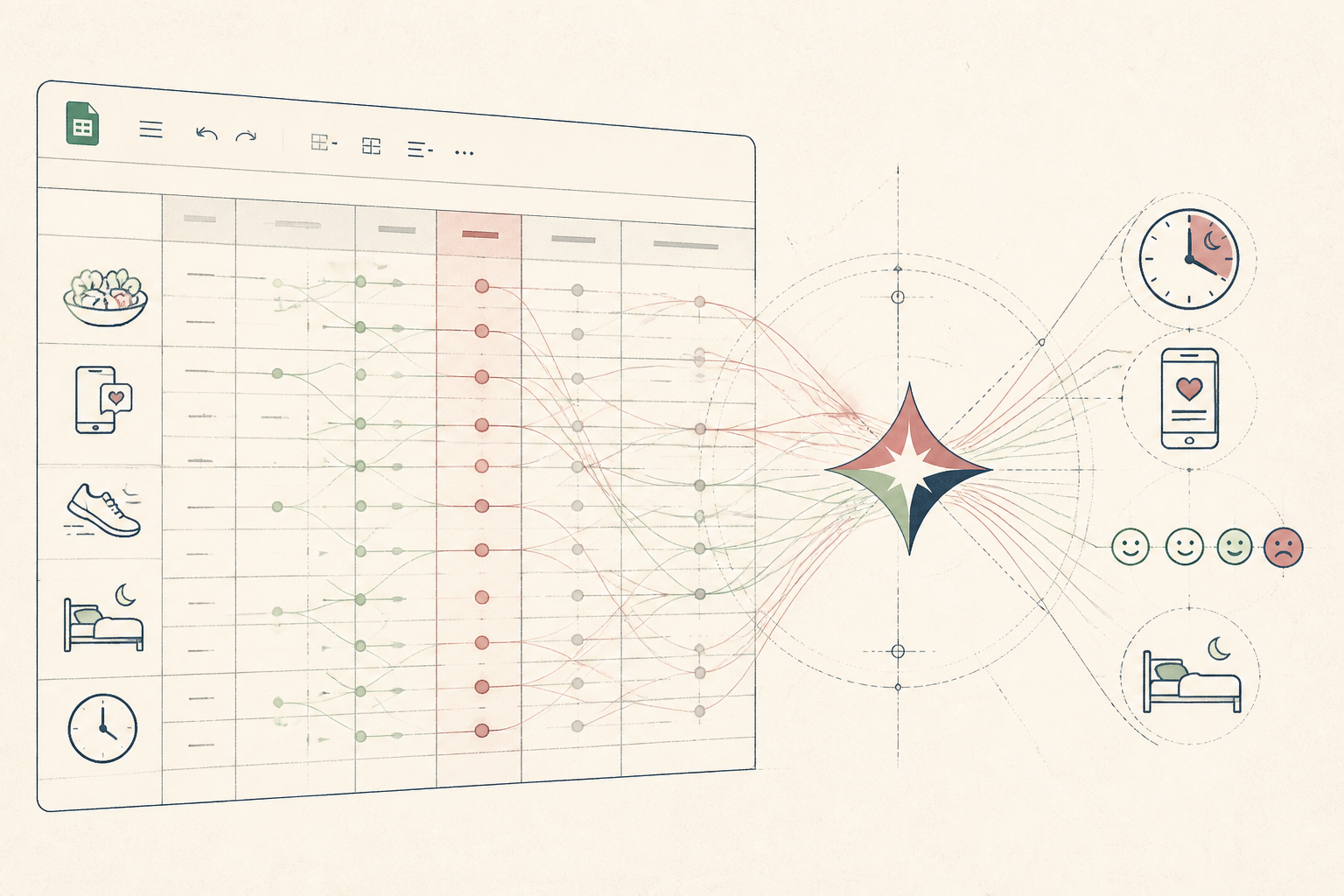
Quantifying Mood Patterns for Bespoke Client Protocols
“''Your client’s subjective mood dips correlate not with carbohydrate intake, but specifically with evening social media use, showing an average 18% lower mood score on days following greater than 90 minutes of screen time after 8 PM.''”
Disparate client logs, fuzzy insightsClear, actionable mood protocol adjustments
Tools used
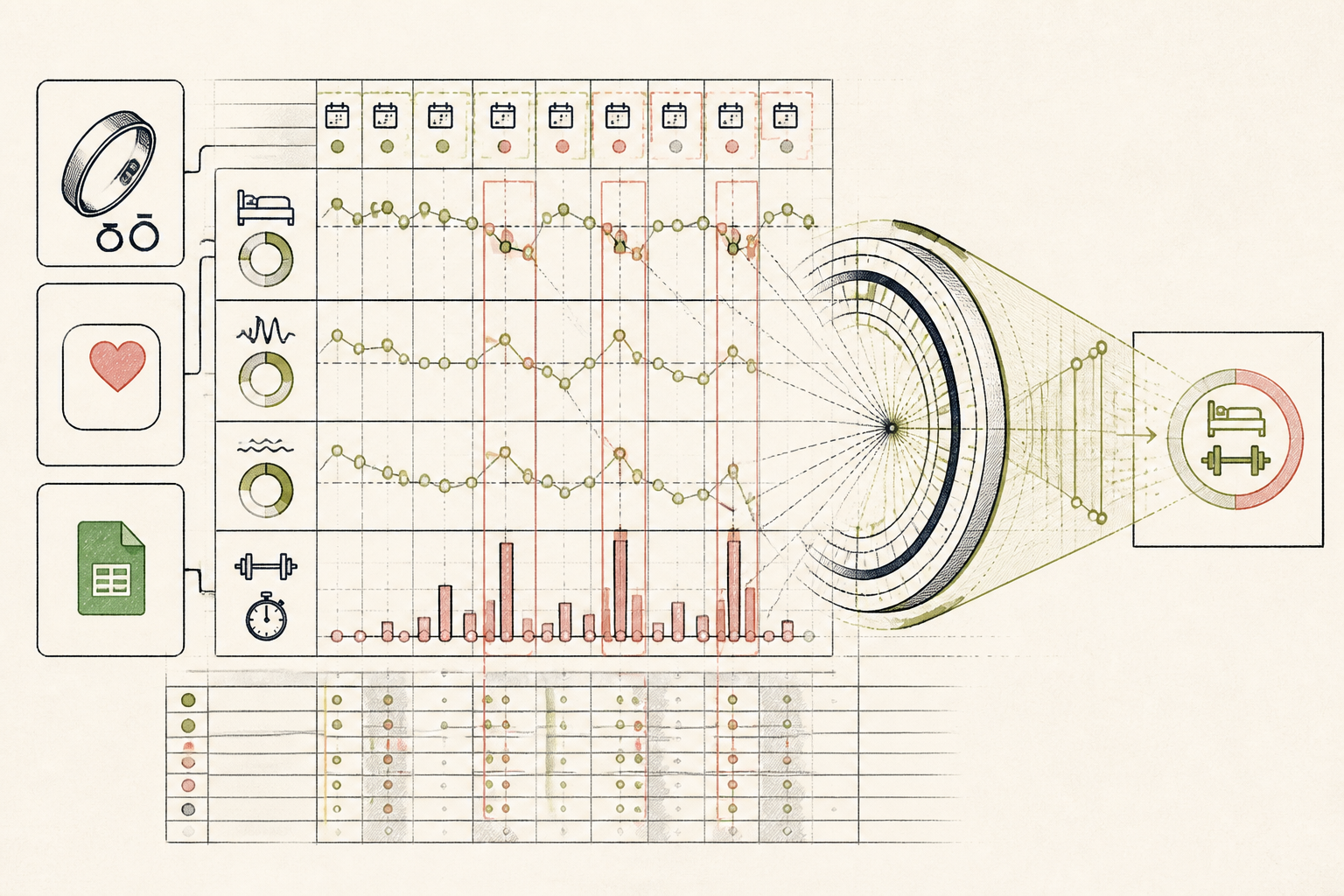
From Scattered Sleep Data to a Clear Pattern
“Your three worst-sleep nights all followed strength training after 7pm — not screen time, which you'd assumed. Specifically, sleep efficiency dropped by an average of 9% on those evenings.”
Disparate sleep data, vague assumptionsOne clear pattern, informed evening choices
Tools used
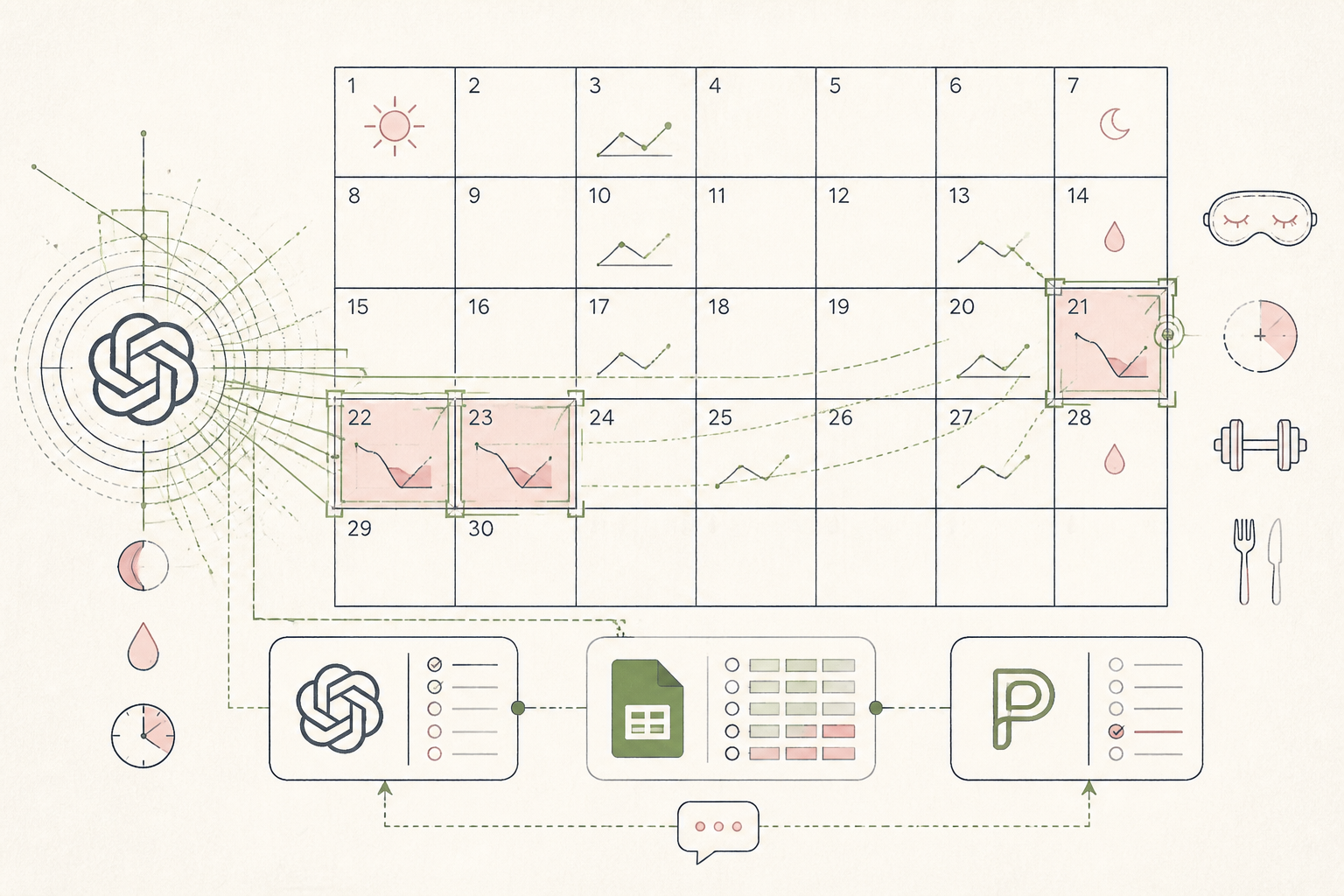
Cycle Syncing for Consistent Energy
“Your client's energy dips consistently align with the mid-luteal phase, specifically days 21-23, when they typically report a 30% reduction in perceived energy levels and an increase in sleep duration by an average of 45 minutes.”
Manual cycle tracking and generic adviceAutomated insights, targeted weekly adjustments
Tools used
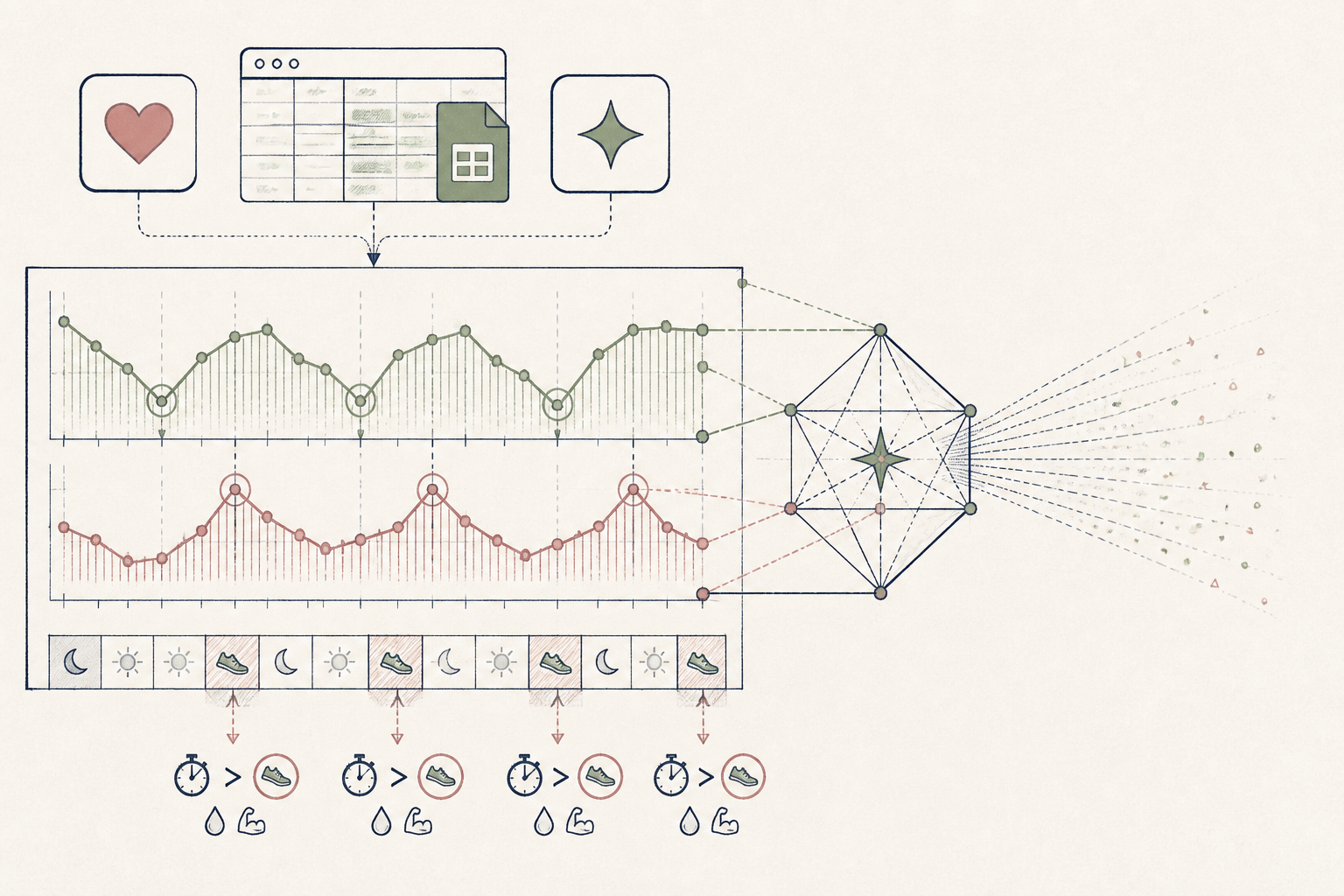
The Post-Workout Recovery Pattern You Overlooked
“Your lowest HRV scores and highest resting heart rates consistently appear after evening runs exceeding 10km, indicating a clear need for increased recovery on those specific days.”
Disparate health apps, no clear recovery planAI-driven daily readiness insights
Tools used
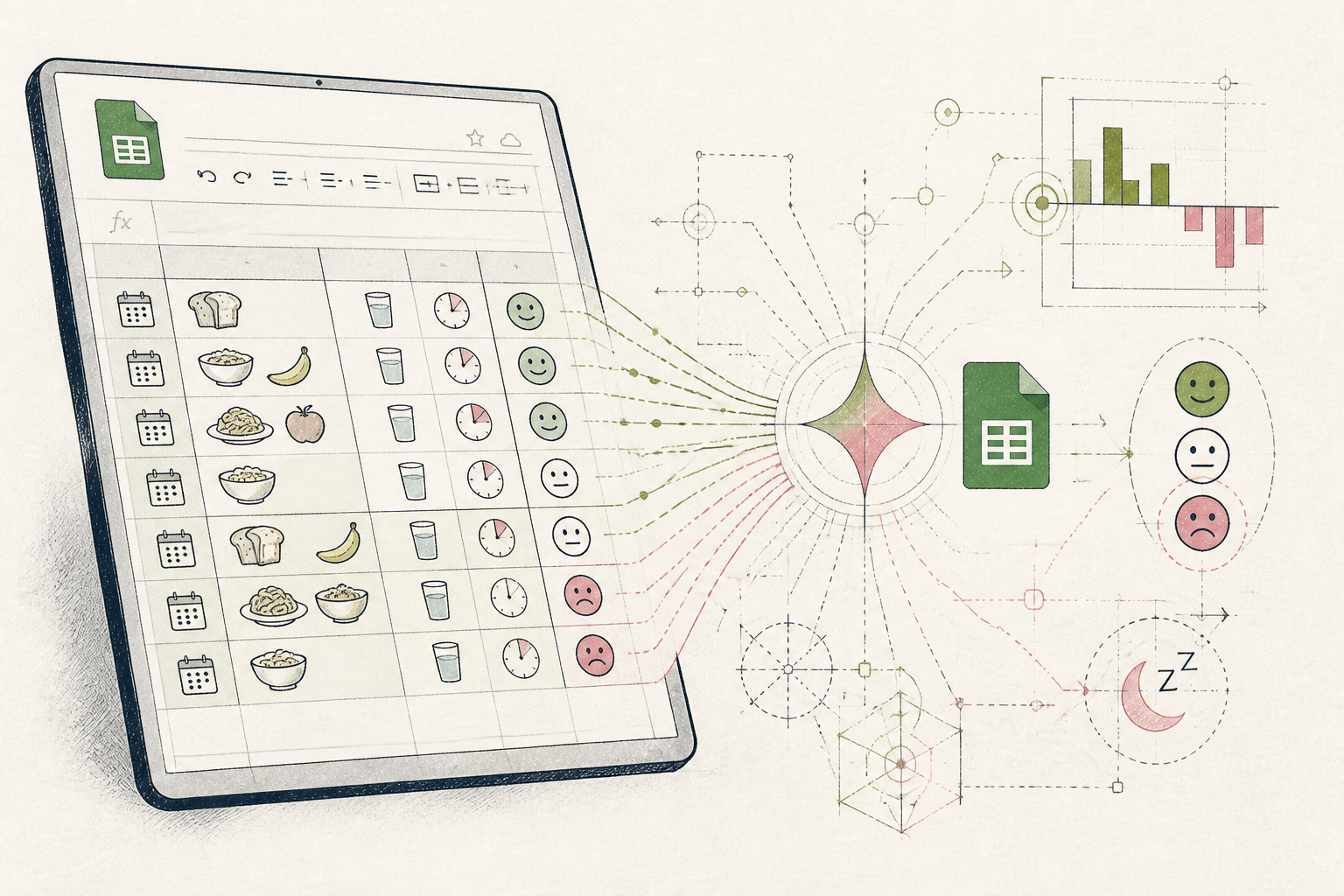
From Mood Journal to Actionable Insights
“AI analysis revealed that clients consistently reported a 20-30% drop in afternoon energy and mood scores on days following carbohydrate-heavy breakfasts, a pattern previously attributed to general stress.”
Anecdotal client mood notesQuantified dietary impact on mood
Tools used
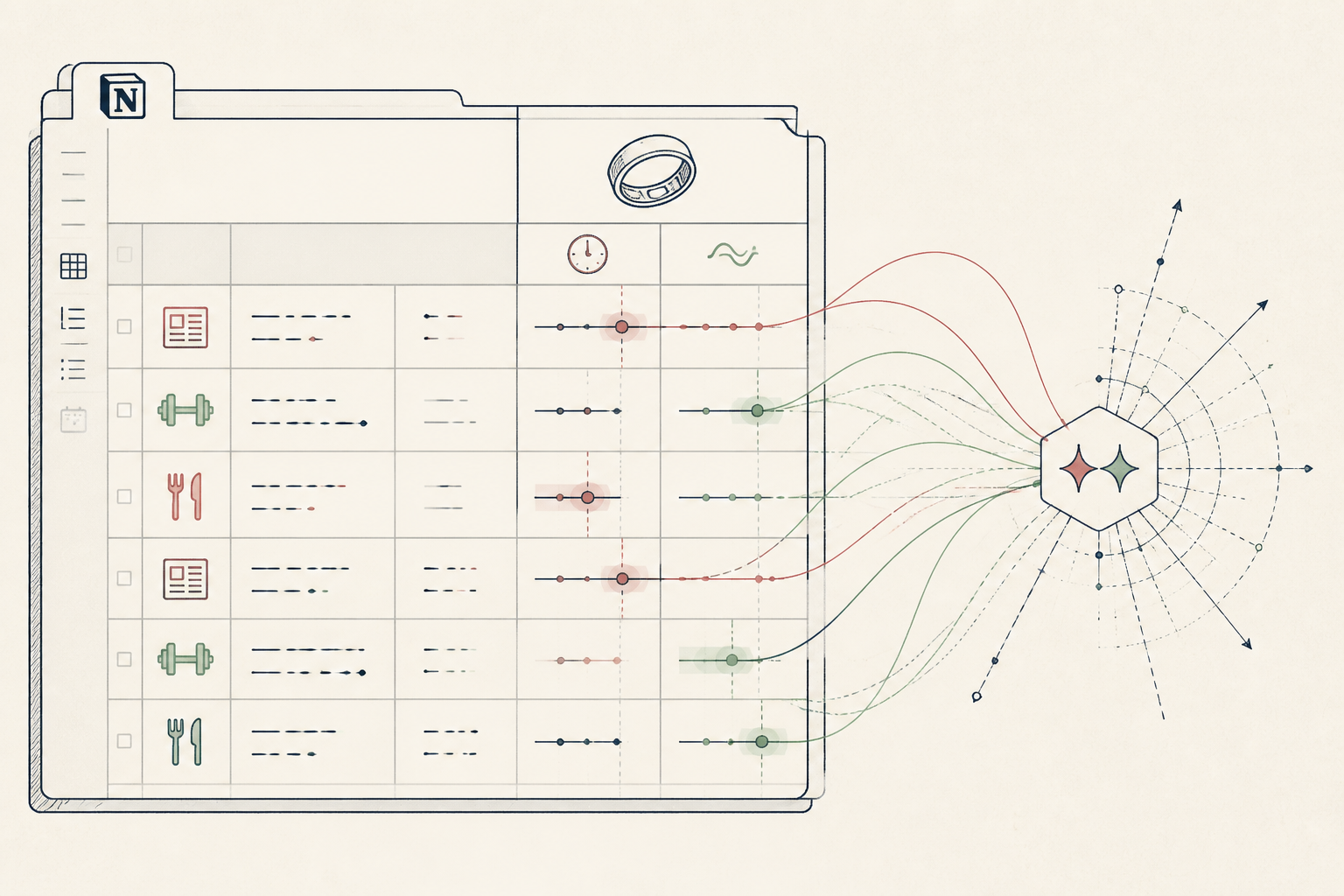
From Haphazard Tracking to Targeted Sleep Improvement
“Your Oura Ring data consistently shows that evenings with over 30 minutes of news consumption before bed correlate with a 15% increase in sleep latency and a 10% decrease in deep sleep duration.”
Unstructured data in multiple appsClear, actionable sleep insights
Tools used
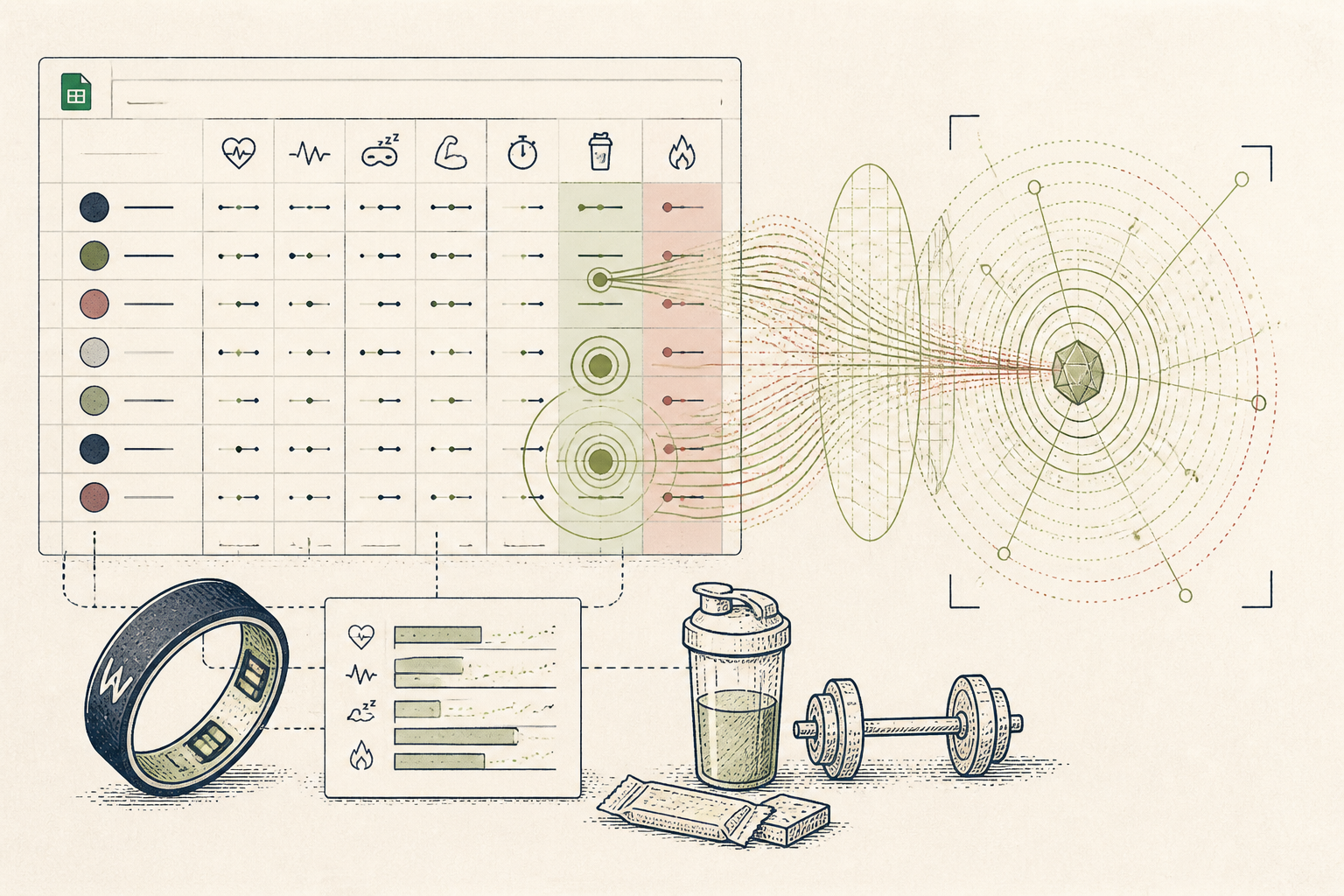
From Athlete Data to Actionable Recovery Plan
“AI identified a 30% increase in inflammatory markers on recovery days following high-intensity interval training (HIIT) when athletes consumed less than 1.5g/kg body weight of protein, a pattern previously attributed to training load alone.”
Disparate athlete data, subjective recovery adviceIntegrated data, quantified, personalised recovery plan
Tools used
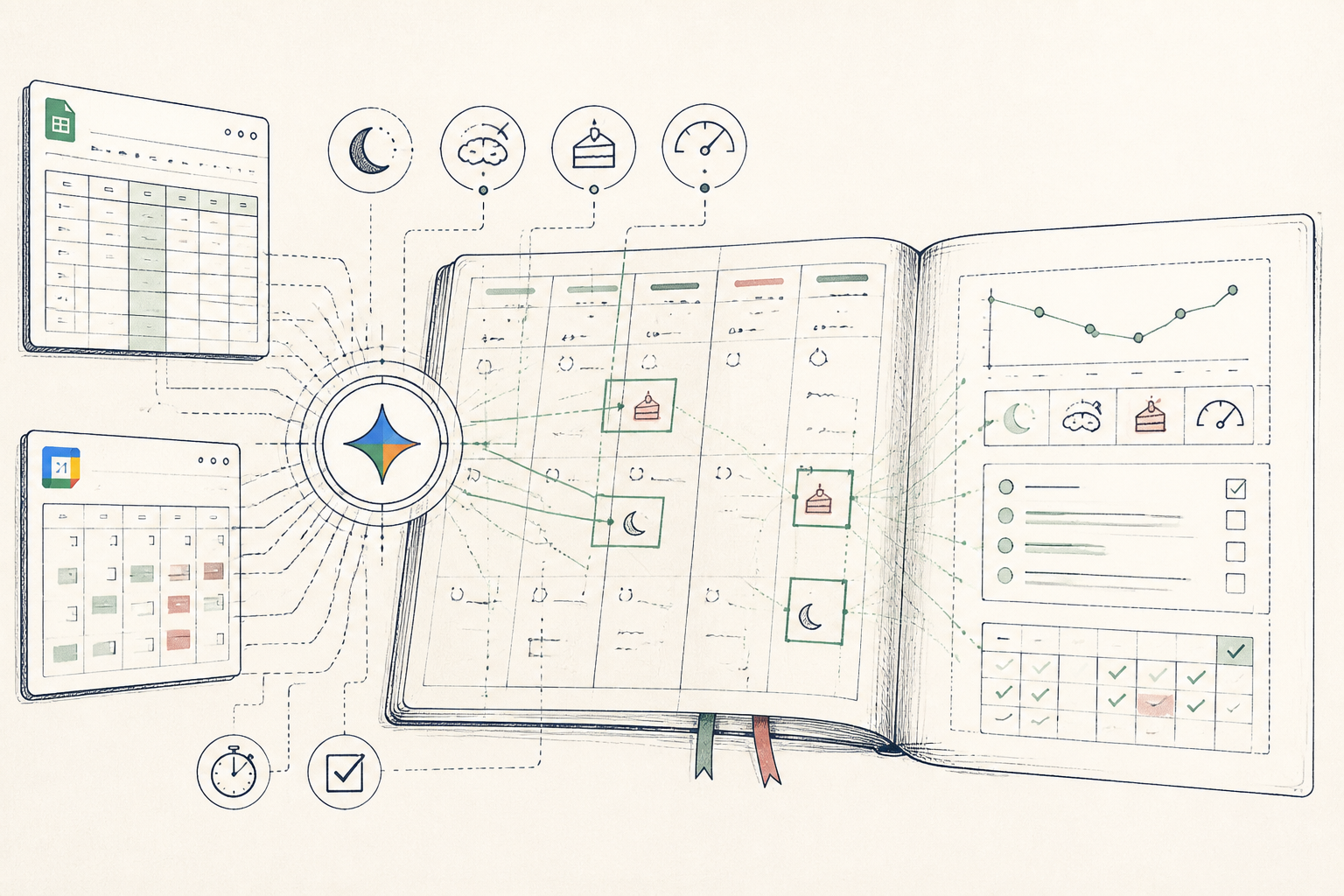
Weekly Protocol: Structured Experimentation for Cognitive Performance
“Your three lowest focus days consistently followed evenings with more than 30g of added sugar, irrespective of sleep duration, which you’d previously assumed was the primary factor.”
Ad-hoc tracking, unclear impactFocused weekly cognitive experiment
Tools used
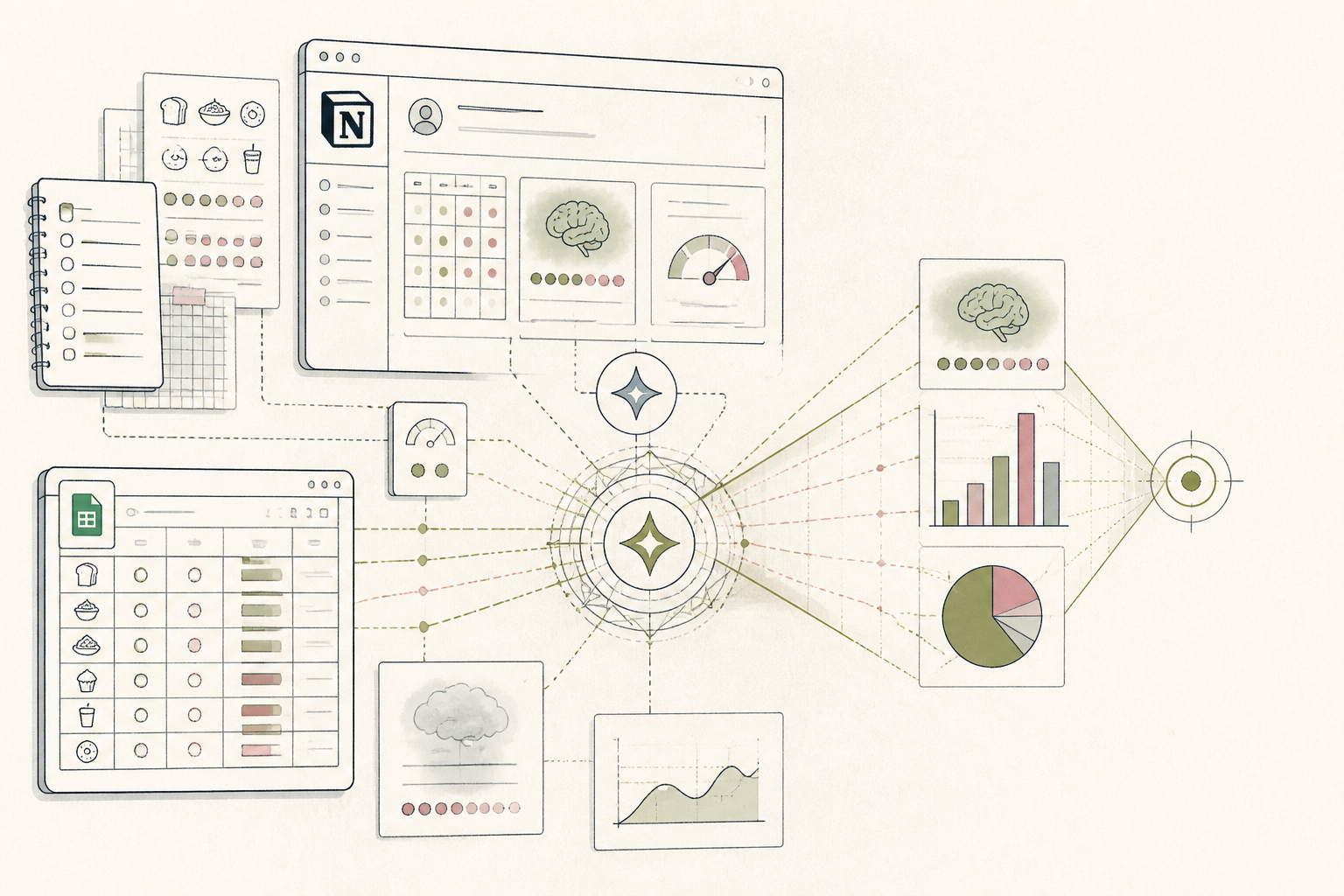
From Scattered Notes to Focused Insights
“In clients aged 45-60, a 30% increase in reported "brain fog" directly correlates with diets containing more than 150g of processed carbohydrates daily, a pattern she had previously attributed to stress.”
Disorganised client notes, anecdotal patternsQuantified cognitive impacts, personalised plans
Tools used
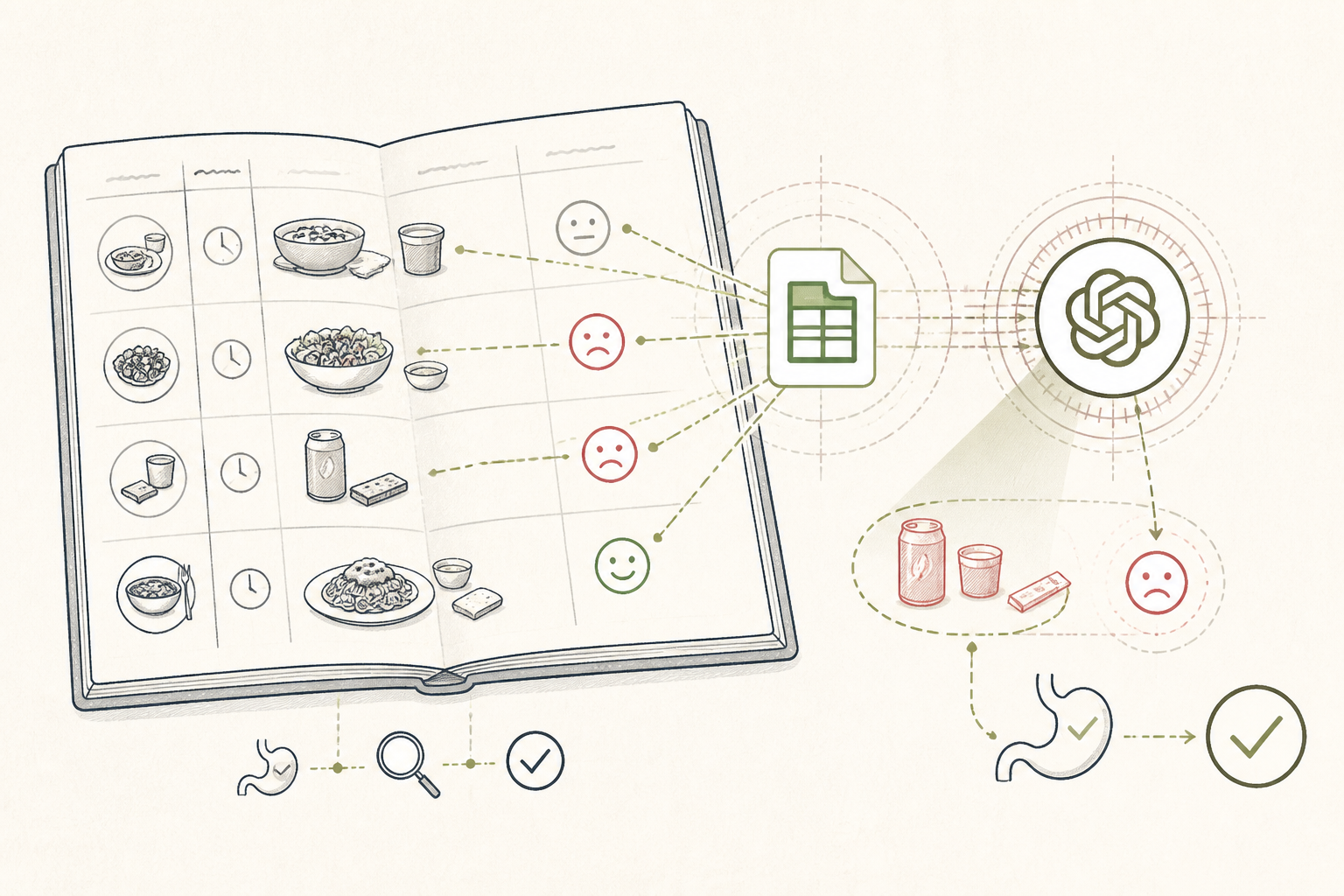
From Scattered Notes to Targeted Gut Support
“AI analysis revealed that 80% of reported bloating and discomfort incidents occurred within three hours of consuming artificial sweeteners, a connection previously overlooked.”
Vague gut discomfort, inconsistent trackingClear triggers, reduced symptoms
Tools used
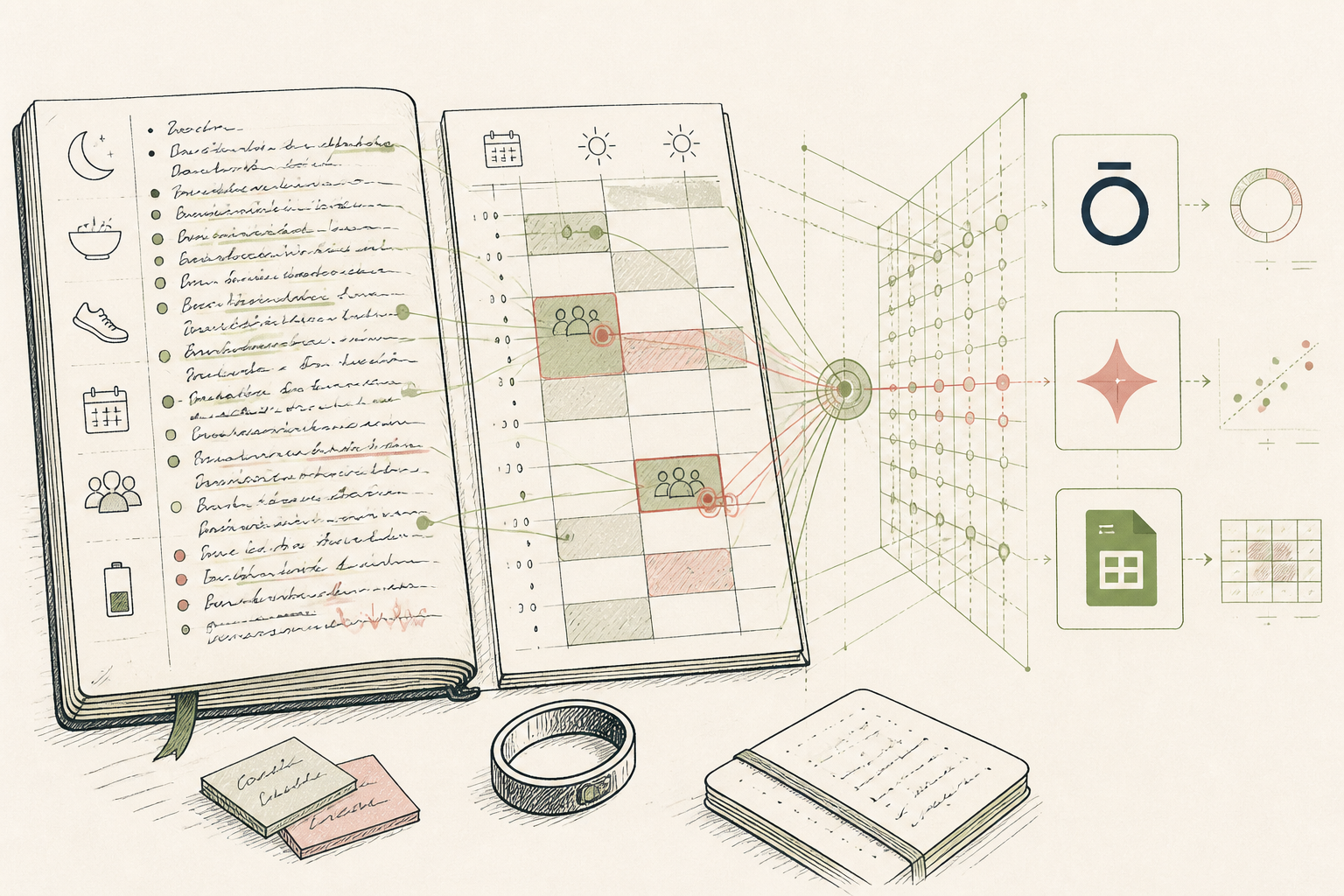
From Haphazard Tracking to Targeted Energy Insights
“Your energy dips correlate not with carbohydrate intake as you suspected, but with a 15% increase in client meetings before 11 AM on Tuesdays and Fridays, regardless of diet.”
Disorganised notes, vague energy patternsClear energy insights, actionable adjustments
Tools used
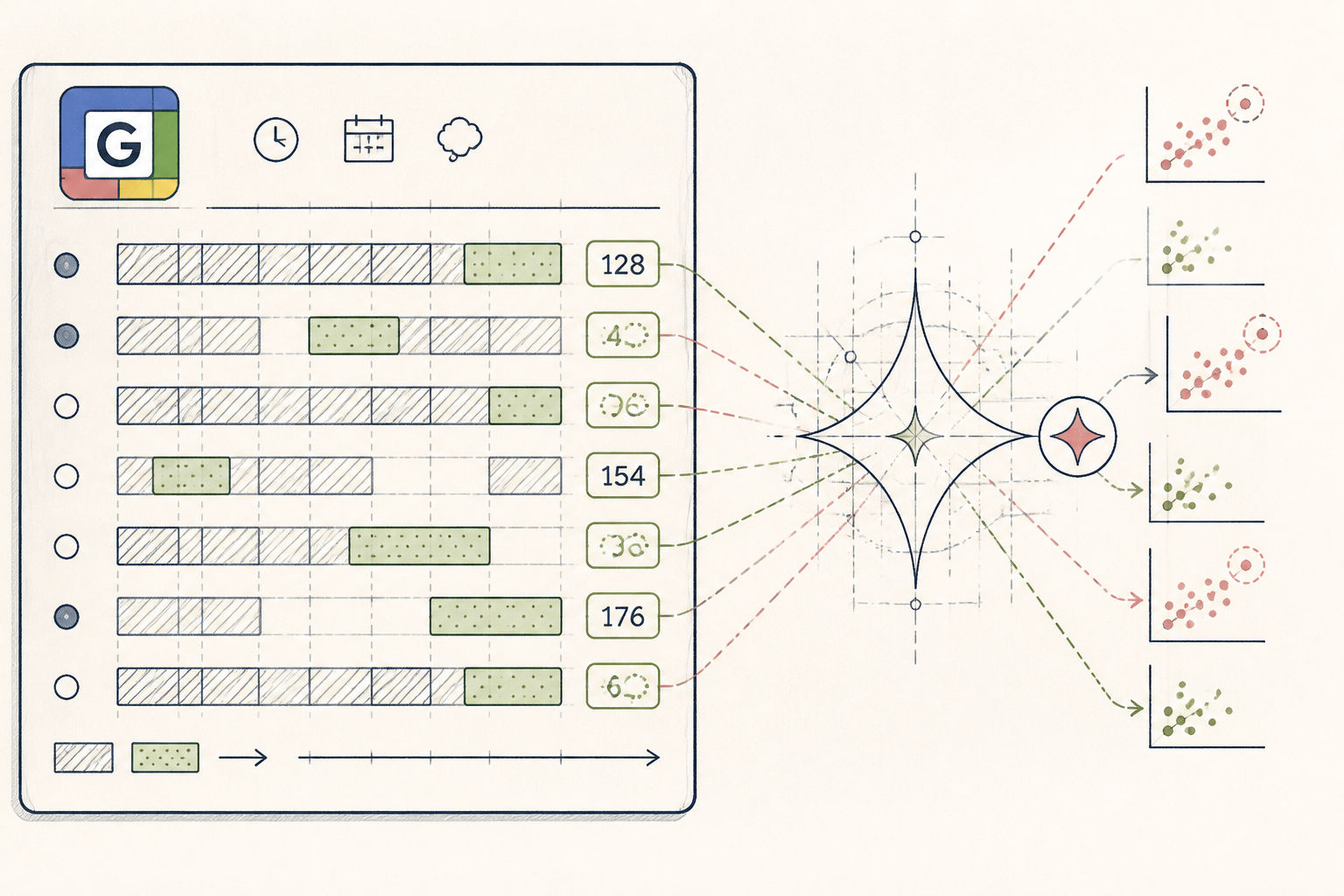
From Hazy Notions to Concrete Stress Insights
“Your two highest stress days this month consistently followed evenings where your calendar showed more than 90 minutes of unscheduled 'flex time' — not the heavily booked days you anticipated.”
Subjective stress trackingQuantified stress patterns
Tools used
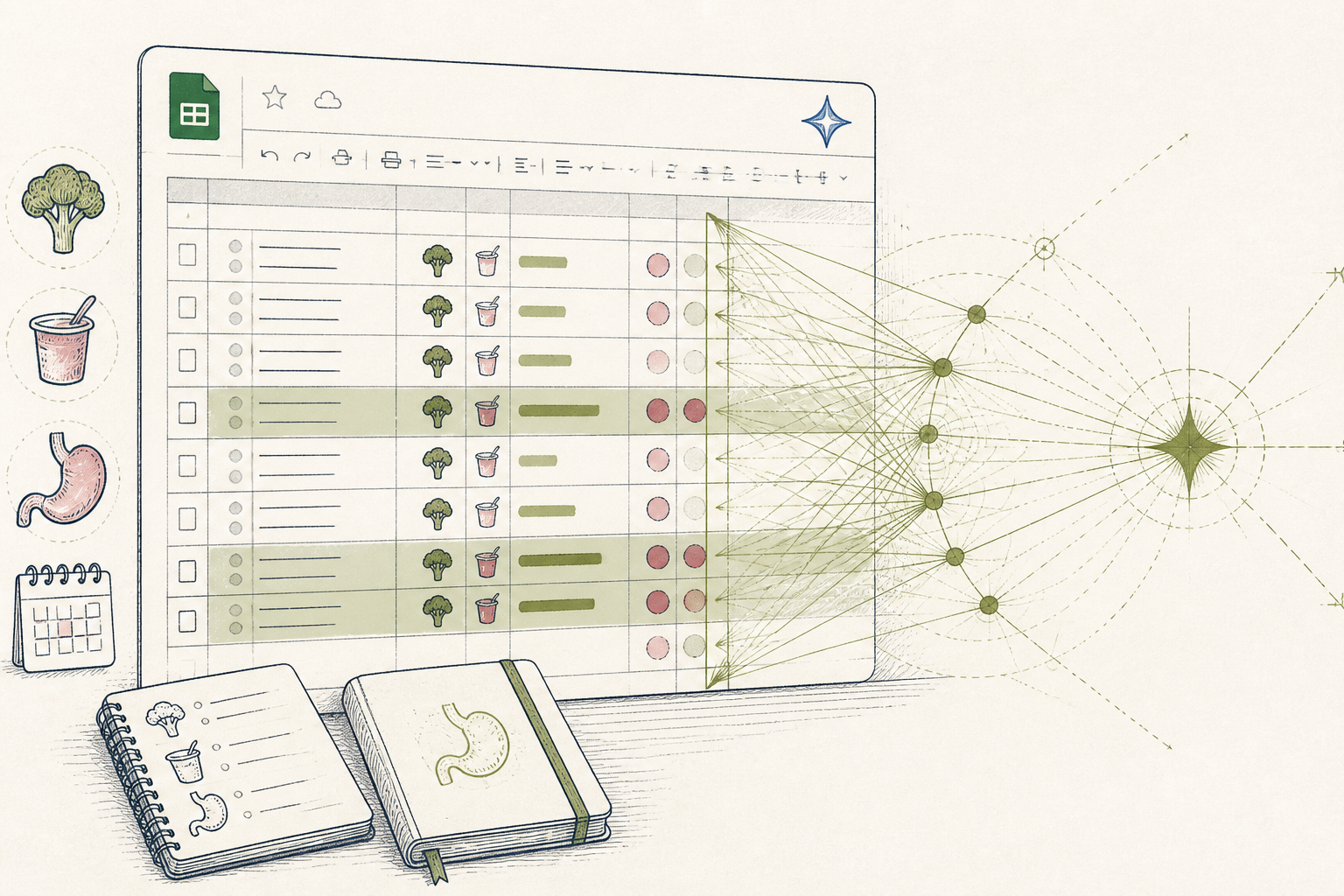
From Symptoms to Specifics: A Practitioner’s AI-Powered Gut Health Audit
“In reviewing client food and symptom logs, the AI identified that a 15% increase in fermented foods correlated with a 22% reduction in reported bloating within a 7-day period for 60% of tracked clients, rather than the expected reduction from probiotic supplements alone.”
General advice, scattered client logsActionable, data-driven gut health strategies
Tools used
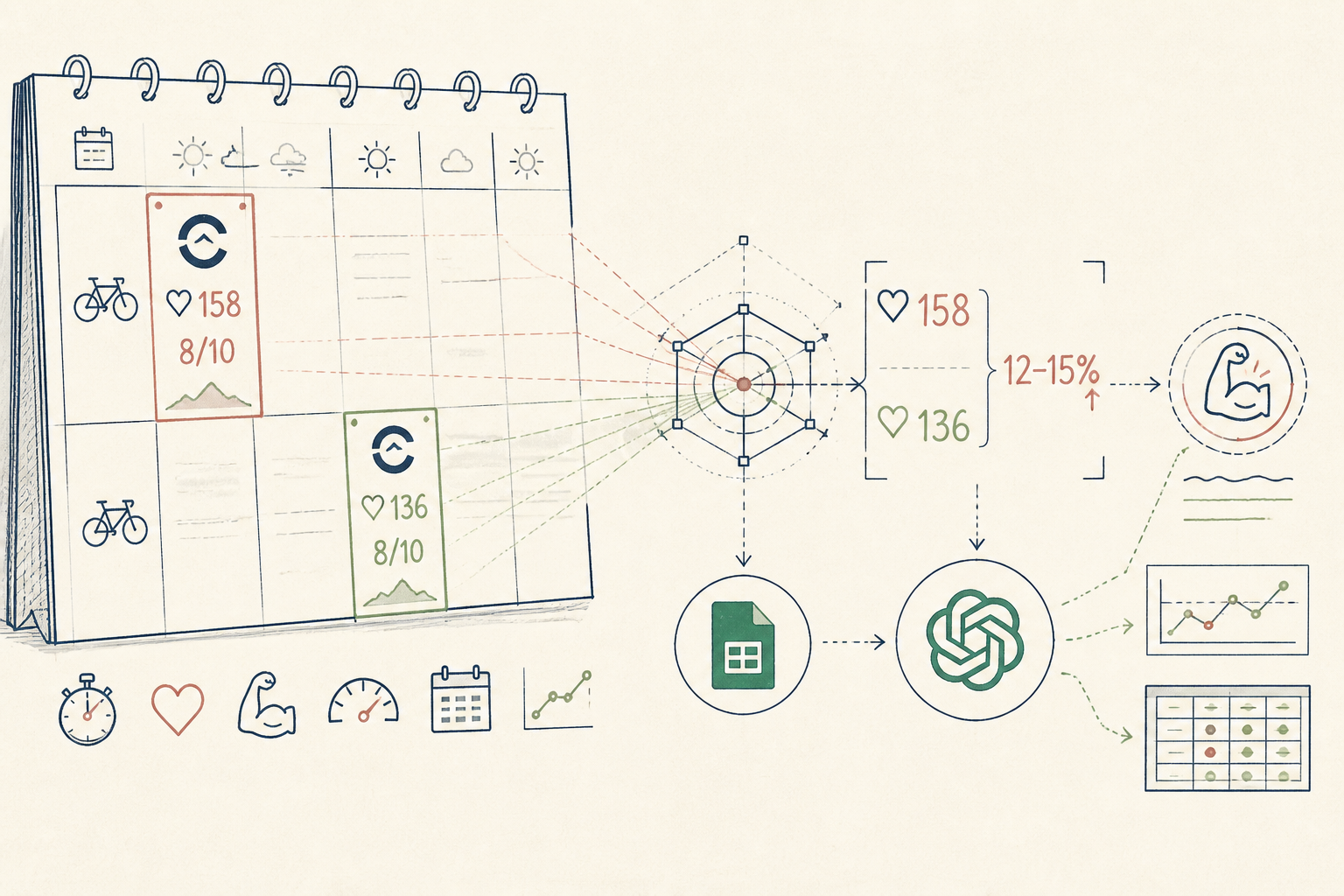
Weekly Cycle Insights from Disparate Data
“Your Tuesday morning rides consistently show a 12-15% higher average heart rate for the same perceived effort compared to Thursday rides, suggesting cumulative fatigue rather than environmental factors.”
Disparate fitness data, unanalysedClear weekly fatigue patterns identified
Tools used
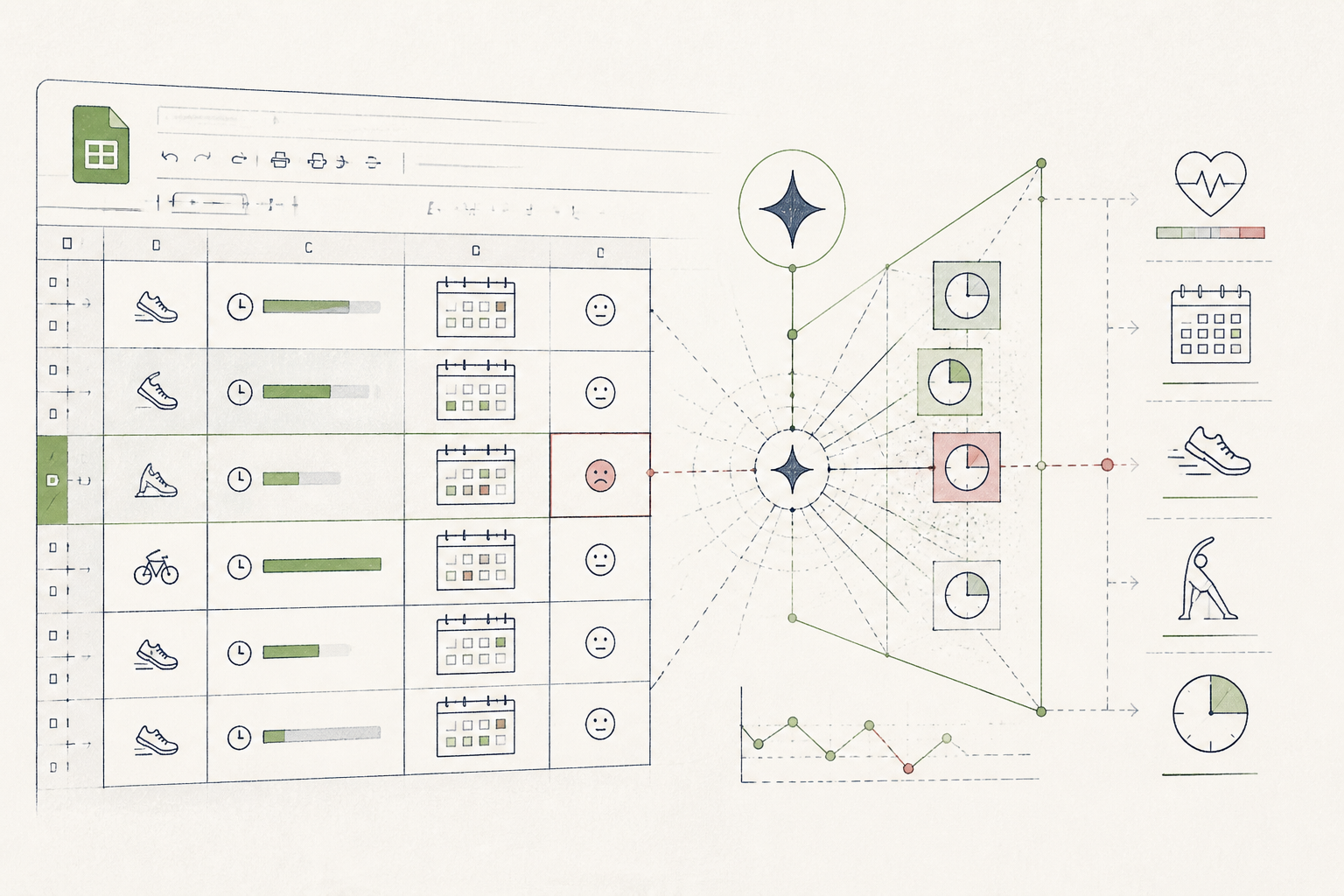
Weekly Movement Review, Accelerated
“AI found that clients who reported feeling "stiff" on Monday mornings consistently had less than 15 minutes of zone 2 cardiovascular activity the preceding Saturday, regardless of total weekly training volume.”
Hours collating client training logs manually6-minute AI-assisted movement review
Tools used
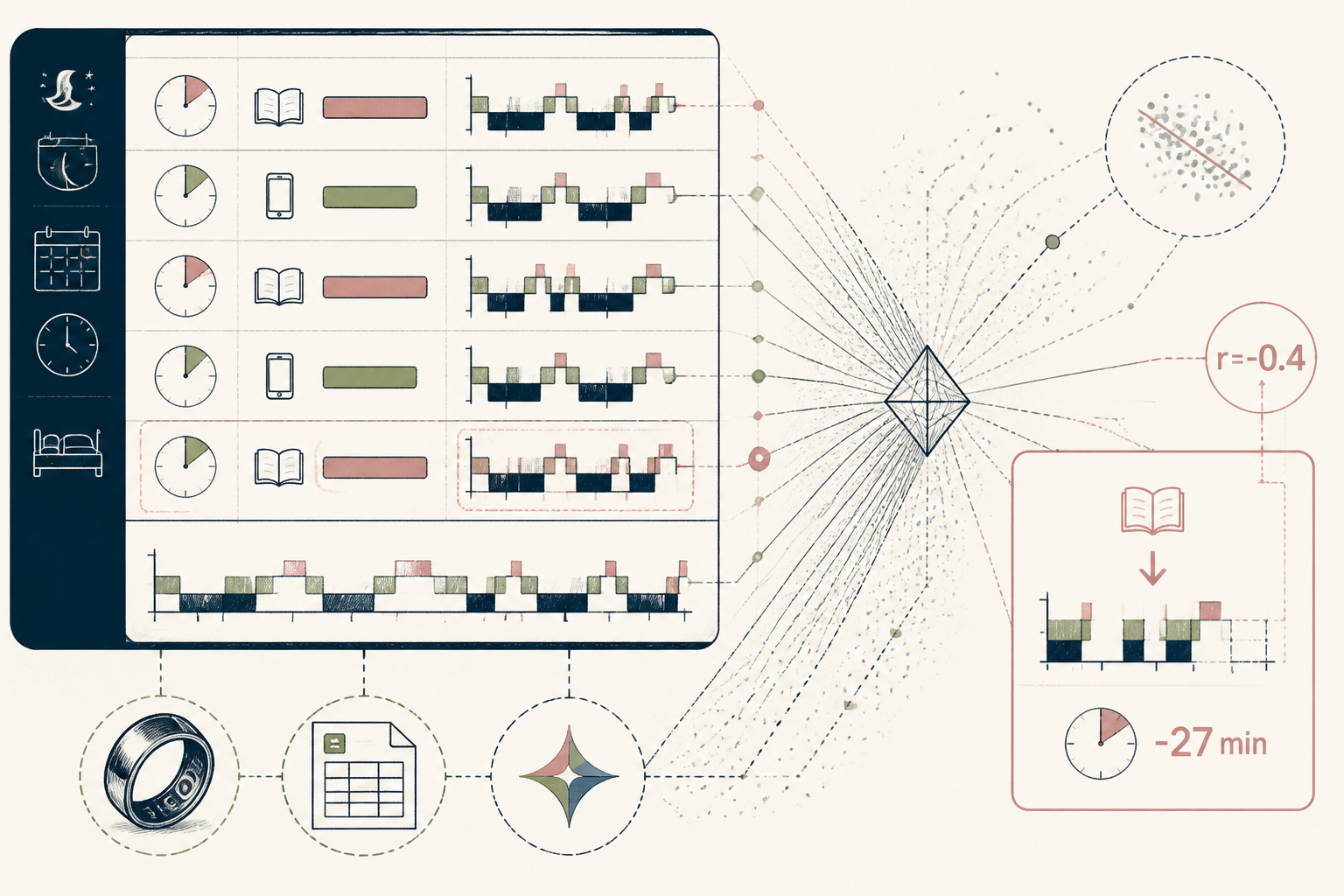
One Simple Change: A Daily Habit Shift for Deeper Sleep
“AI: 'Your deep sleep correlation with evening screen time is unexpectedly low (r=0.15). Instead, a moderate inverse correlation (r=-0.4) exists with active reading post-21:00, reducing deep sleep by an average of 27 minutes.'”
Assumed screen time was the sleep thiefOptimised wind-down for deeper rest
Tools used
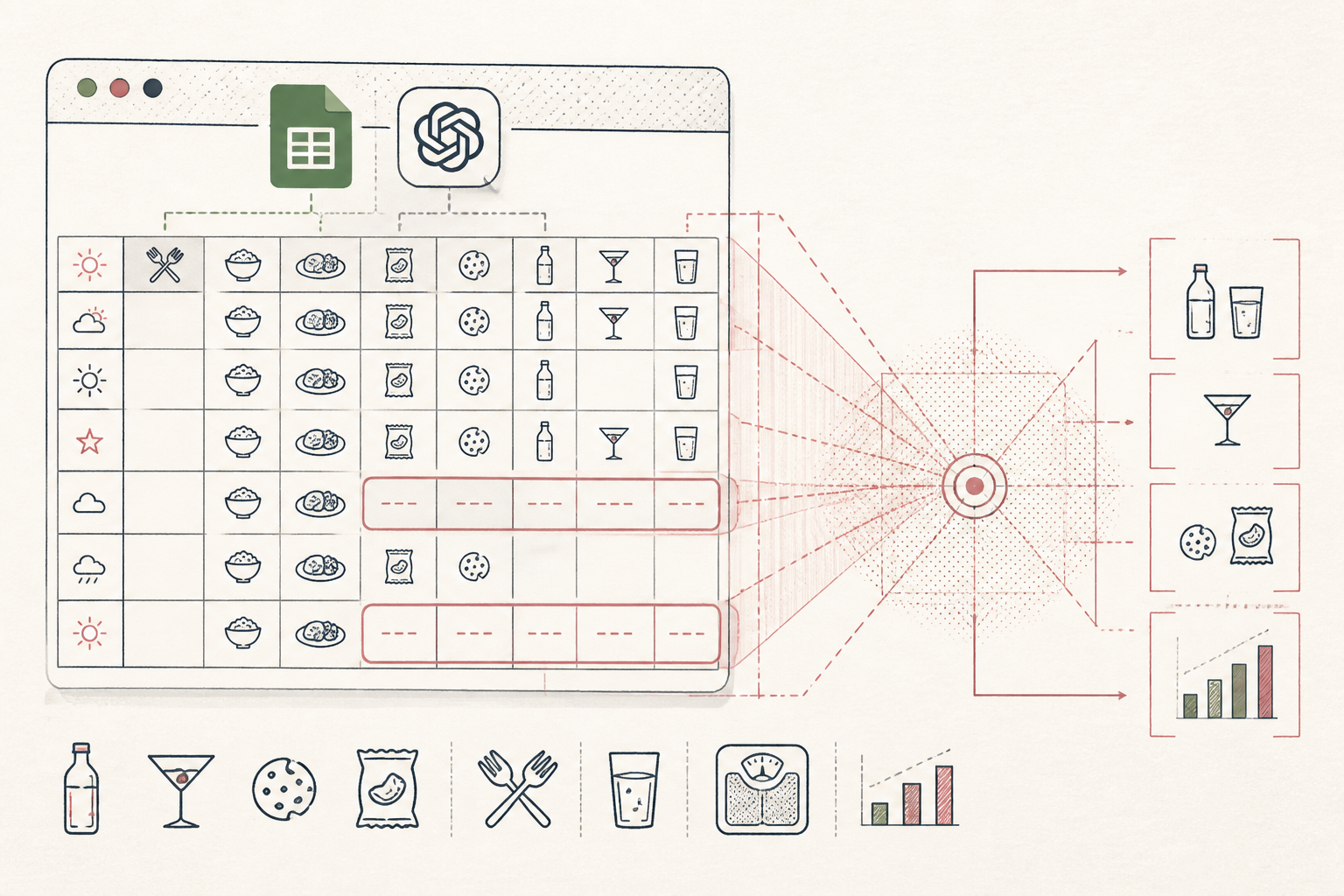
Calorie Balance Audit Uncovers Hidden Trends
“In clients with unexpected weight plateaus, the AI consistently identified a 15-20% underestimation of calorie intake on "cheat days," primarily from liquid calories and untracked snacks, rather than main meals.”
Manual calorie tracking and slow trend identificationAutomated trend spotting, faster client insights
Tools used
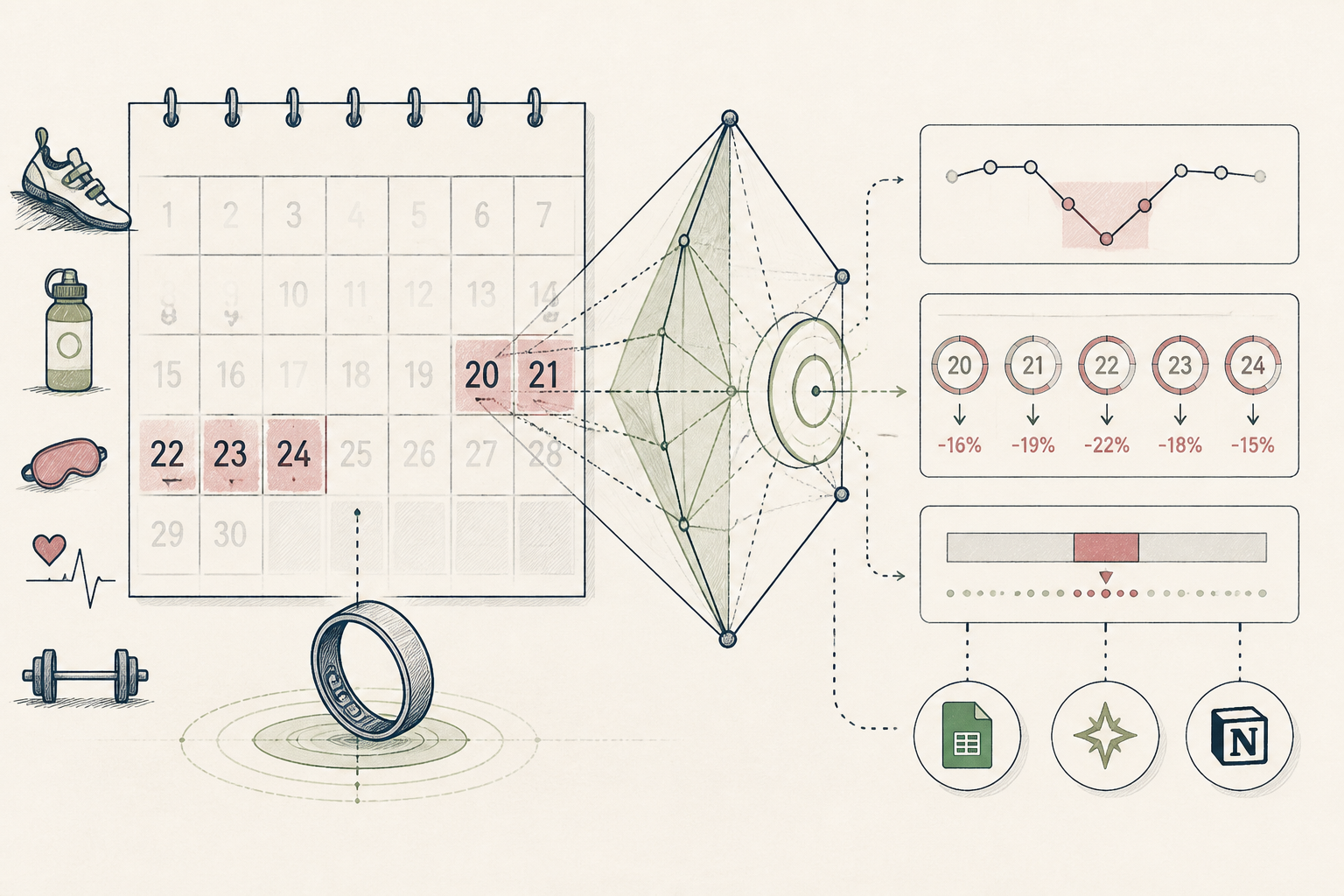
The Discreet Cycles of an Amateur Climber
“Your recovery scores consistently dip by an average of 18% during days 20-24 of your cycle, indicating this is your lowest energetic phase, not days 1-3 as you’d assumed.”
Vague cycle tracking, ignored recovery scoresClear recovery patterns, proactive training adjustments
Tools used
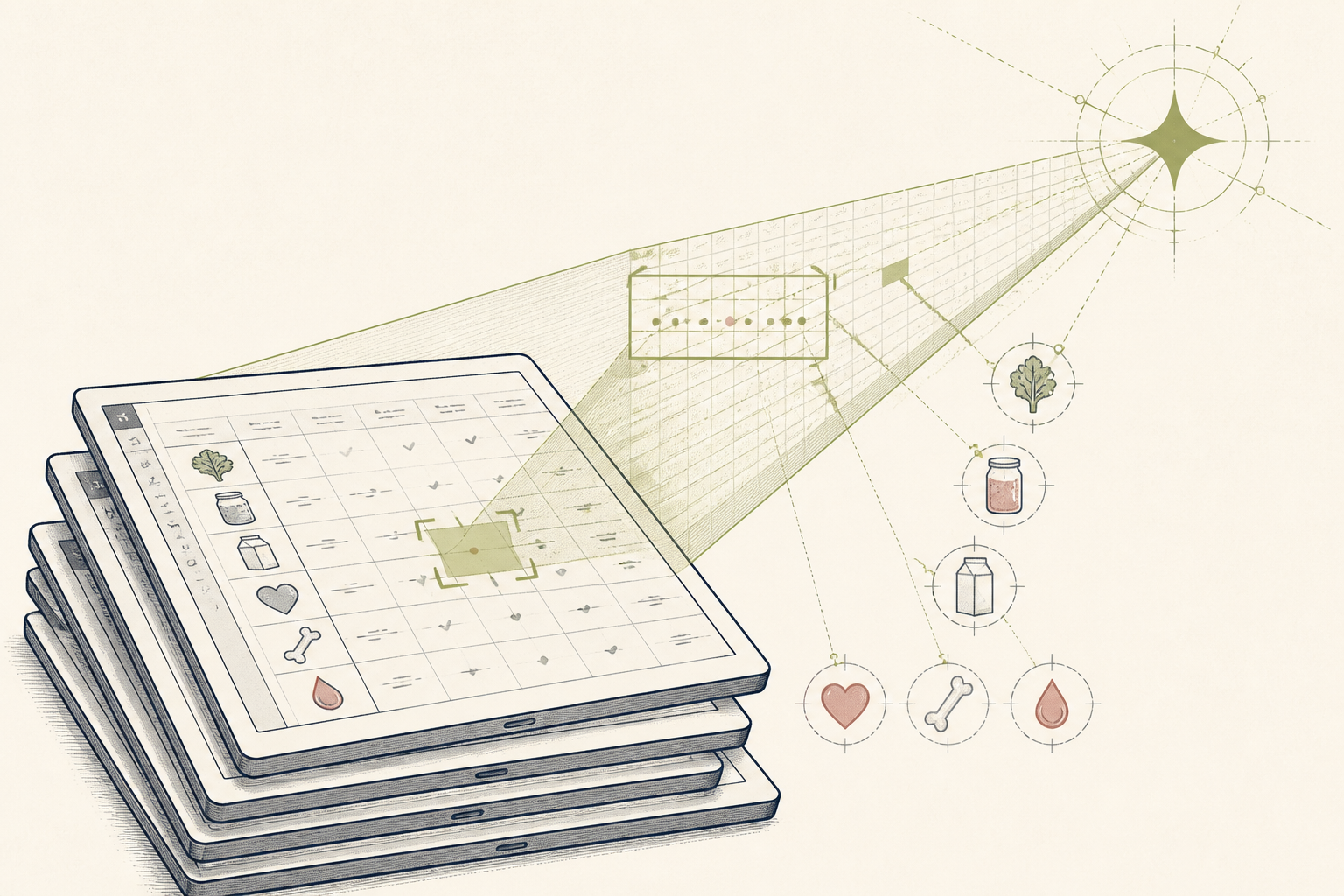
The Anti-Inflammatory Audit
“Over 60% of clients demonstrated a consistent deficiency in Vitamin K2 (menaquinone) across their dietary logs, a nutrient crucial for cardiovascular and bone health often overlooked in standard intake assessments.”
Reactive recommendations, generalised adviceProactive, data-backed dietary insights
Tools used
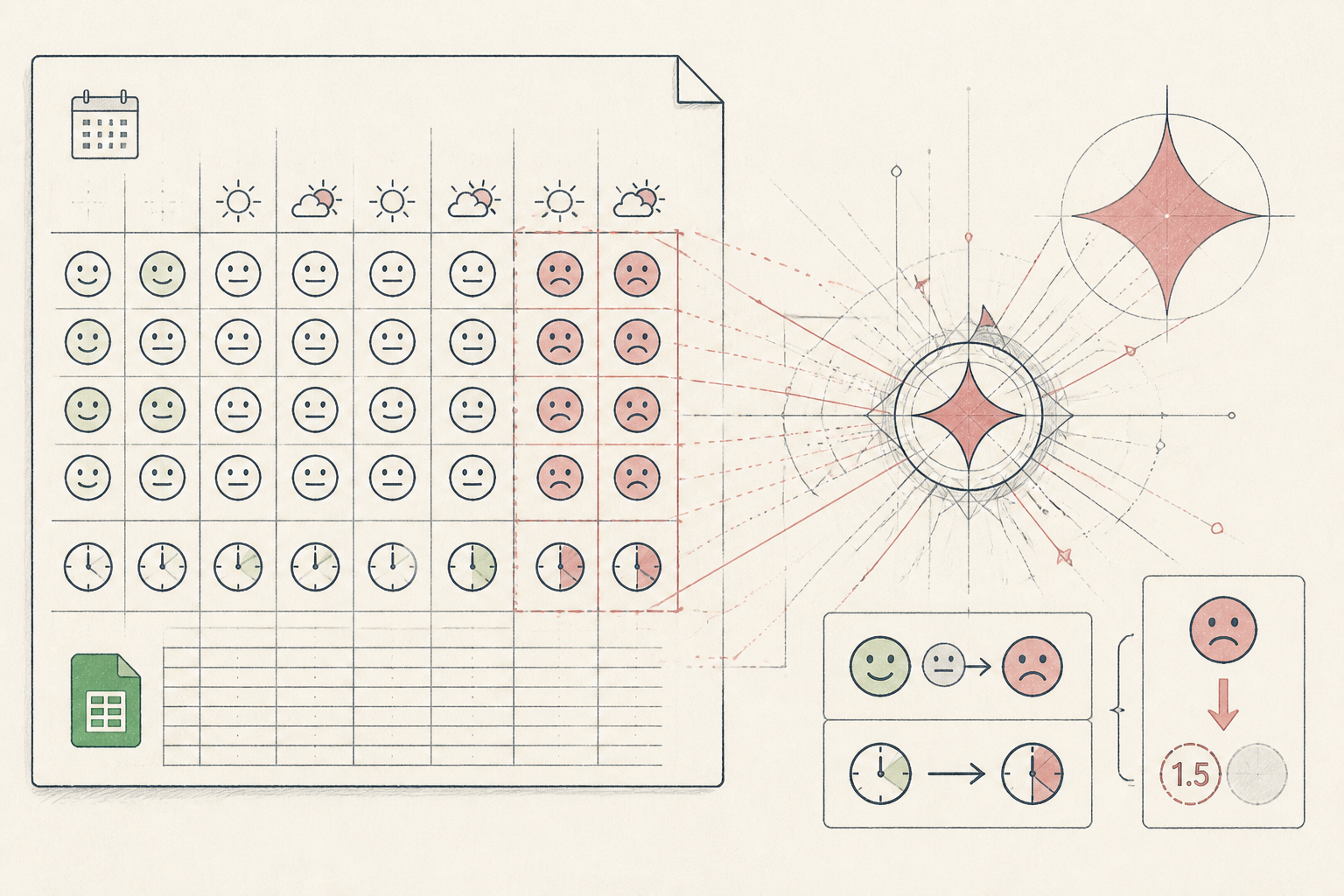
Weekly Mood Check-in Reveals Surprising Link to Lunch Timing
“Your mood score consistently dips by an average of 1.5 points on days when lunch is delayed beyond 14:00, regardless of sleep duration or morning activity.”
Unstructured daily mood notesActionable weekly mood insights
Tools used
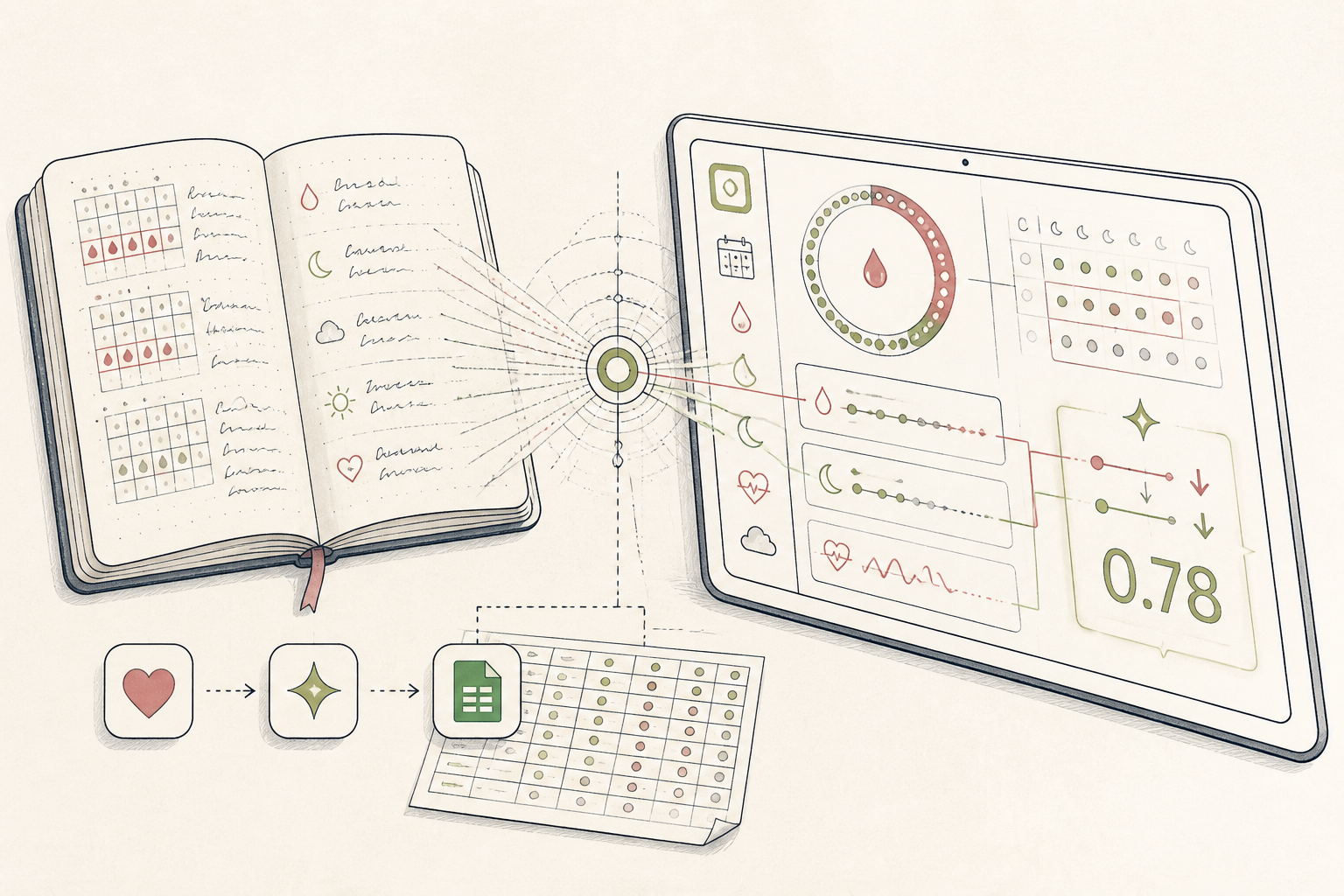
From Scattered Notes to Focused Period Tracking
“"Your luteal phase consistently shortens by 1.5 days when your deep sleep average drops below 6.5 hours in the preceding follicular phase – a correlation of 0.78, which is higher than expected."”
Disparate cycle logs, no clear insightsIntegrated cycle data with actionable sleep-phase correlations
Tools used
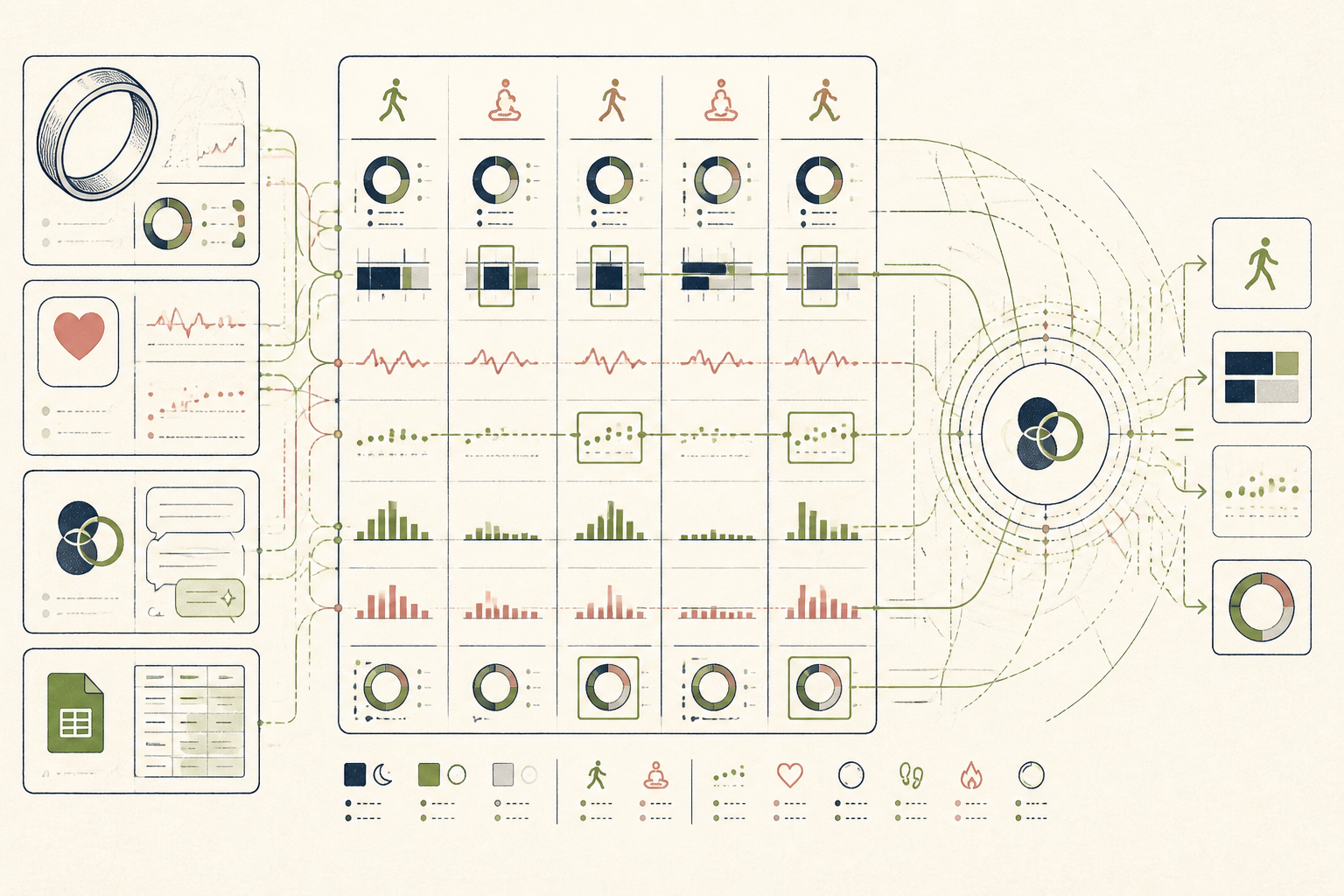
From Fragmented Health Data to a Clear Recovery Signal
“Your most restorative sleep nights consistently followed days with a 'recovery walk' of at least 45 minutes, even more so than planned rest days, by an average of 18 minutes of deep sleep.”
Disparate data across 4 apps, no clear patternsOne consolidated view, clear recovery insights
Tools used
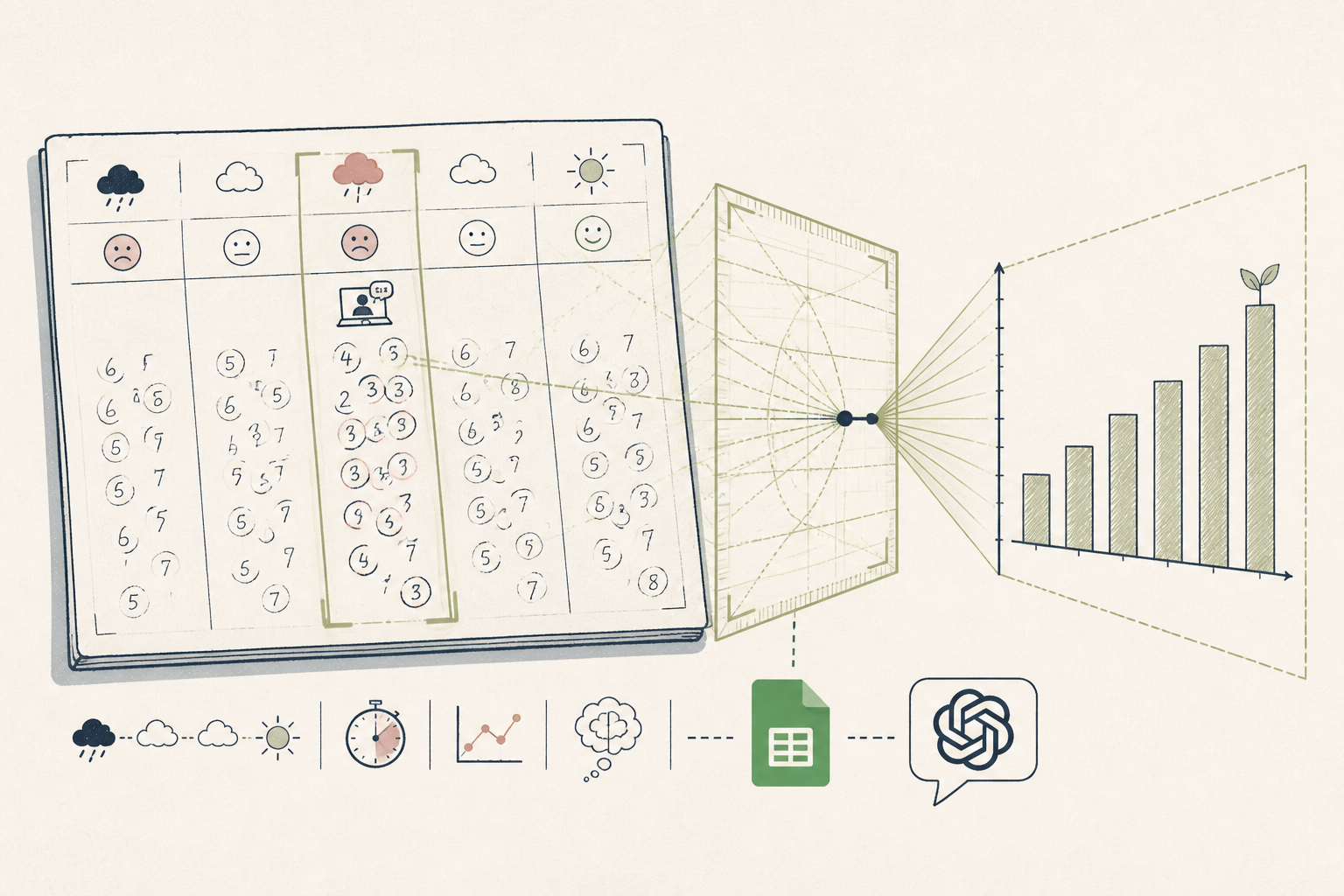
Mood Tracking with AI: From Vague Impressions to Actionable Insights
“Your lowest reported mood scores consistently fall on Wednesday afternoons, averaging a 4.2 out of 10, coinciding with your longest client consultation bloc of the week.”
Subjective Mood DiaryData-Driven Mood Insights
Tools used
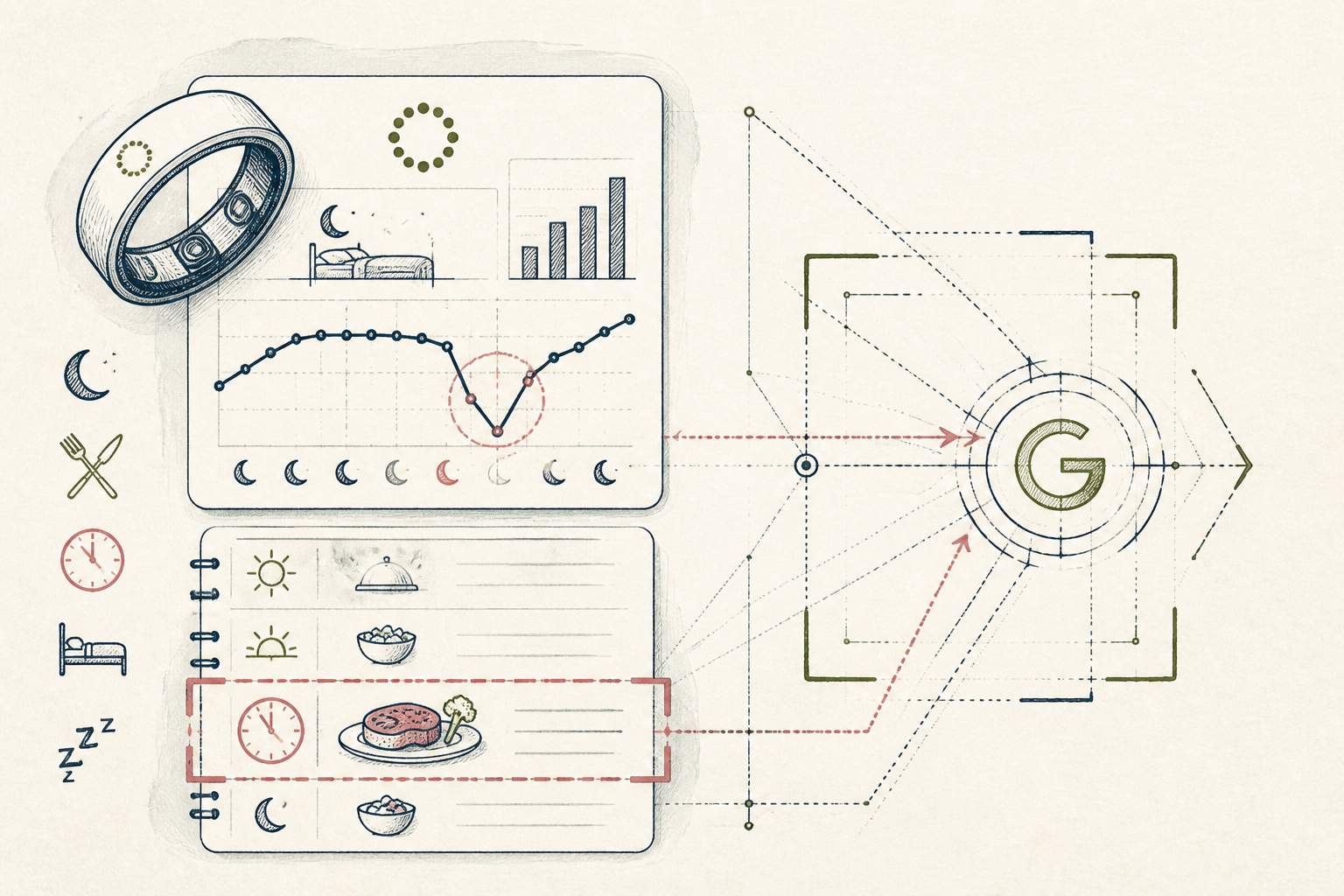
Weekly Sleep Review: Identify the Real Disruptors
“Your sleep consistency dipped most significantly (by 18% on average) on nights following large protein intake after 8 PM, not due to your perceived enemy, evening screen time.”
Disjointed sleep data, vague assumptionsFocused weekly insights, actionable changes
Tools used
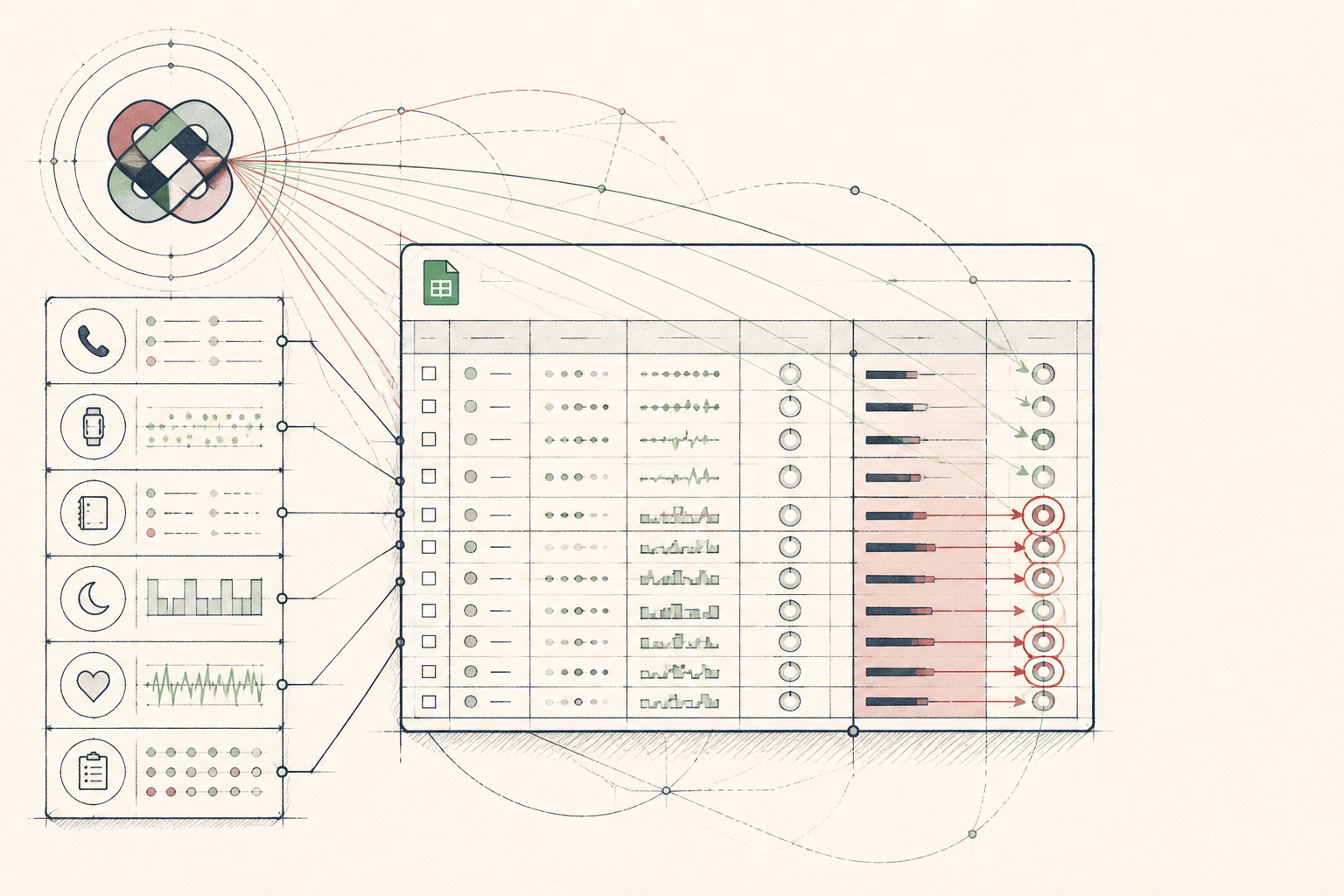
From Hazy Notions to Targeted Recovery
“AI found that clients consistently logged 15-20% lower subjective recovery scores on days following client calls exceeding 45 minutes, a pattern previously attributed to training load.”
Intuitive weekly adjustmentsData-driven micro-adjustments in minutes
Tools used
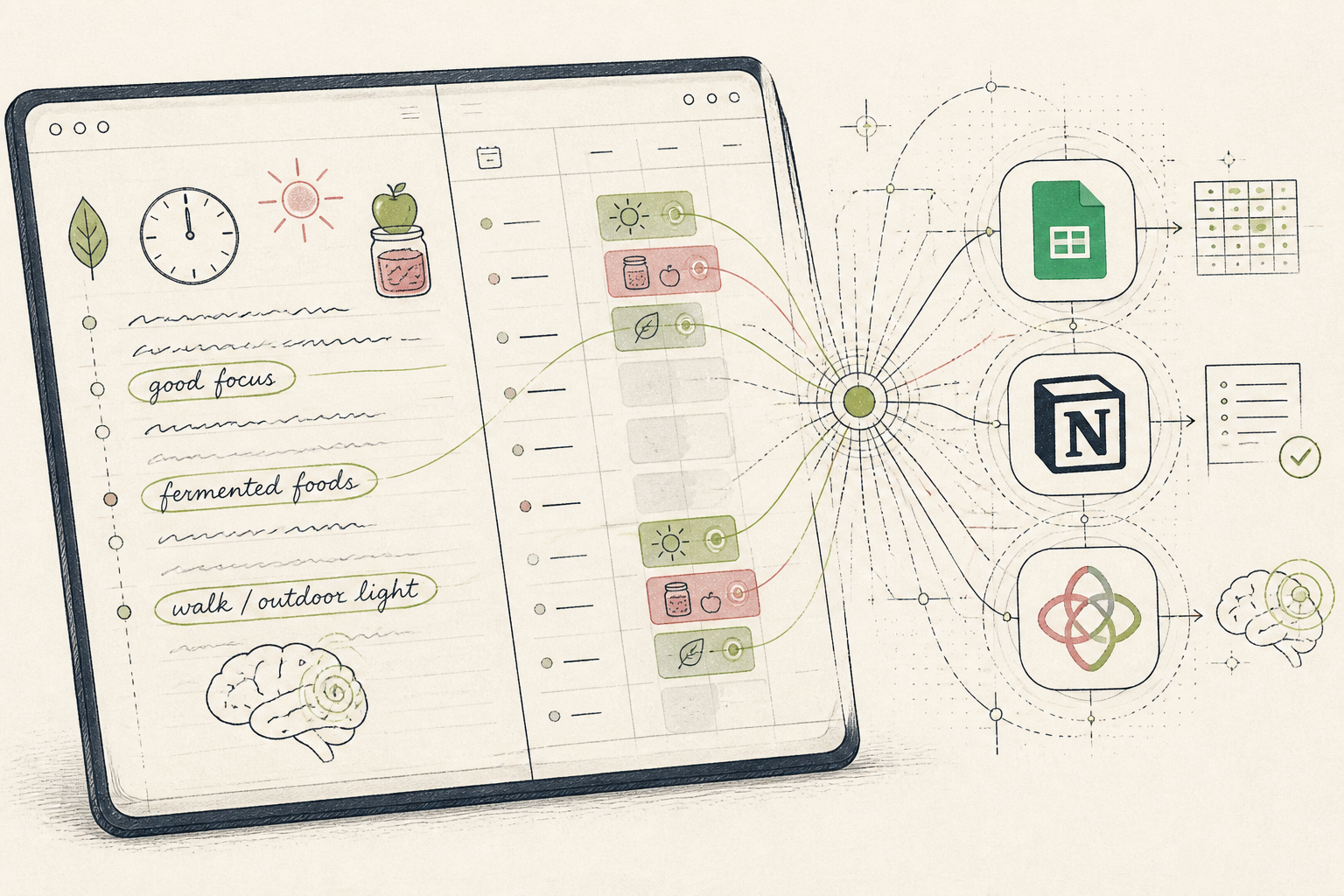
From Scattered Notes to Focused Clarity on Cognitive Boosters
“Your three most productive workdays directly followed consumption of fermented foods at breakfast and coincided with at least 20 minutes of outdoor light exposure before 9 AM.”
Amorphous daily observations on cognitive functionStructured, evidence-backed insights for daily routine
Tools used
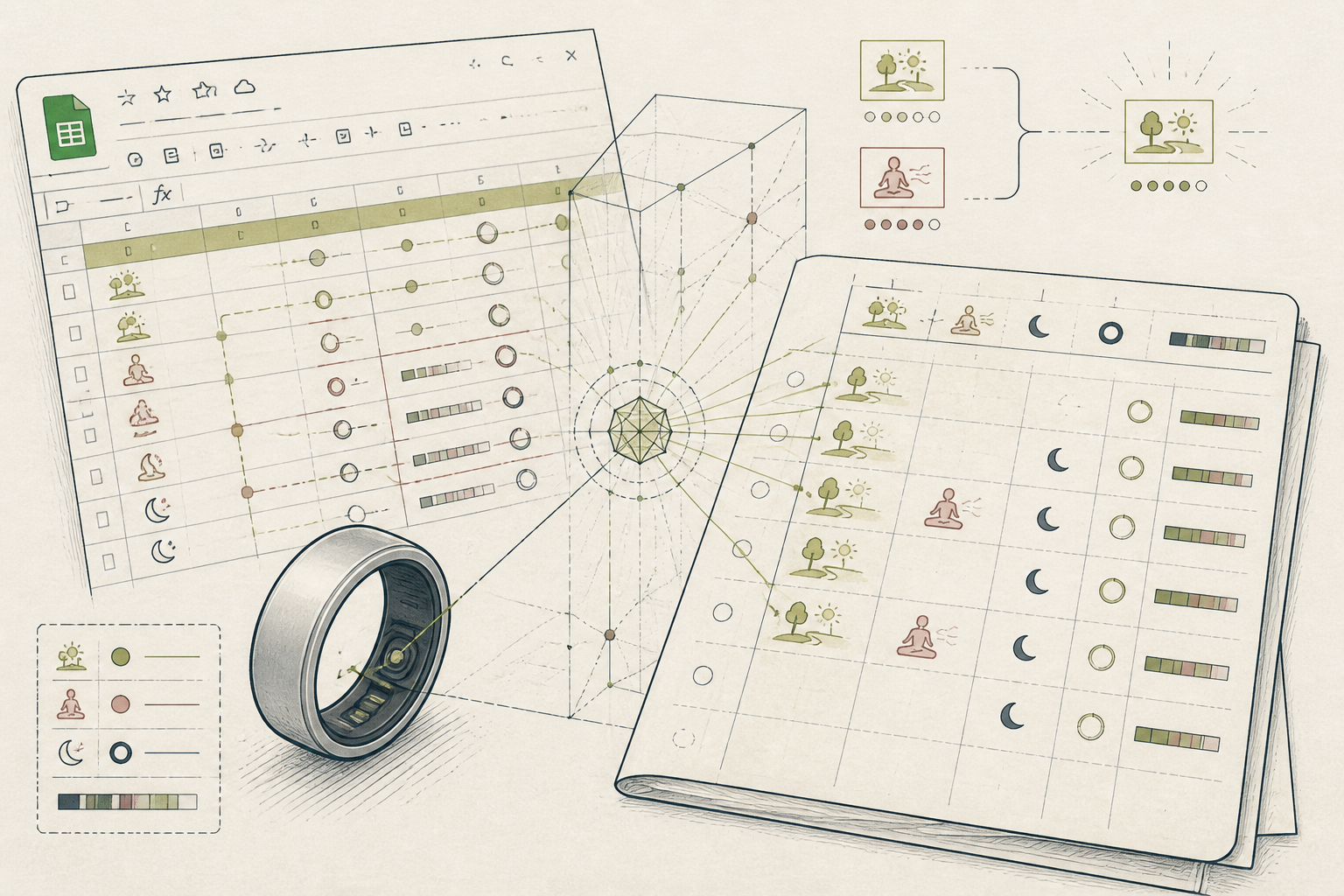
From Haphazard Insights to Focused Sleep Improvement
“The AI observed, 'Your sleep consistency scores improved by an average of 1.2 points on days following morning outdoor walks, a more significant improvement than achieved by your evening breathwork practice.'”
Disparate sleep data, no clear patternsActionable insights for sleep consistency
Tools used
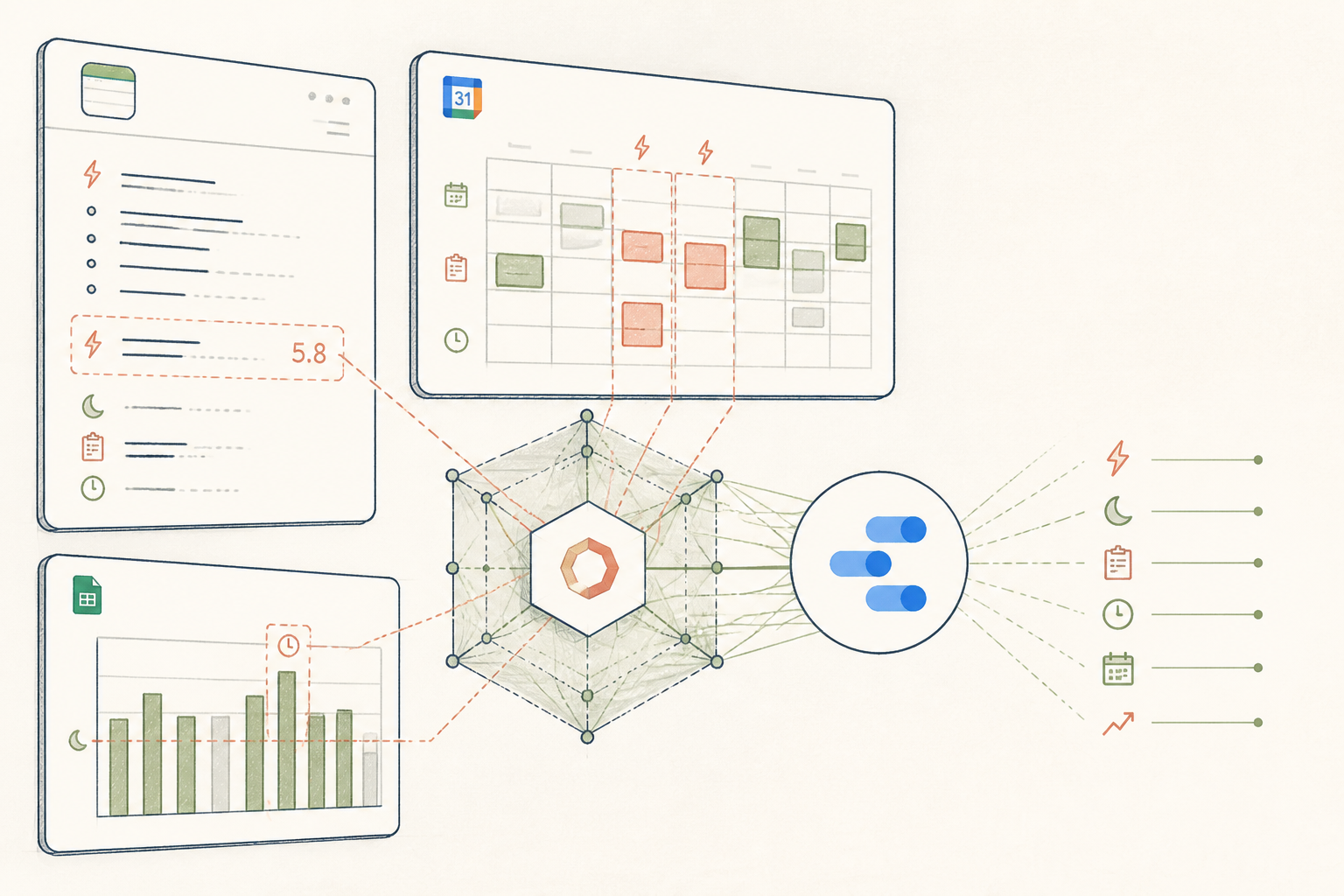
From Scattered Notes to Clear Energy Patterns
“Your most significant energy dips (average 5.8 on a 10-point scale) consistently occurred on Tuesdays and Wednesdays, following days with less than 6.5 hours of sleep and high meeting loads (3+ hours).”
Disparate energy logs across appsUnified insights, clear weekly patterns
Tools used
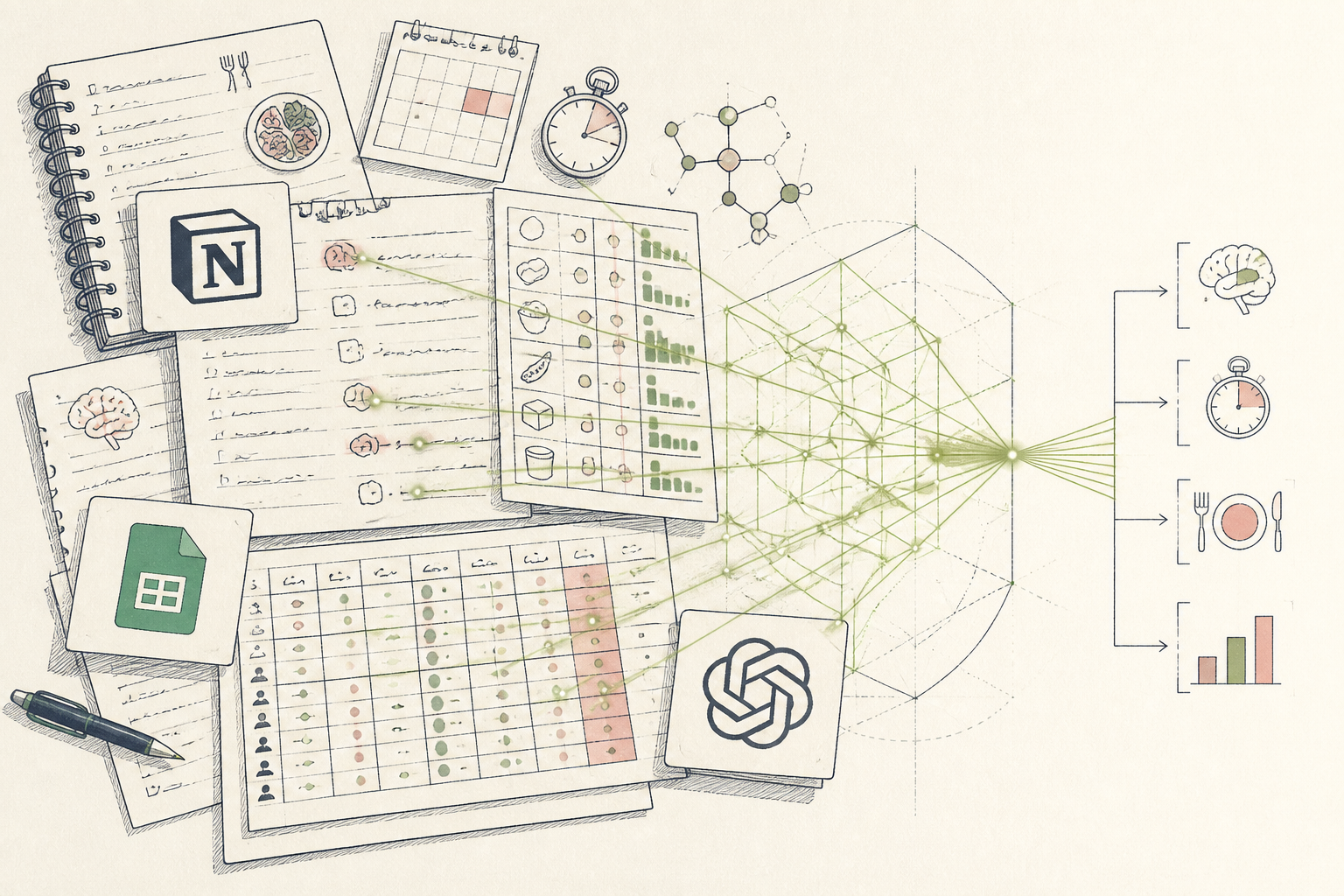
From Scattered Notes to Targeted Cognition Protocol
“AI identified that 78% of reported "brain fog" incidents in clients correlated with daily protein intake below 0.8g/kg body weight, even when other macros were sufficient.”
Client notes scattered, insights missedAI uncovers hidden dietary patterns
Tools used
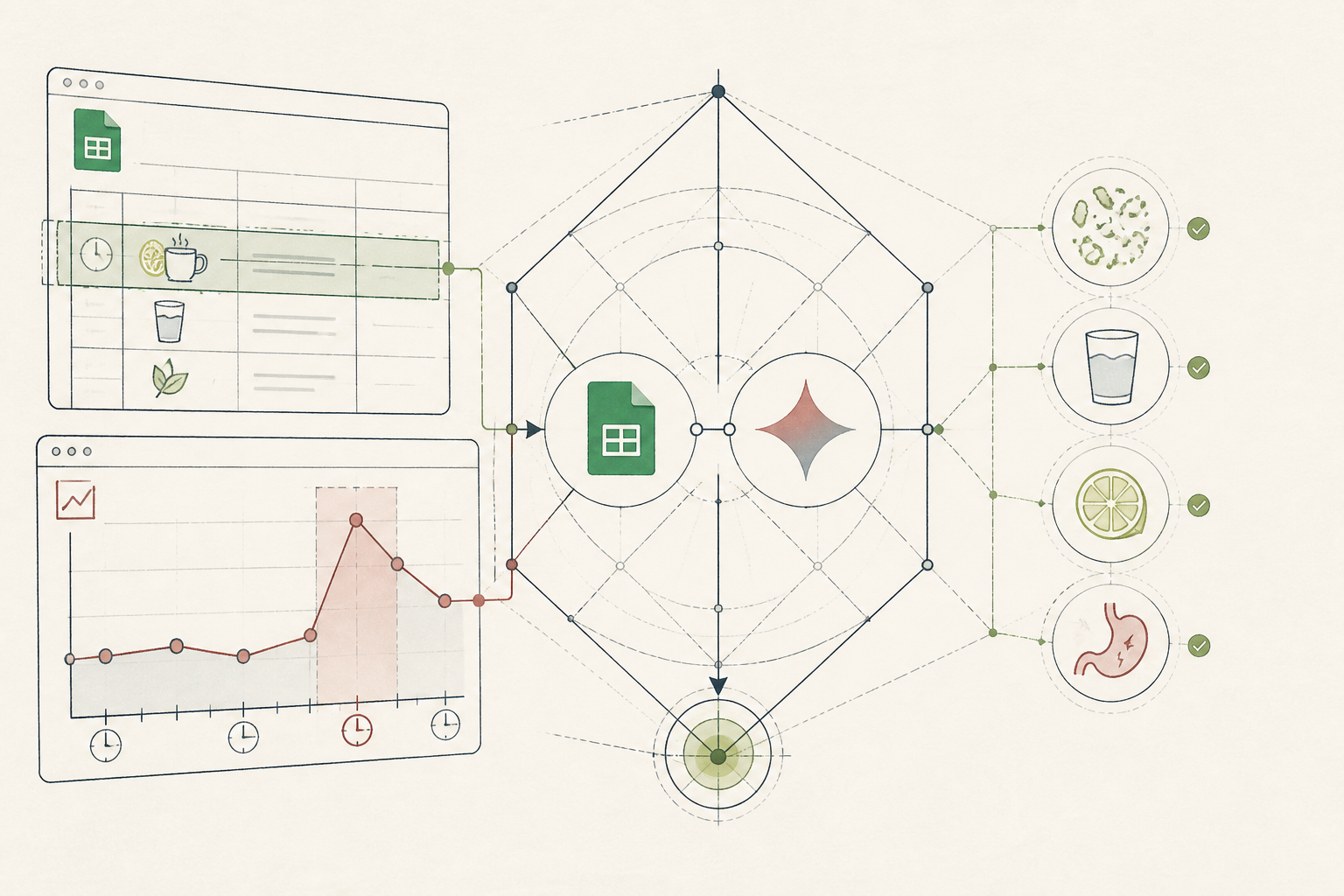
One Small Shift, Measurable Gut Impact
“Your daily hot lemon water, intended for hydration, consistently precedes a 20-30% increase in gut discomfort measurements within two hours, a pattern not seen with plain water or herbal tea.”
Vague discomfort, daily guessing, no patternsClear triggers, targeted adjustments, 18% less discomfort
Tools used
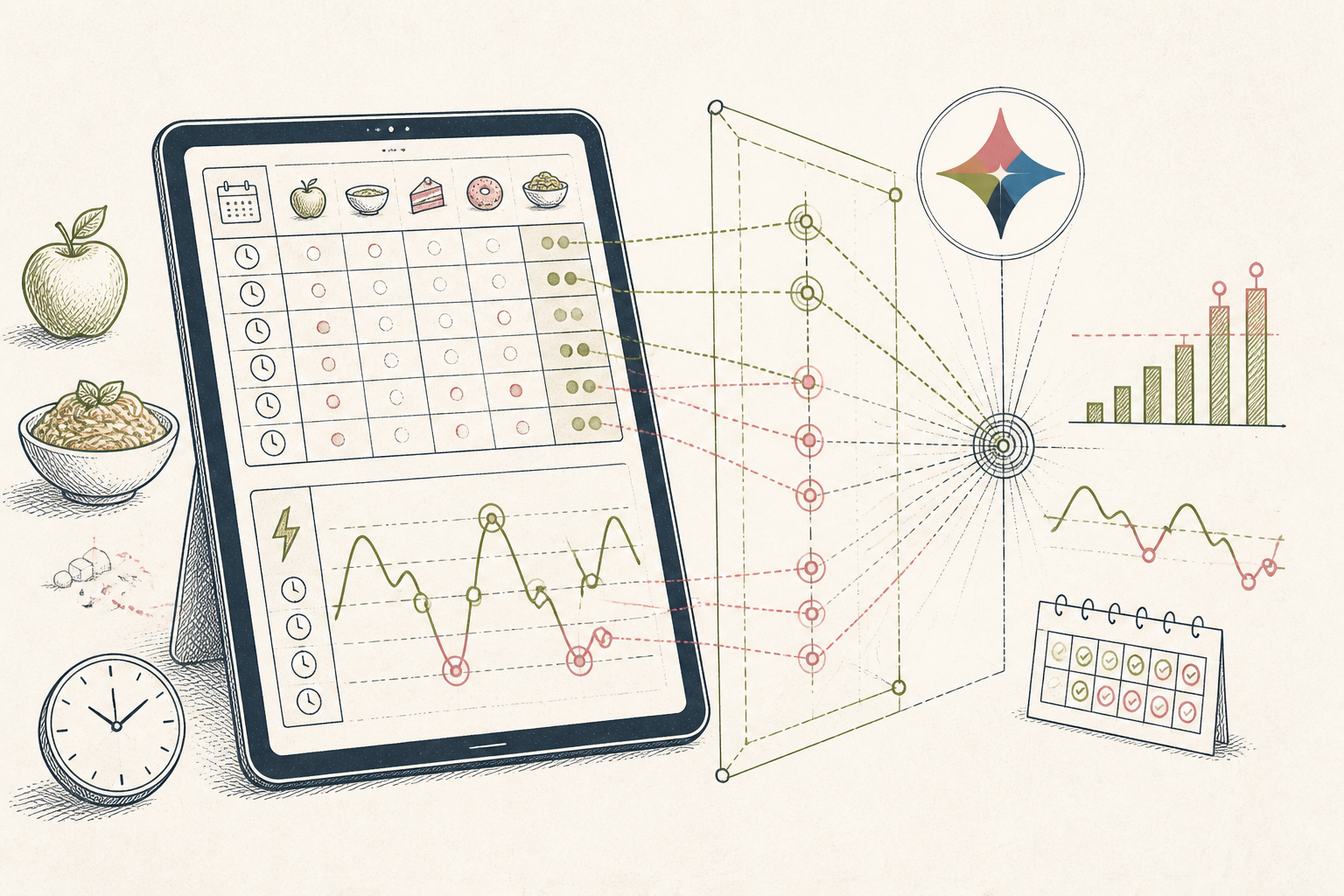
From Scattered Notes to Insight: Tailored Client Energy Protocol
“Your client's energy dips consistently align with days she consumes more than 40g of refined carbohydrates, rather than her perceived cause of 'stressful meetings.'”
Disjointed client notes, unclear patternsClear energy insights, personalised protocols
Tools used

Weekly Stress Review identifies hidden patterns
“Your stress peaks correlate significantly with social media use exceeding two hours, specifically on days following less than 6.5 hours of sleep, identifying a 73% predictability rate for elevated stress scores.”
Stress tracked variably across appsIdentified specific stress triggers with 73% confidence
Tools used
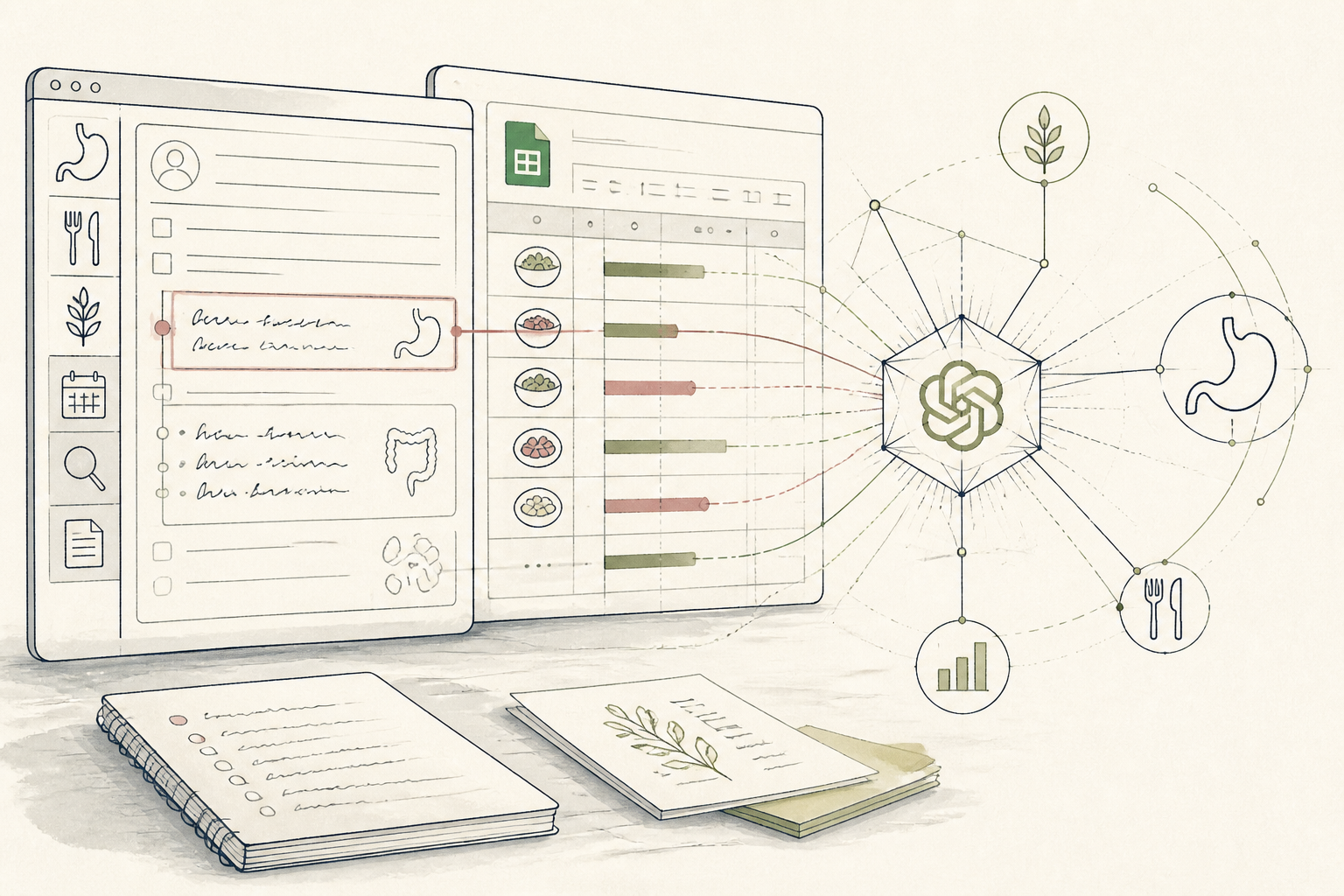
From Scattered Notes to Targeted Gut Support
“AI found that clients reporting \"post-lunch bloating\" also consistently showed a 40% lower average intake of fermentable fibres on those specific days, indicating a potential dietary pattern rather than general digestive weakness as the primary trigger.”
Disparate client notes, manual correlation attemptsTargeted insights, 4-hour weekly time saving
Tools used
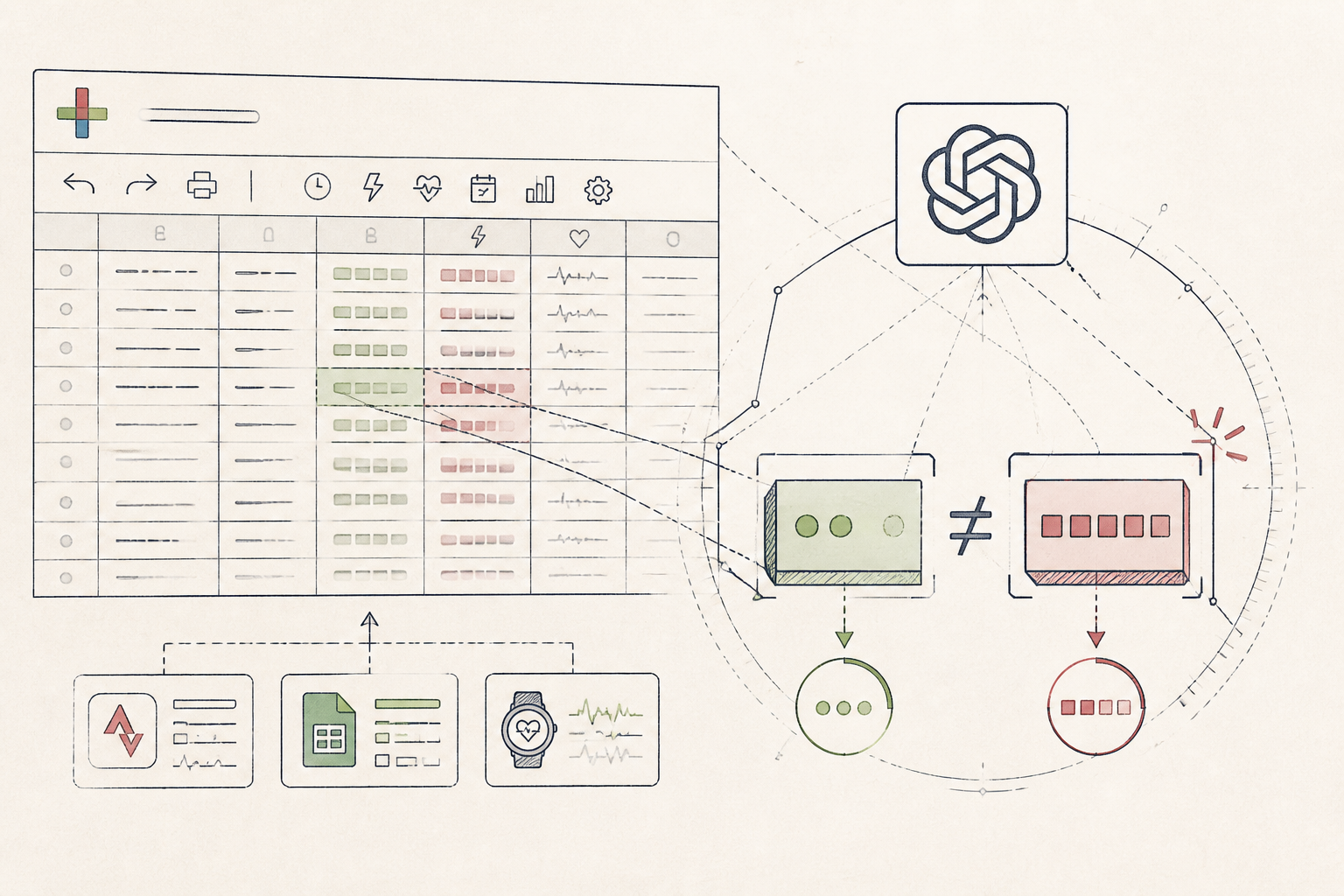
From Haphazard Cycling to Structured Progress
“Your Tuesday morning rides, despite being marked "easy," consistently averaged 15% higher power output than your designated moderate effort zone, indicating an opportunity for more effective zone training.”
Disparate ride data, no performance insightsConsolidated insights, guided training adjustments
Tools used
- —
A solo practitioner installs a Townie in one afternoon — and gets Sunday back.
“The tool is not the win. The habit is. Ana replaced four hours of Sunday review with a Monday-morning brief she reads over coffee.”
Sunday review taking four hours, nothing automated, drafts written from a cold read.Monday 7am brief in her inbox, drafts pre-written from her folder, nothing crosses the human edge without her.
Tools used
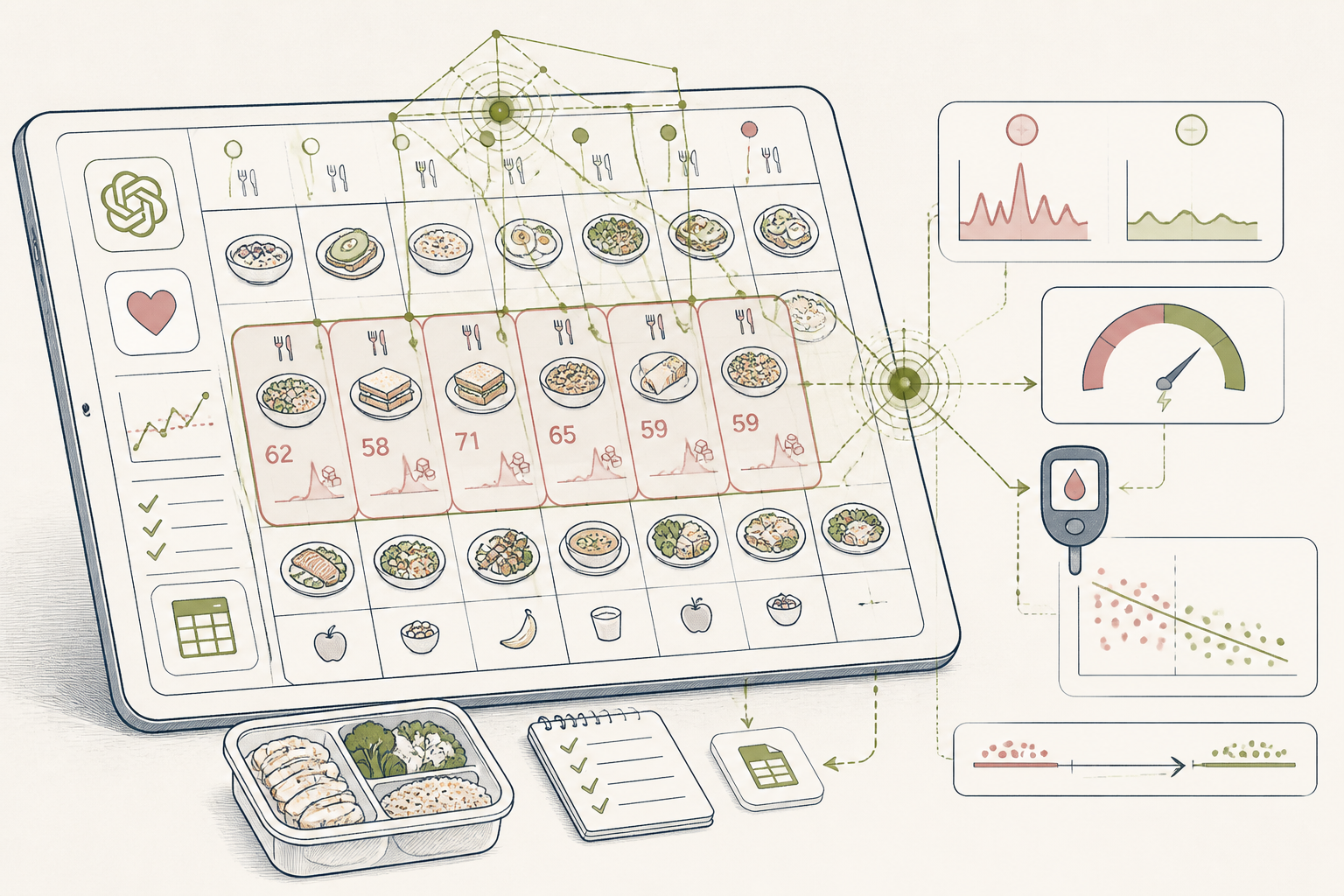
Weekly Planning with AI to Stabilize Blood Sugar
“AI found that weekday lunchtime meals, specifically those containing more than 45g of carbohydrates, were consistently correlated with a 30% increase in post-meal glucose spikes compared to weekend meals with similar carbohydrate content.”
Haphazard meals, unpredictable energyAI-optimised weekly meal plan, stable energy
Tools used

A solo practitioner turns a 90-minute workshop recording into a weekly 60-second reel — in one afternoon
“ChatCut flagged that 41% of the 92-minute take was filler and repeats — and that her three sharpest teaching moments all clustered in the last 18 minutes, after the audience had loosened up.”
92-min recording, never posted4×60s reels shipped, 1 afternoon
Tools used
- —
The solo practitioner who shipped a week of reels in one afternoon.
“One consented workshop, six shipped clips, timeline never opened.”
Two months of unshipped recordings.Six vertical clips, one afternoon.
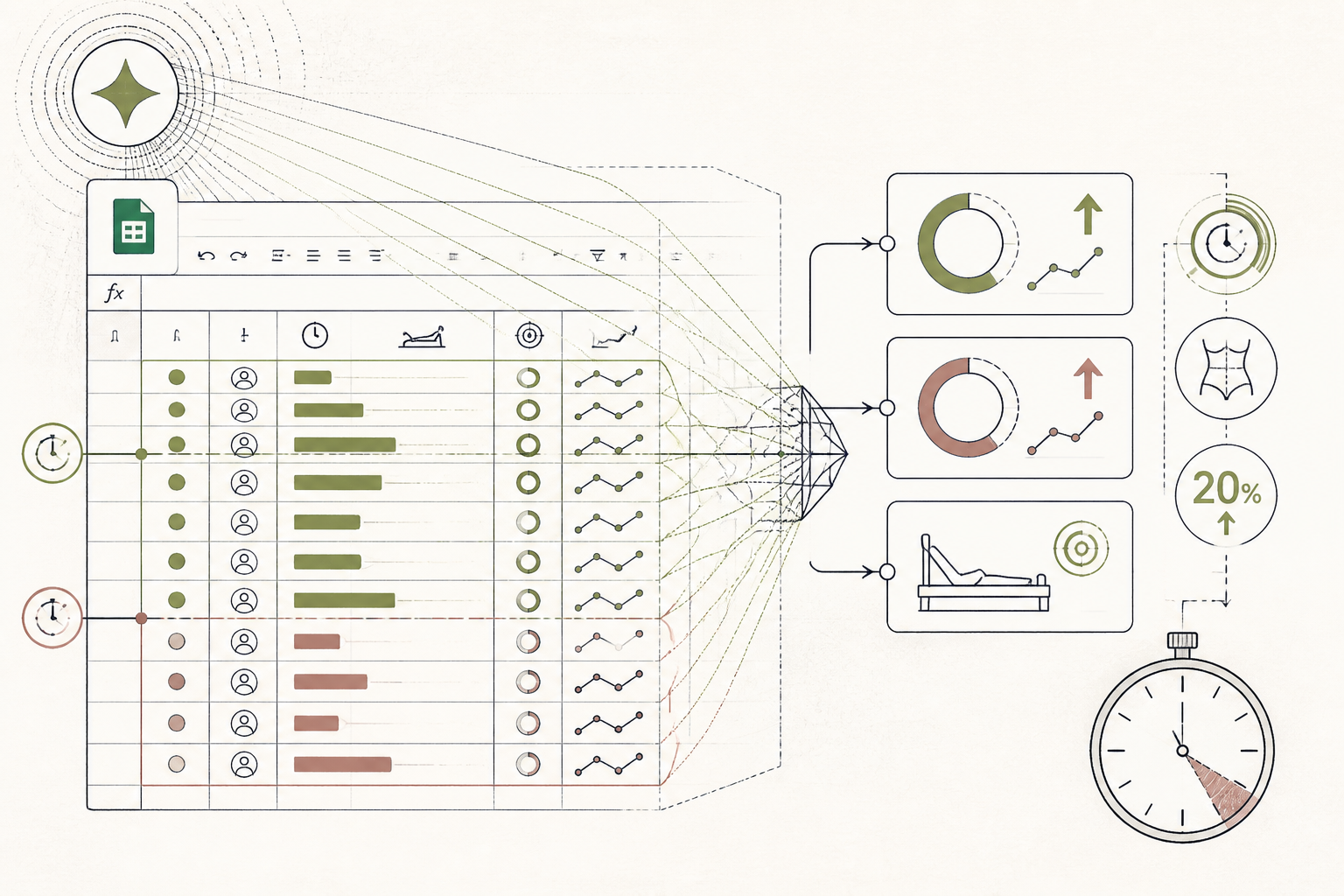
Weekly Movement Review in 7 Minutes
“Your weekly review found that clients who consistently logged over 150 minutes of moderate-intensity activity reported a 20% faster improvement in core stability metrics compared to those below 100 minutes, a correlation you previously attributed primarily to in-studio hours.”
Hour-long scattered client data reviews per week7-minute focused AI-summarised client review
Tools used
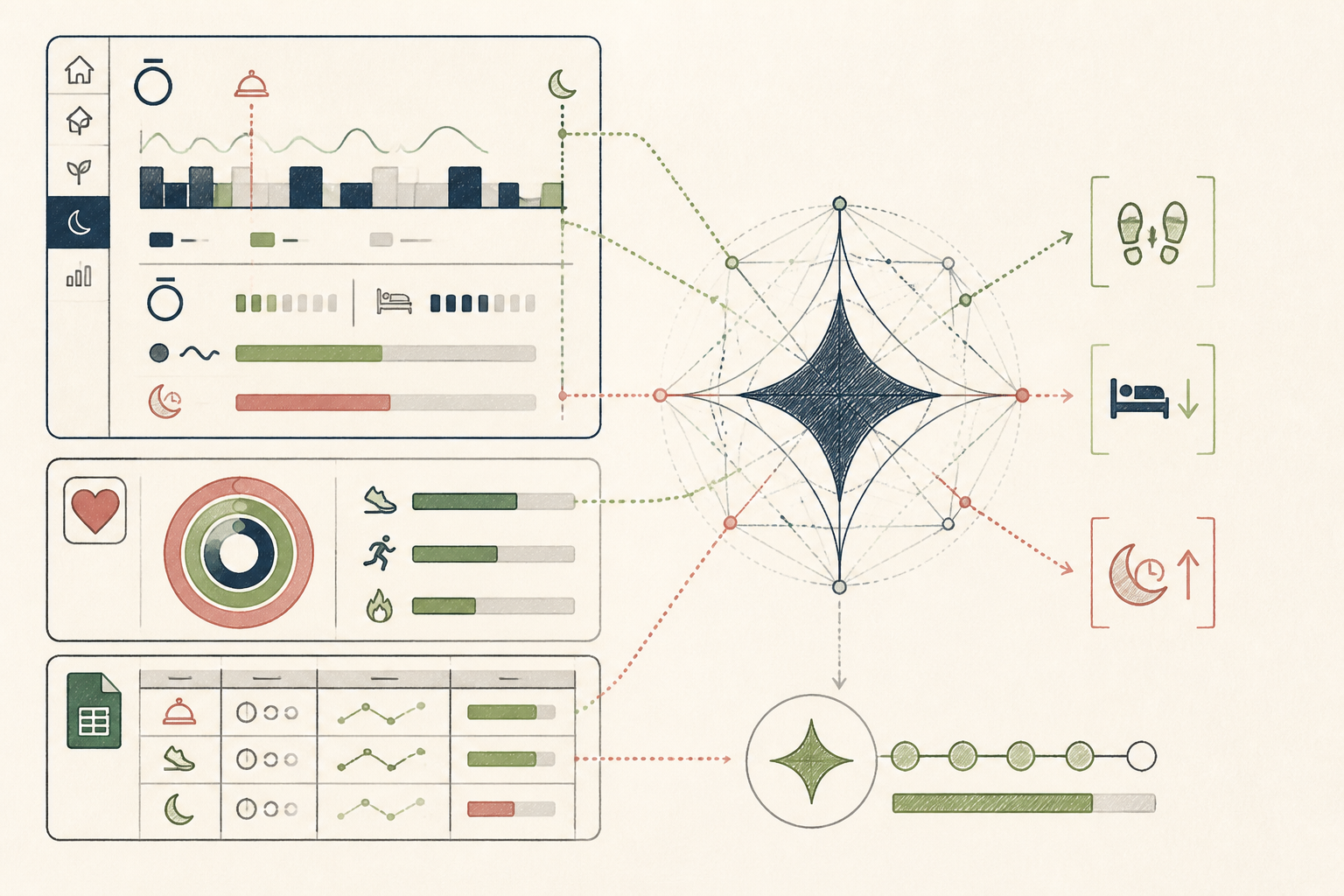
From Haphazard Tracking to Targeted Longevity Insights
“Your Oura Ring data consistently shows that evenings with fewer than 75 total steps between dinner and bedtime correlate with a 15-20% reduction in your average deep sleep duration and a 10% increase in sleep latency.”
Disparate health apps, no clear patternsIntegrated data, actionable longevity strategy
Tools used
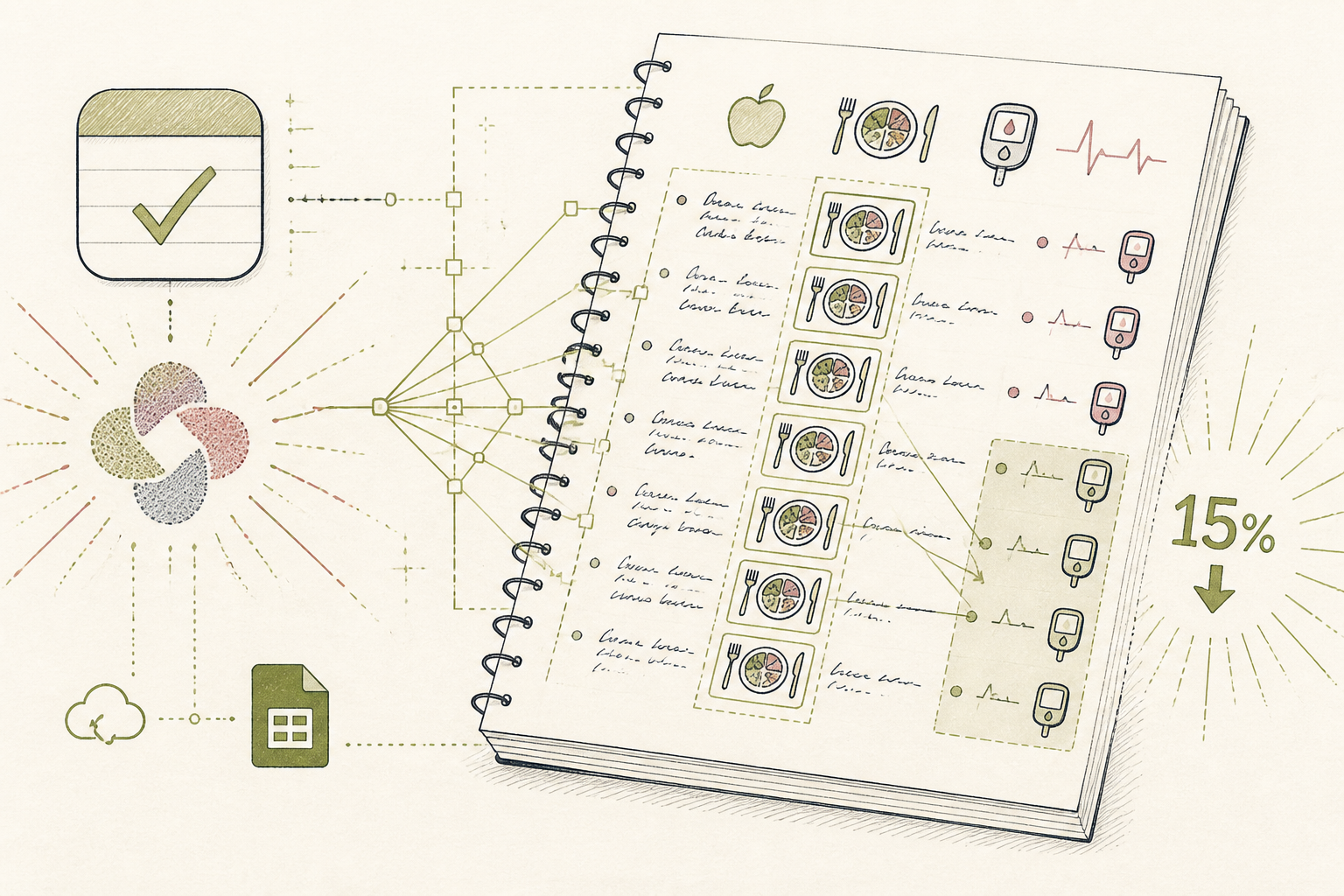
Weekly Metabolic Review in Apple Notes with AI
“AI found a consistent 15% drop in client morning glucose readings on days following a specific meal composition you noted simply as "balanced plate" – a pattern you'd missed manually scanning weeks of client logs.”
Ad-hoc client notes, no structured reviewStructured weekly metabolic insights, 15 min.
Tools used
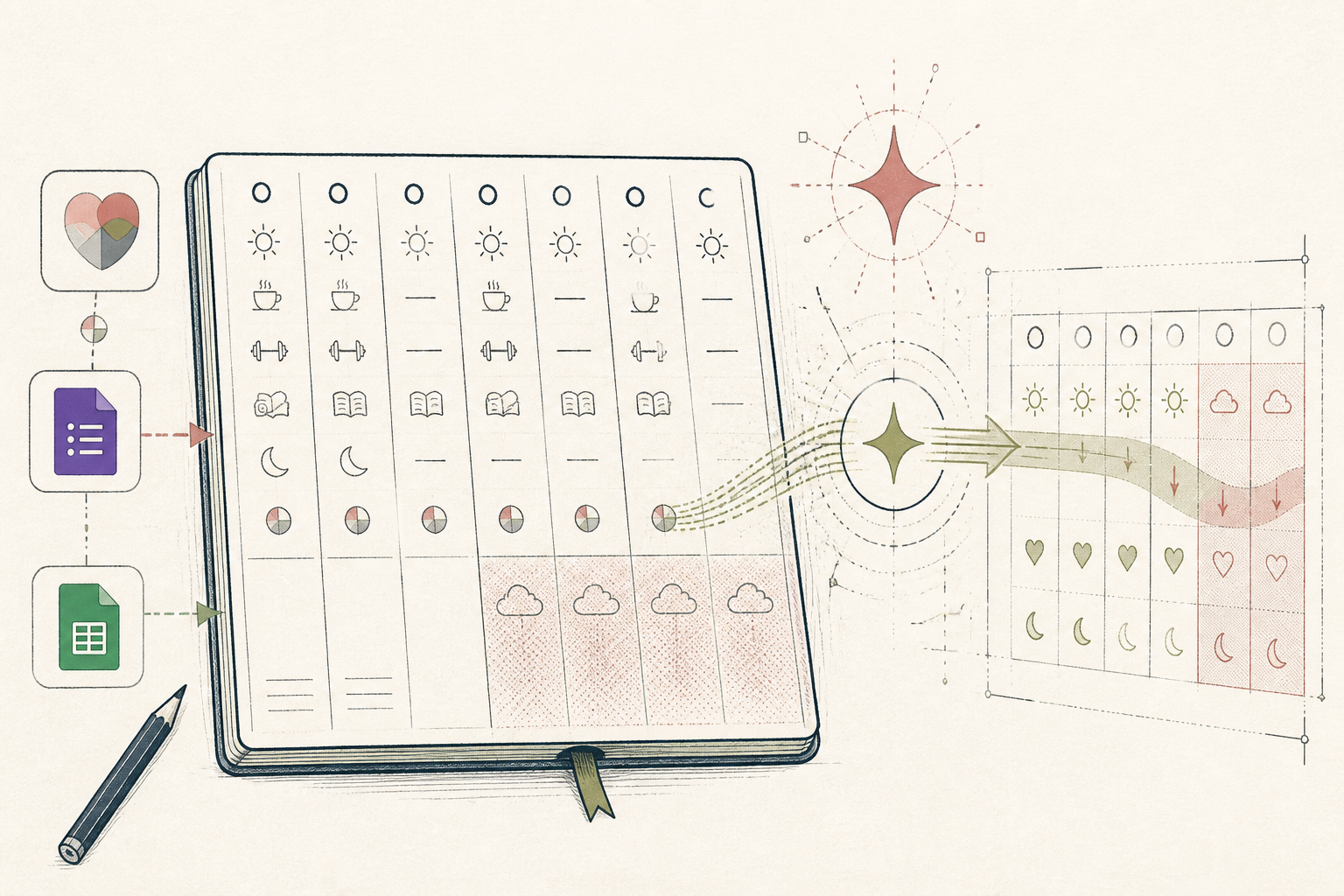
Daily Cycle Syncing for a More Predictable Week
“Your energy dips most predictably for 3.5 days beginning on Day 20 of your cycle, correlating with a 15% increase in reported brain fog during that period across the last three months, not randomly as you'd assumed.”
Sporadic cycle tracking with no clear patternsPredictable weekly energy based on cycle phase
Tools used
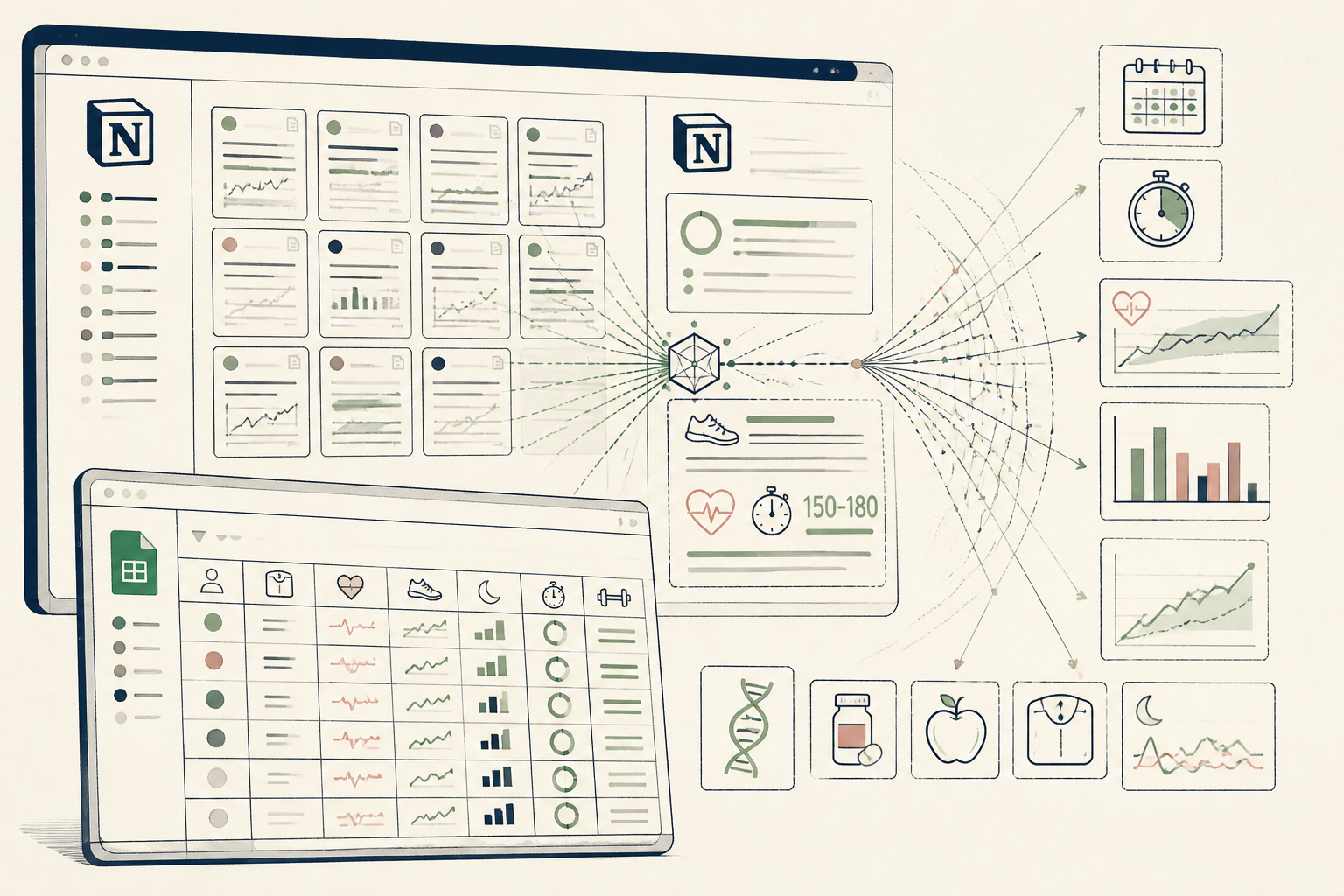
From Scattered Notes to Focused Longevity Protocol
“AI found that across 15 recent longevity studies, the most overlooked, high-impact intervention for clients over 40 was consistent, low-intensity movement (Zone 2 cardio) for 150-180 minutes weekly, not solely high-intensity interval training as commonly assumed.”
Unstructured longevity research notesActionable, client-specific protocols
Tools used
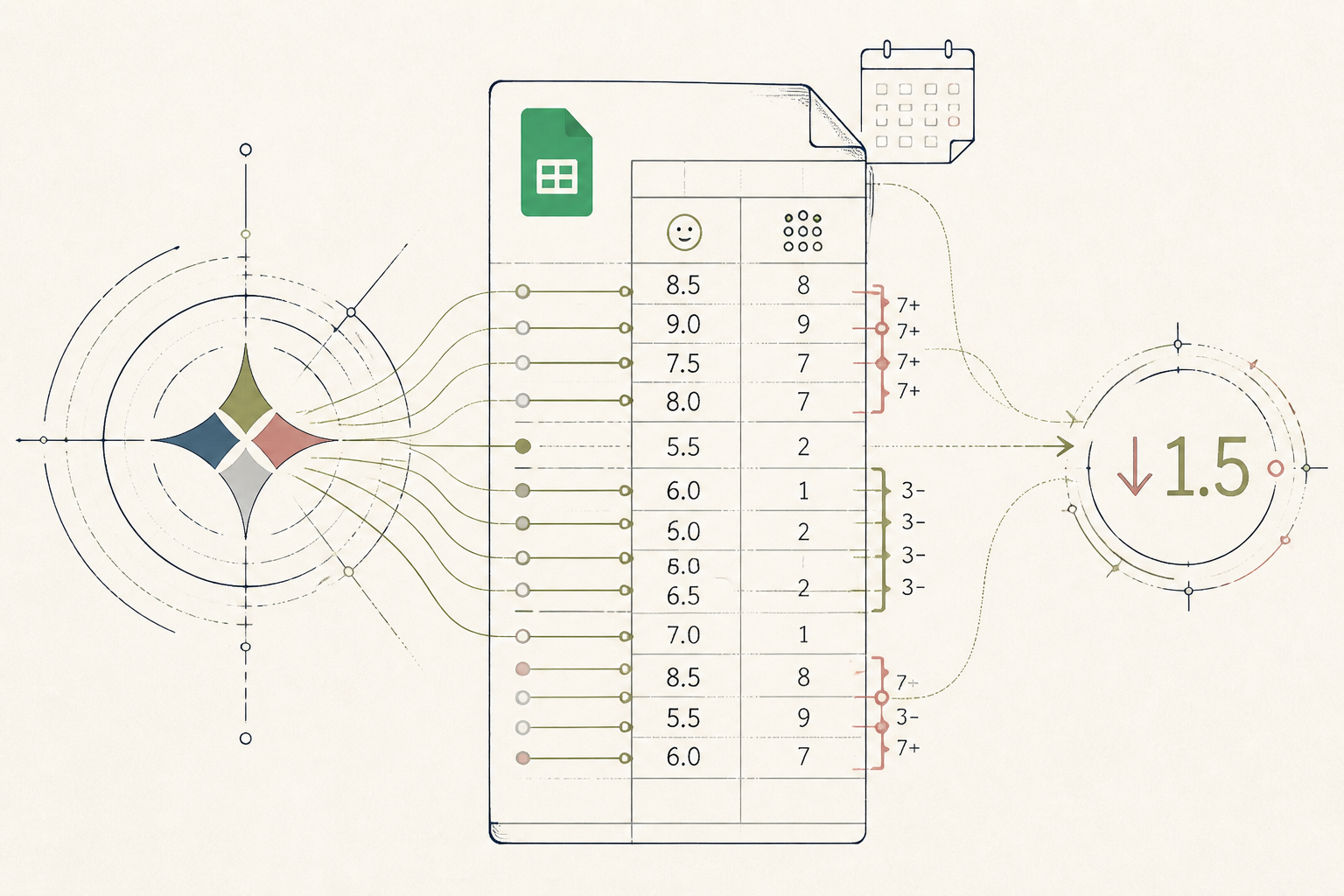
Mood Tracking Refined: Identifying Unseen Patterns
“Your mood consistently dips by an average of 1.5 points on a 10-point scale on days following exceptionally high client interaction (7+ meetings) compared to days with fewer than 3 client interactions.”
Vague daily mood ratings, no clear insightsActionable mood patterns identified weekly
Tools used
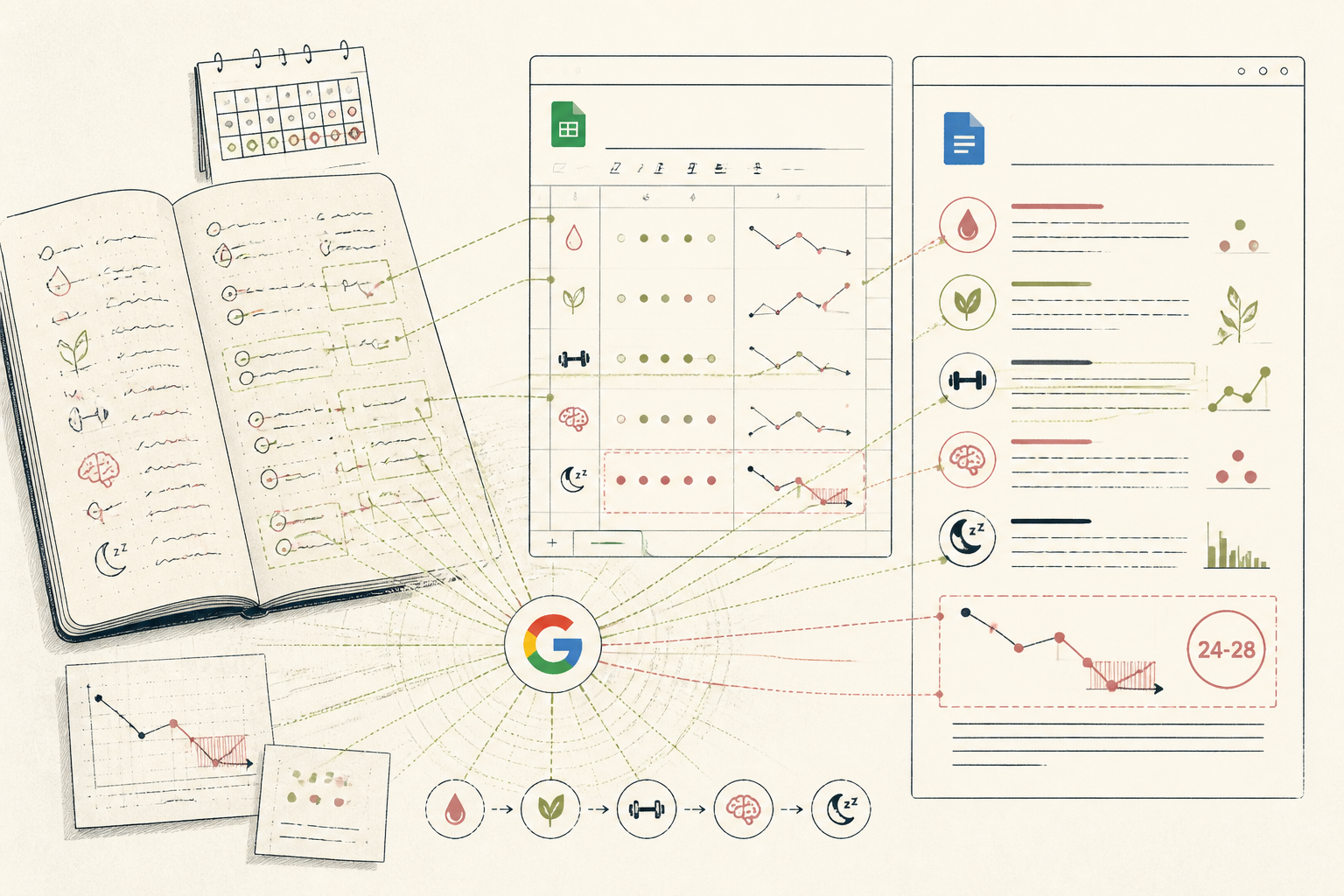
From Haphazard Hormone Tracking to a Clear Cycle Blueprint
“The AI noted that clients consistently reported their lowest energy levels on cycle days 24-28, a full 3-4 days later than the general literature suggests for the late luteal phase.”
Disparate client notes never reviewedActionable weekly insights for client support
Tools used
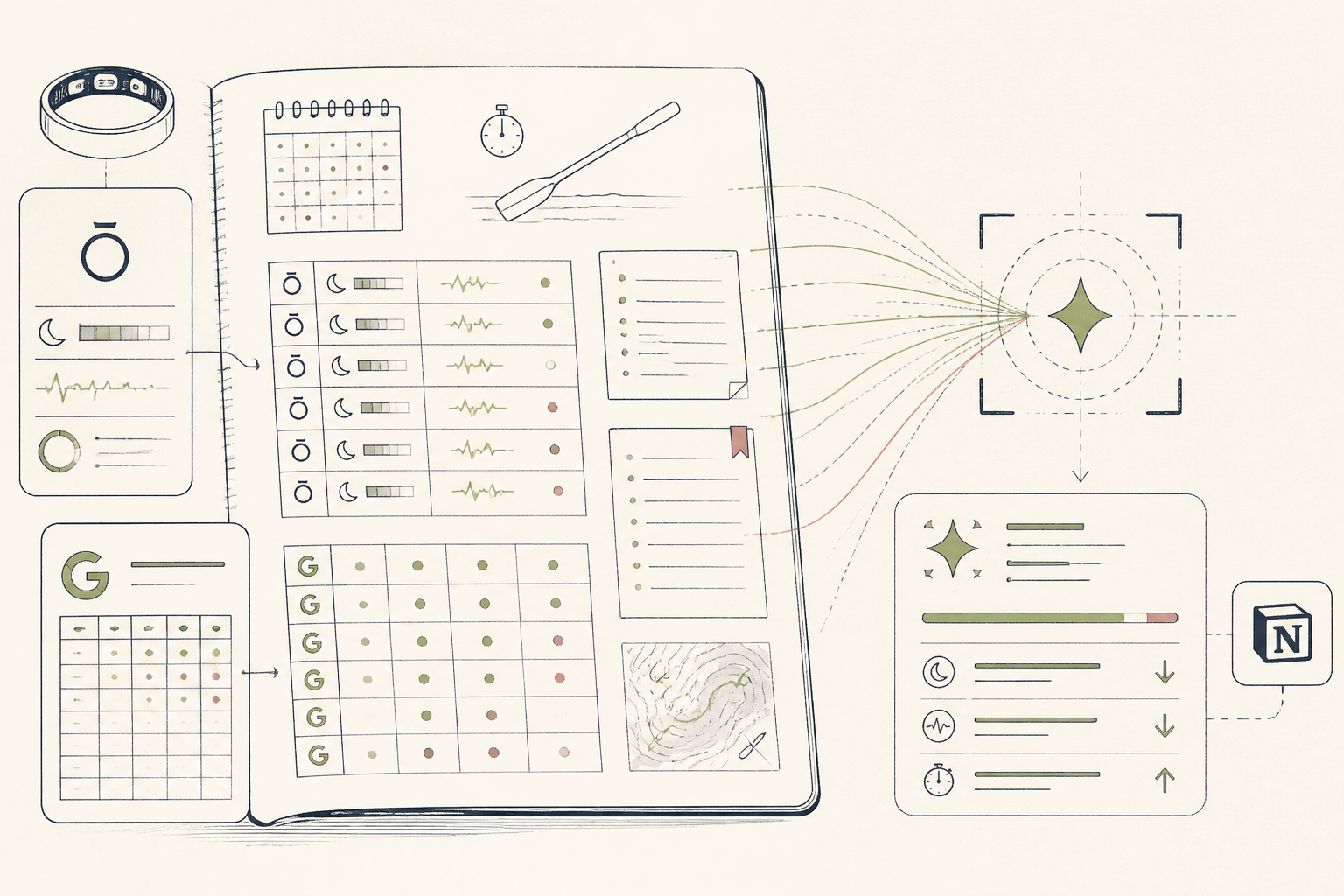
Weekly Recovery Check-ins, Streamlined
“Your Oura Ring data consistently shows that evenings with more than 30 minutes of deep work on a computer correlated with a 15% reduction in average HRV during sleep, across the last six weeks.”
Disparate recovery data, no insightsFocused weekly recovery insights in 5 minutes
Tools used
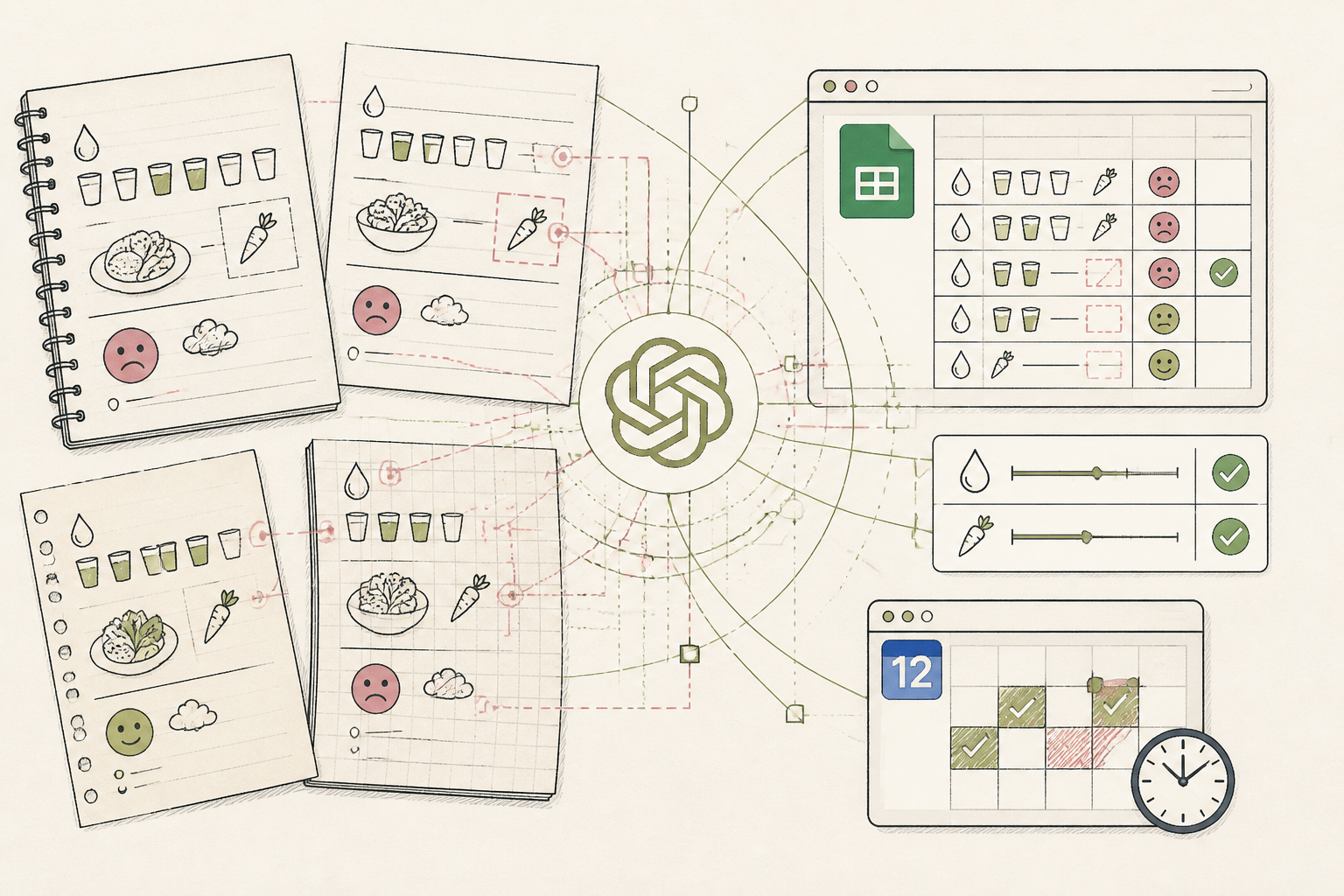
One Nutritionist’s Journey from Buried Notes to Clear Trends
“In reviewing 14 client logs, I found that clients reporting "low energy" or "brain fog" had, with 88% consistency, recorded less than 1.5 litres of water intake and no raw vegetables in their preceding 24-hour dietary notes.”
Disparate client notes, manual review for each sessionPre-session AI brief highlights key, data-backed issues
Tools used
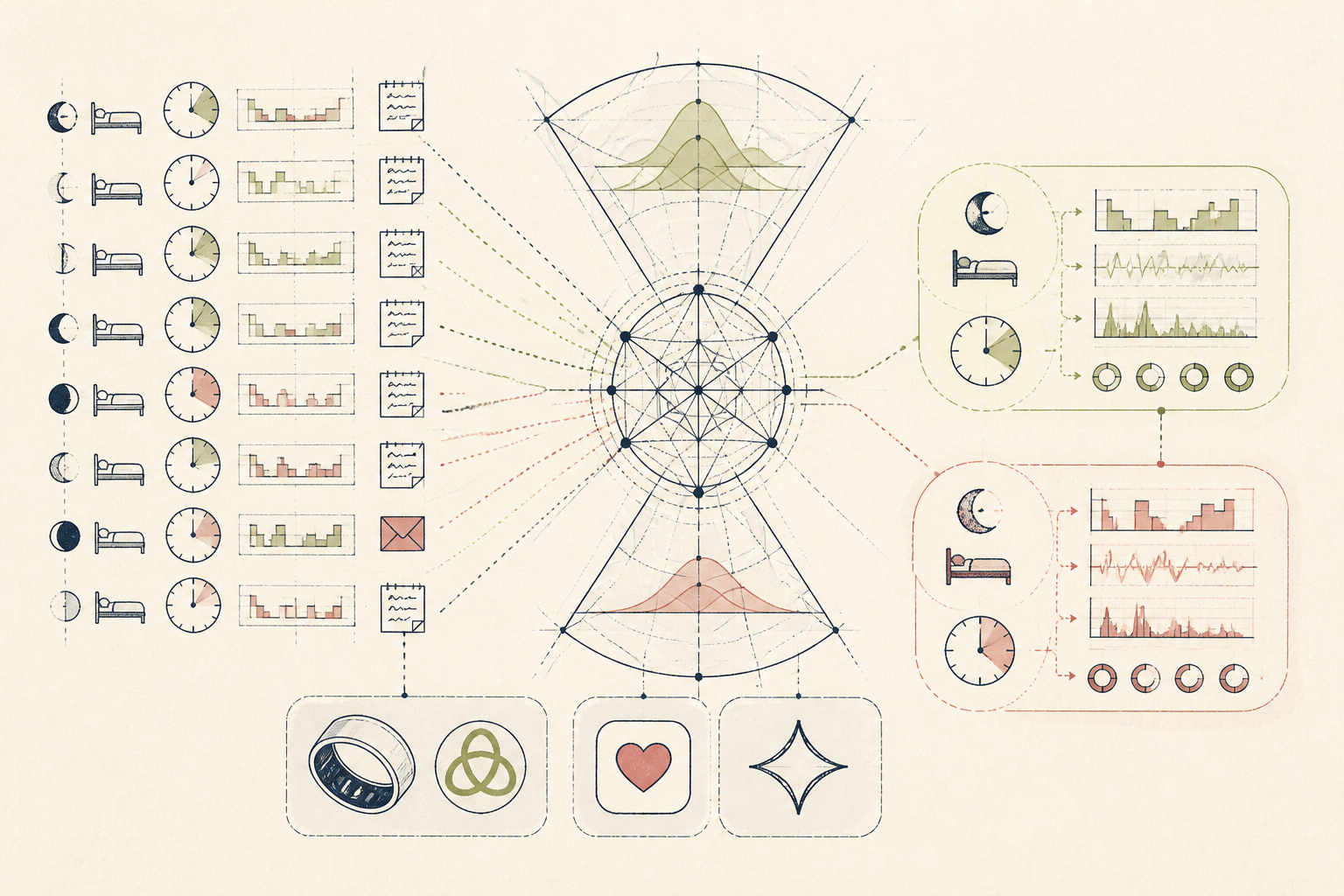
Weekly Sleep Review: From Scattered Data to Sharp Insights
“The AI revealed that her three worst-sleep nights (averaging 5h 12m) consistently followed late-evening work emails—not her pre-bed reading habit, as she had assumed.”
Fragmented Sleep Data, Zero ReviewOne 7-min Actionable Review
Tools used
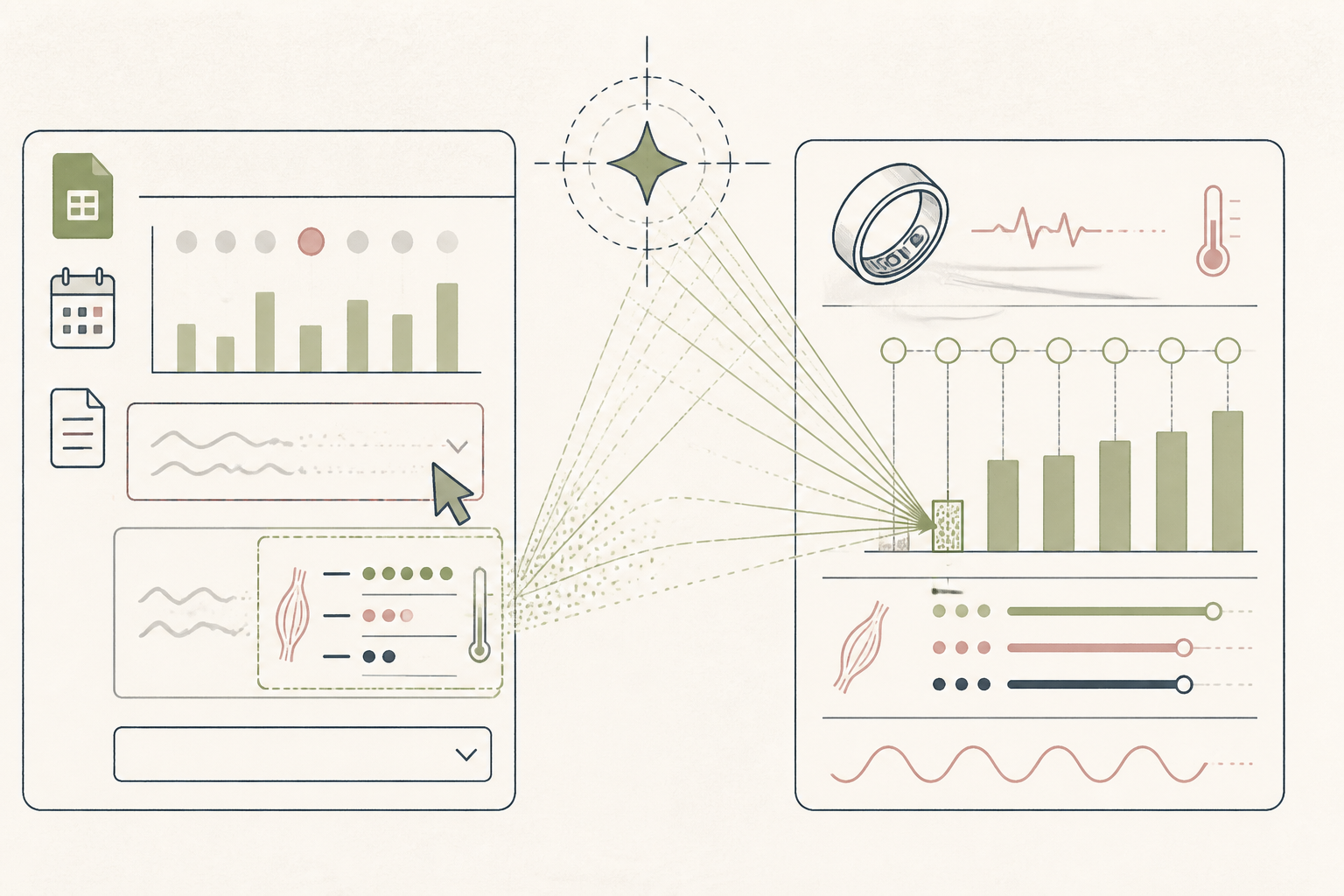
One Daily Routine Refines Recovery Tracking
“AI found that her highest weekly recovery scores consistently followed Monday sessions where client feedback on muscle pliability was entered with specific, objective terms, rather than general subjective notes like "good".”
Disparate notes, unclear impactStructured data, tangible recovery insights
Tools used
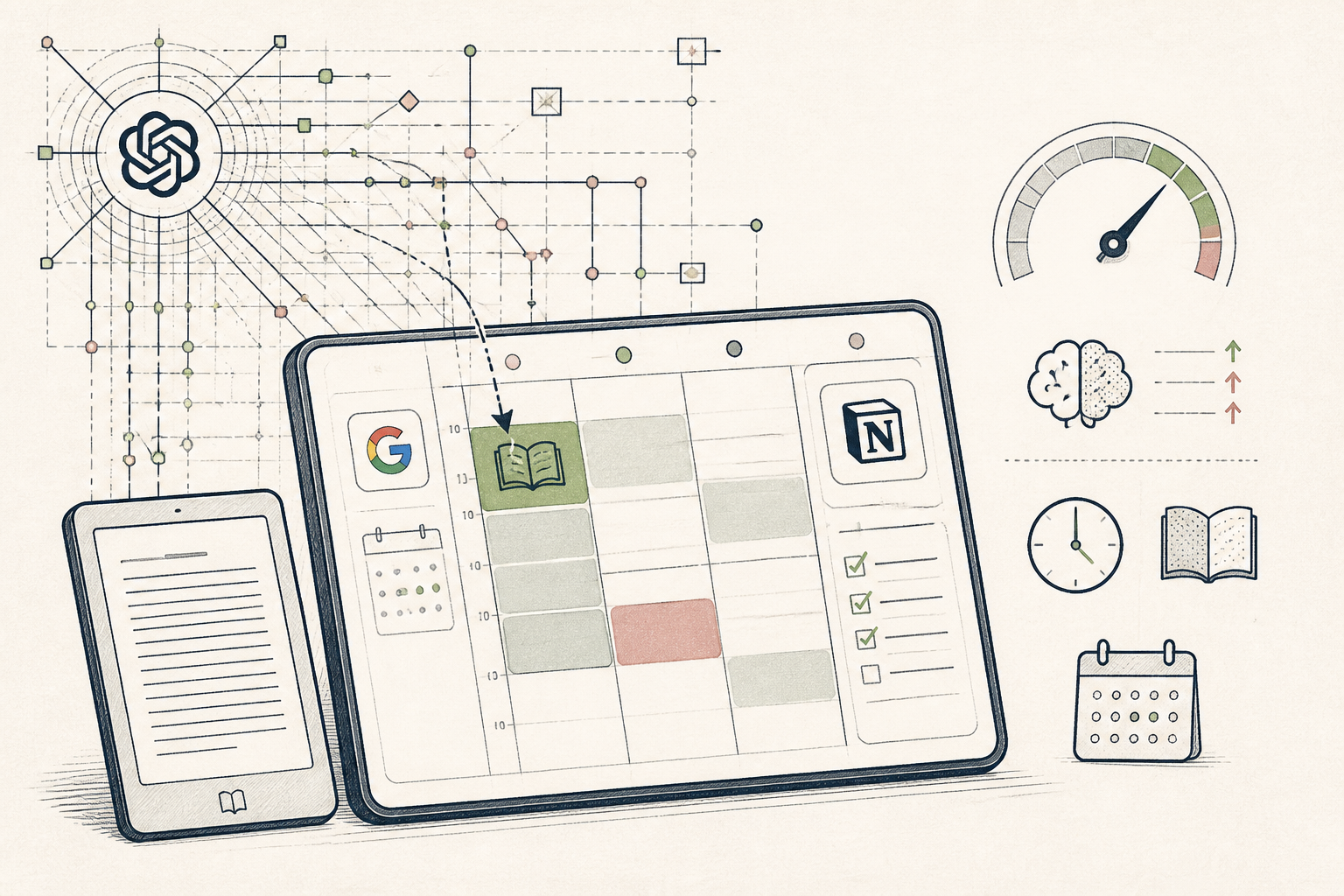
Mindful Mornings, Sharper Focus
“Your most productive focus blocks occurred consistently on days when you incorporated a 15-minute silent reading session before 8:00 AM, showing an 18% average increase in self-reported focus scores compared to other morning activities.”
Haphazard mornings, inconsistent focusAI-optimised morning routine, sustained focus
Tools used
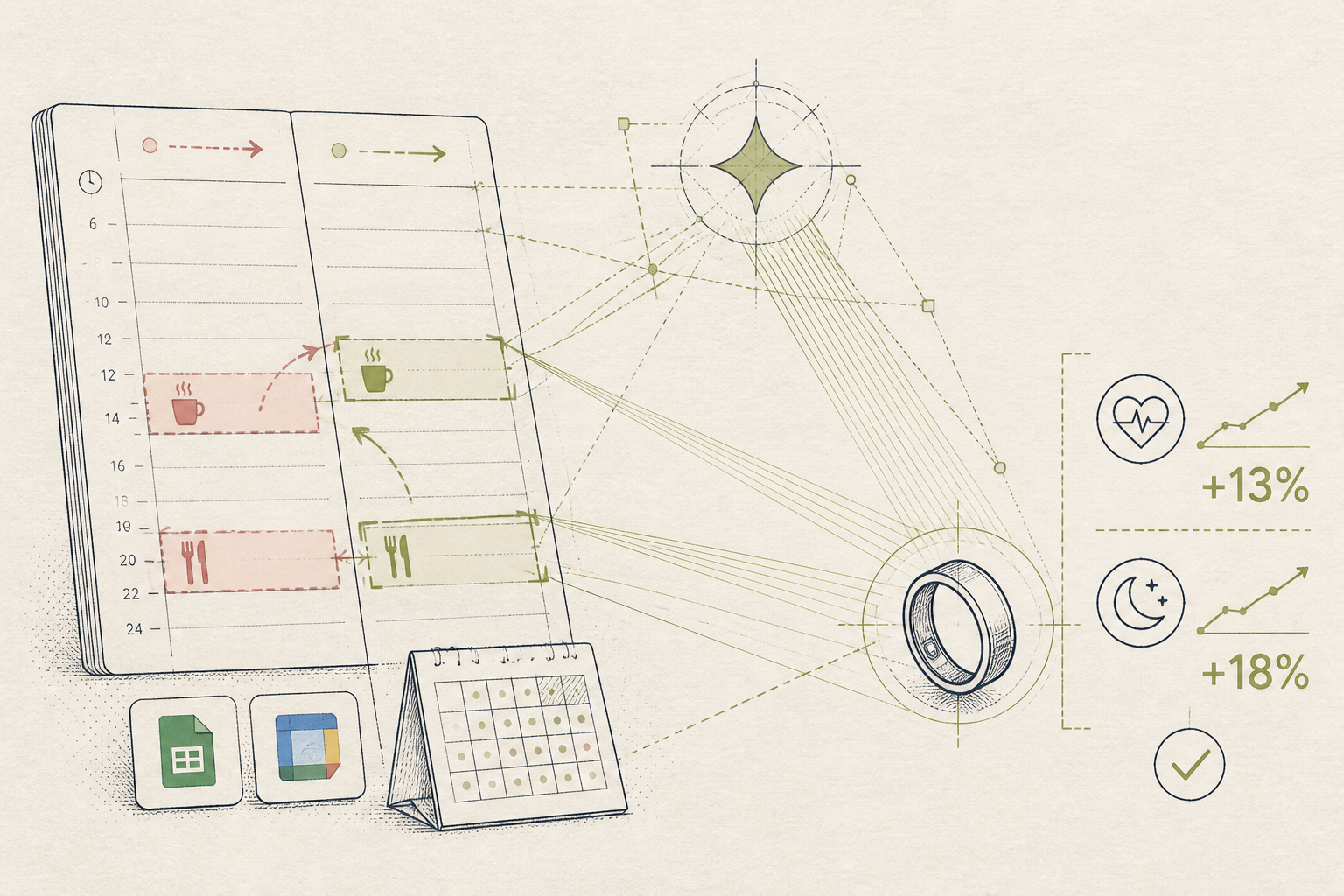
One Small Shift, Measurable Sleep Improvement
“By shifting your client's last caffeine intake to before 2 PM and last meal to before 7 PM, their average nightly HRV increased by 13% and deep sleep duration by 18% over three weeks, observed consistently on four out of five clients where these changes were implemented.”
Ad-hoc client recommendations, inconsistent trackingQuantified impact from targeted, AI-informed advice
Tools used
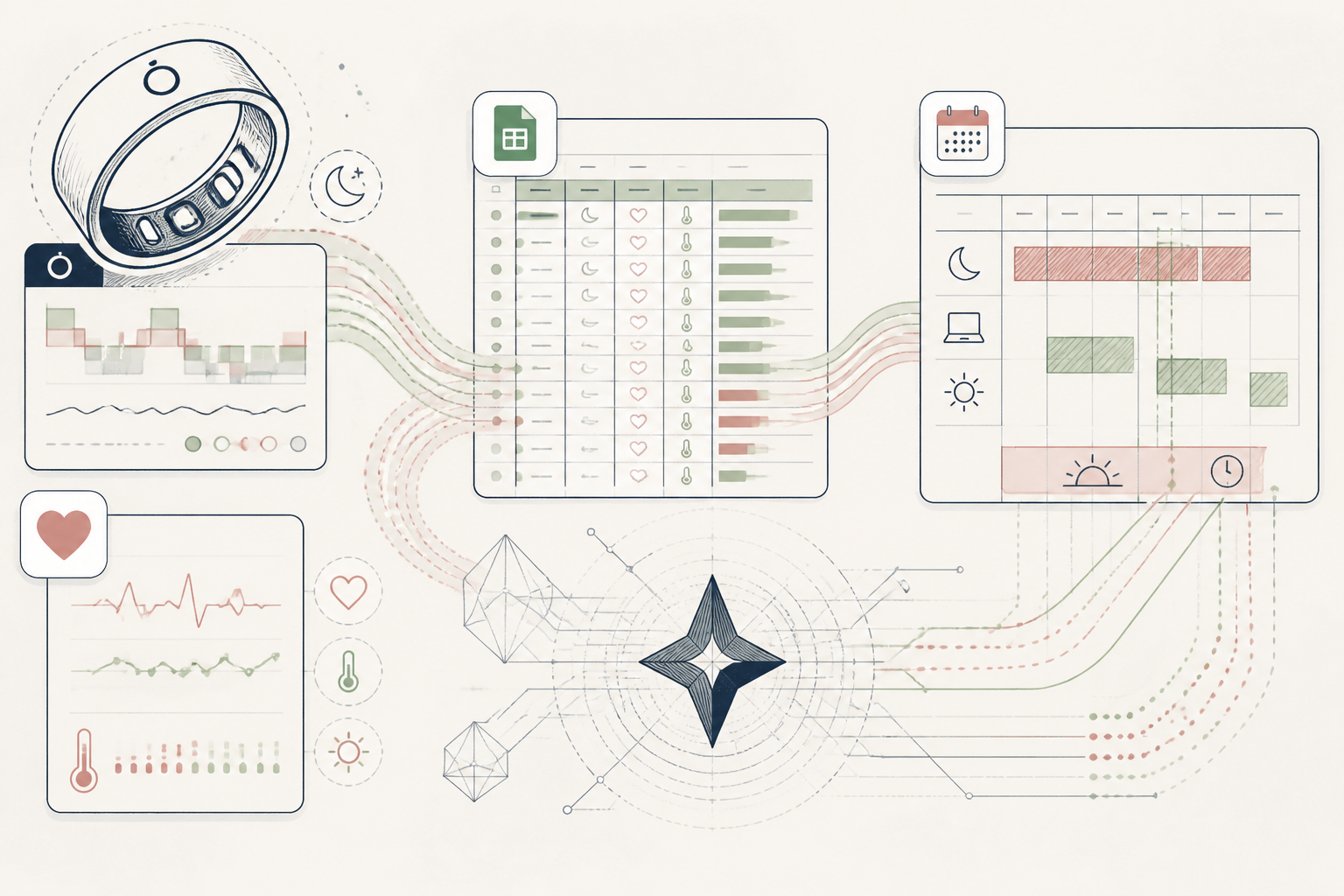
From Hazy Notions to Concrete Energy Insights
“Your most productive days consistently follow nights where your Oura-reported Readiness exceeds 85, particularly when combined with an 8 PM "digital sunset" the night prior, accounting for a 35% increase in focused work hours.”
Subjective energy vibes, unpredictable outputObjective energy data, predictable focus
Tools used
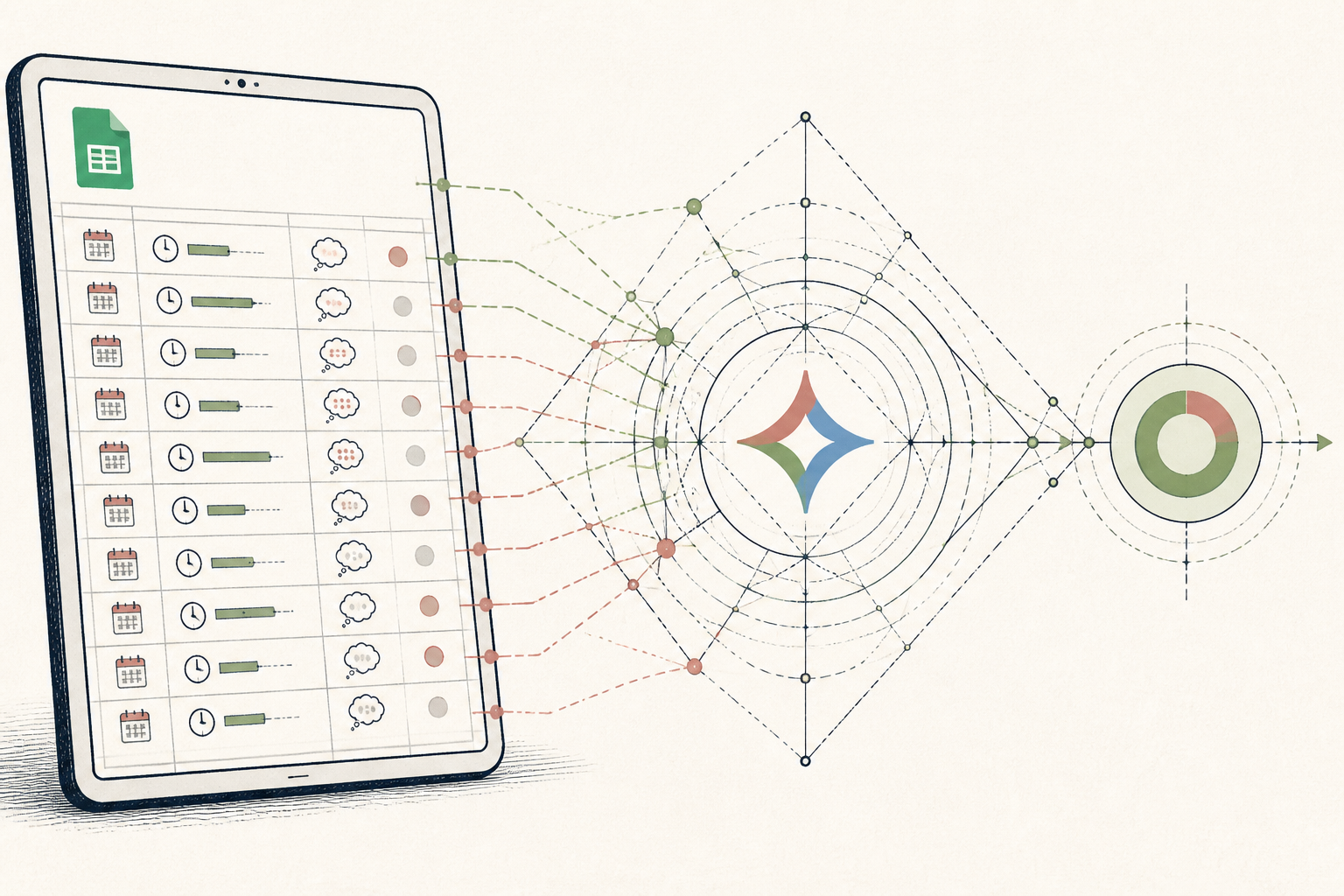
Weekly Cognitive Health Review in 7 Minutes
“Your client's reported 'brain fog' correlated 80% of the time with sleep duration under 6.5 hours in the past two weeks, rather than their assumed dietary triggers.”
Disorganised Client NotesFocused Cognitive Insights
Tools used
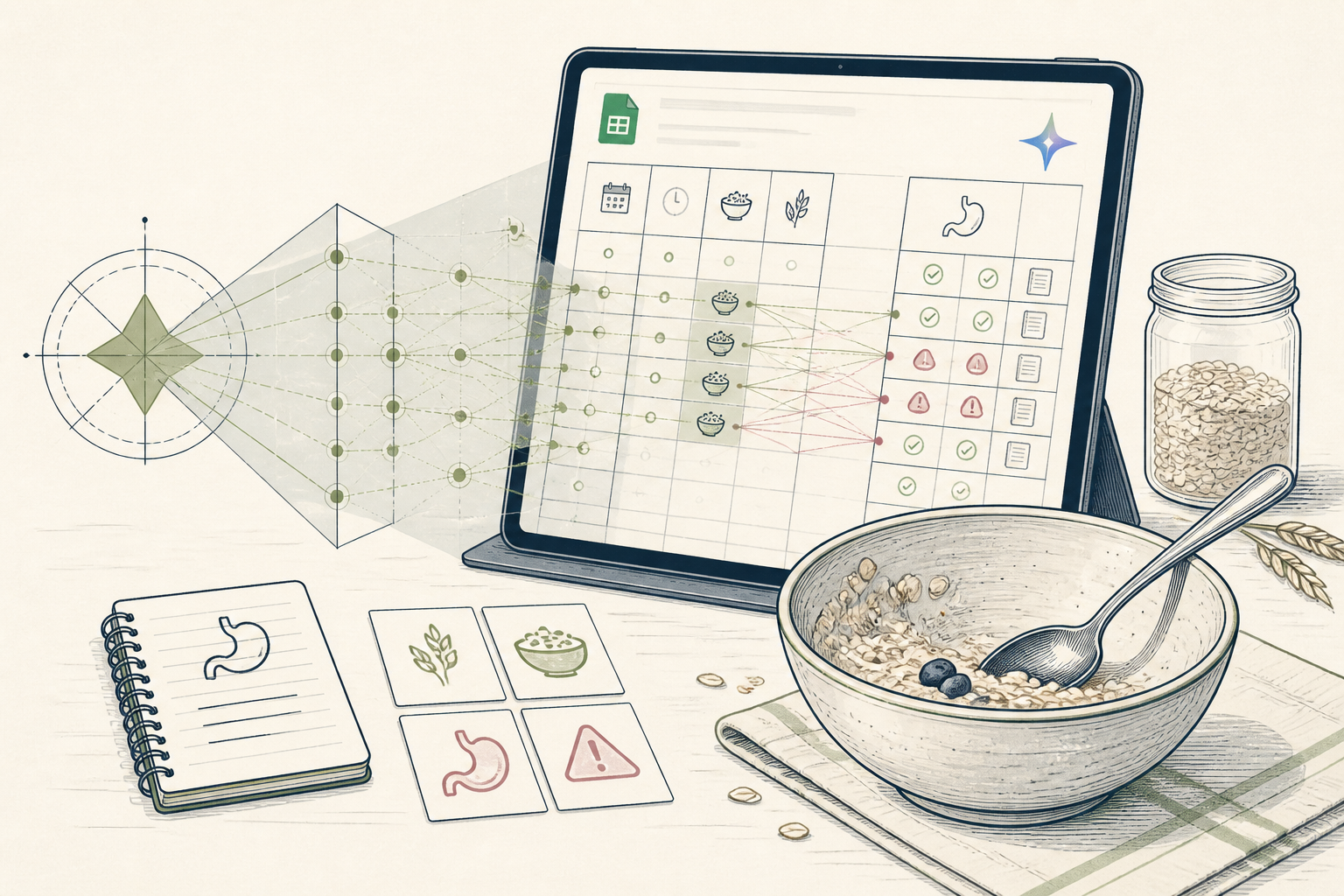
From Scattered Symptoms to a Clear Dietary Trigger
“AI analysis revealed that 80% of reported digestive discomfort instances over the past six weeks occurred within 24 hours of consuming overnight oats, a correlation previously overlooked due to focus on other food groups.”
Vague gut discomfort; manual food diaryClear dietary trigger identified; targeted modification
Tools used
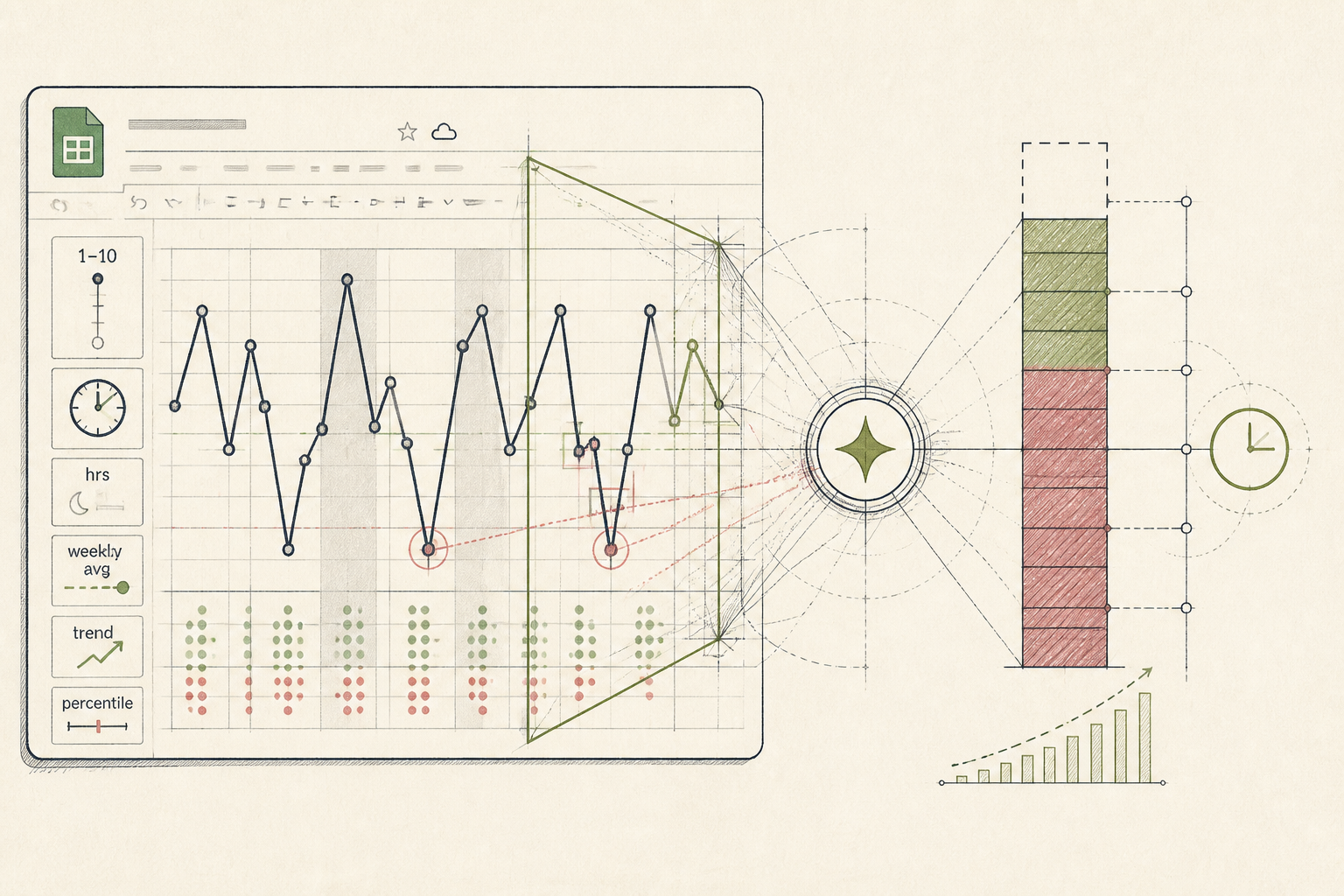
One Small Sleep Debt, One Big Shift in Energy Fluctuations
“Your weekly energy score volatility correlates with your cumulative sleep debt. An additional 45 minutes of sleep debt increases your chance of a severe energy dip—defined as a 3-point drop on your 1-10 scale—by 40%.”
Subjective energy logs, no clear patternsQuantified energy dips, identified root cause
Tools used
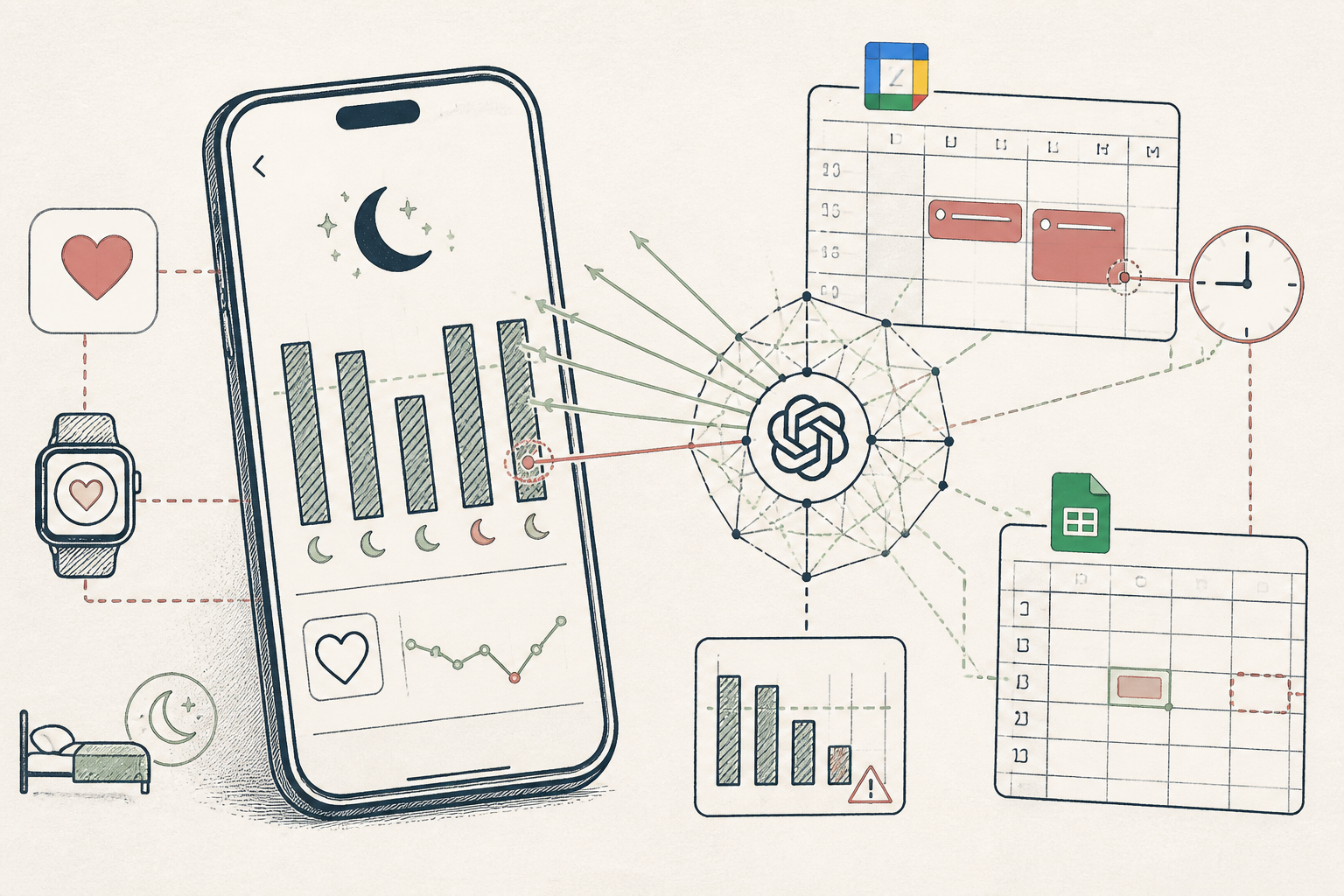
From Hunch to Hard Data: Unpacking Stress Triggers
“ "Your sleep quality dips by an average of 18% on nights following work sessions extending past 9 PM, irrespective of total screen time, suggesting the timing of work, rather than just device use, is a significant factor."”
Vague stress, unquantified hunchesClear triggers, data-backed adjustments
Tools used
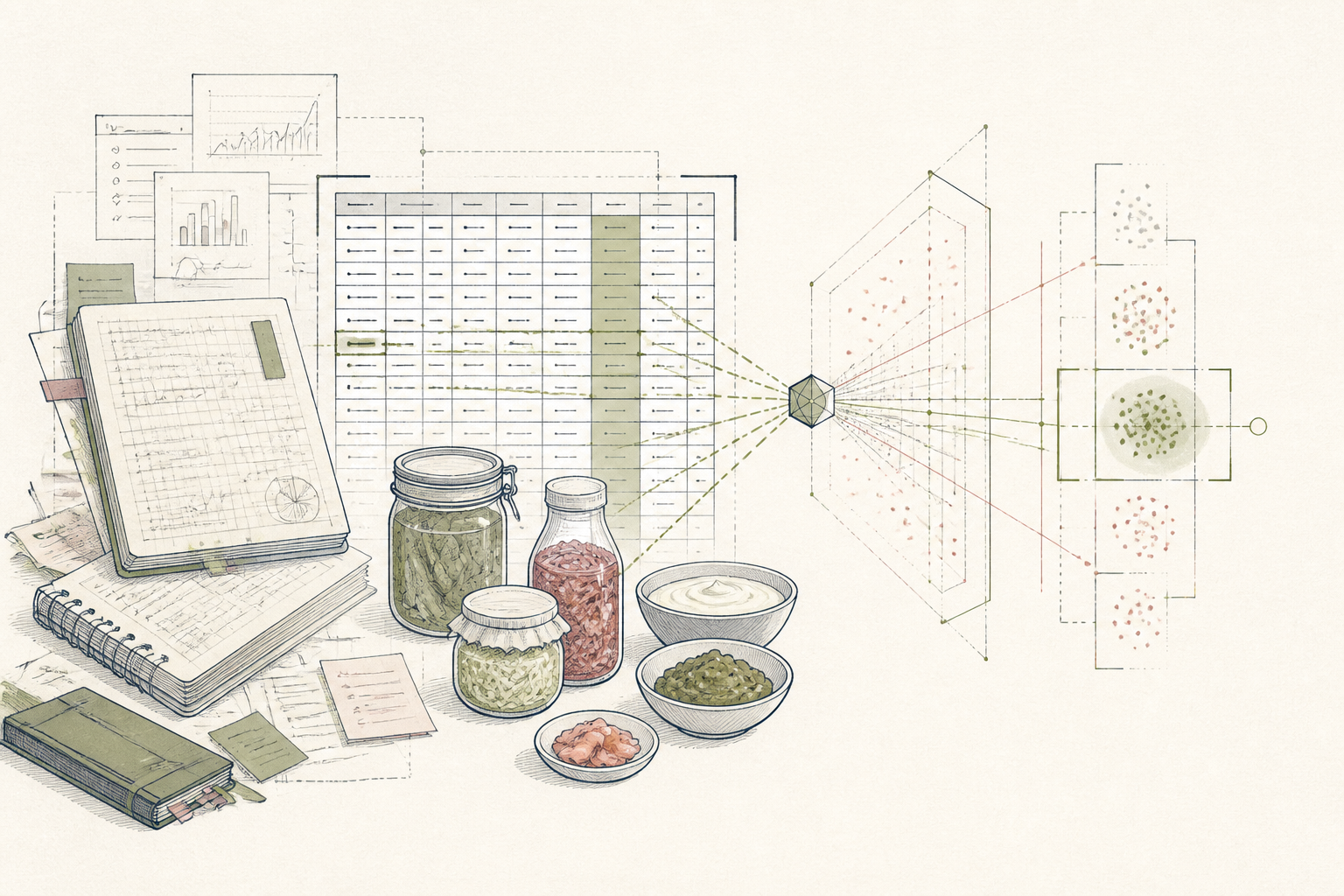
Weekly Review Spots Hidden Stressor
“AI identified: 'Clients reporting high stress consistently consume fermented foods more than twice a week, indicating a potential correlation not previously considered.'”
Disparate client notes, no clear patternsActionable weekly insights for client protocols
Tools used
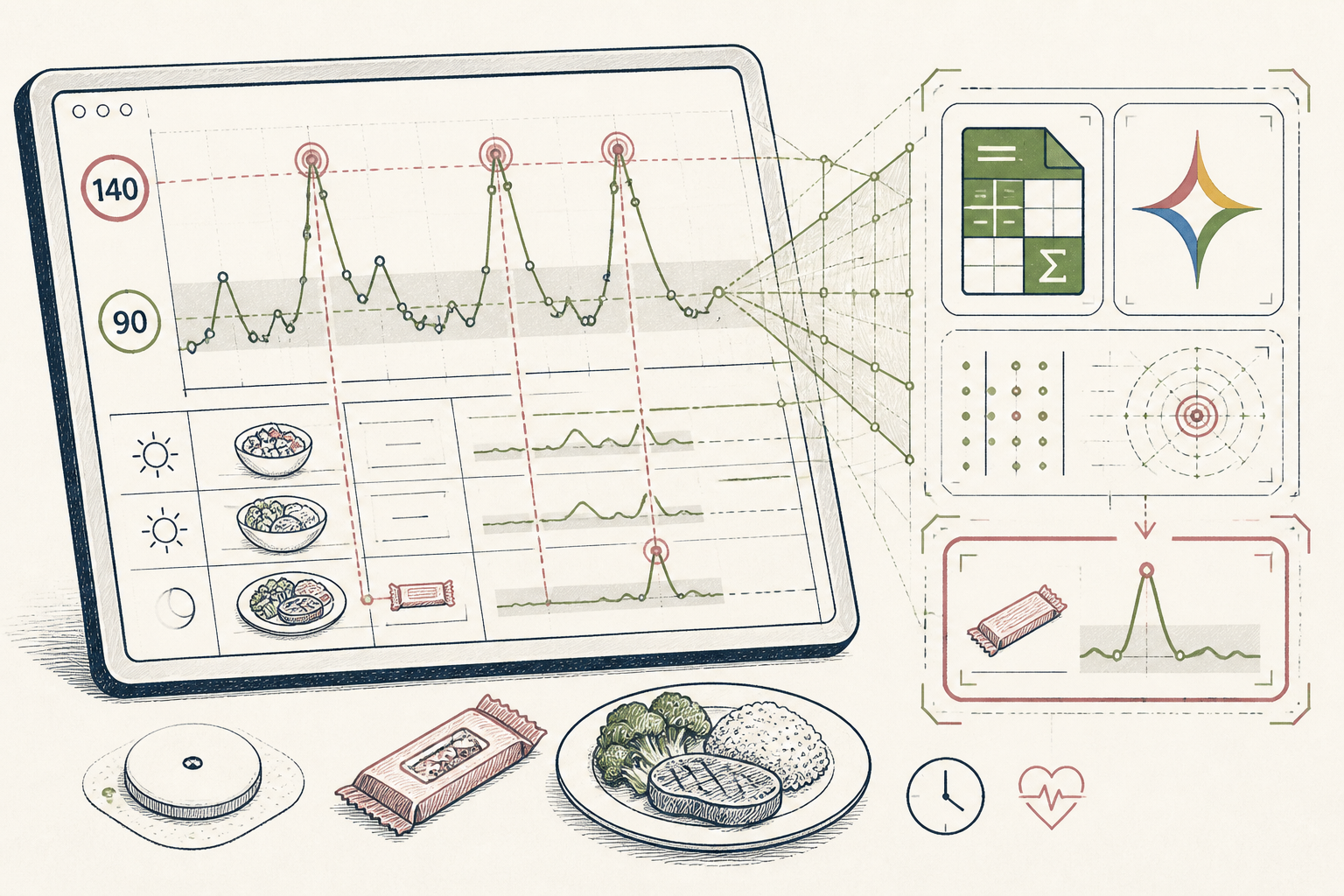
One Small Shift, Big Metabolic Picture
“Your highest average overnight glucose spikes (140 mg/dL) consistently followed dinners that included a sweetened protein bar as dessert, irrespective of carbohydrate content in the main meal.”
Disjointed glucose logs, no clear patterns.Clear dietary impact on overnight glucose identified weekly.
Tools used
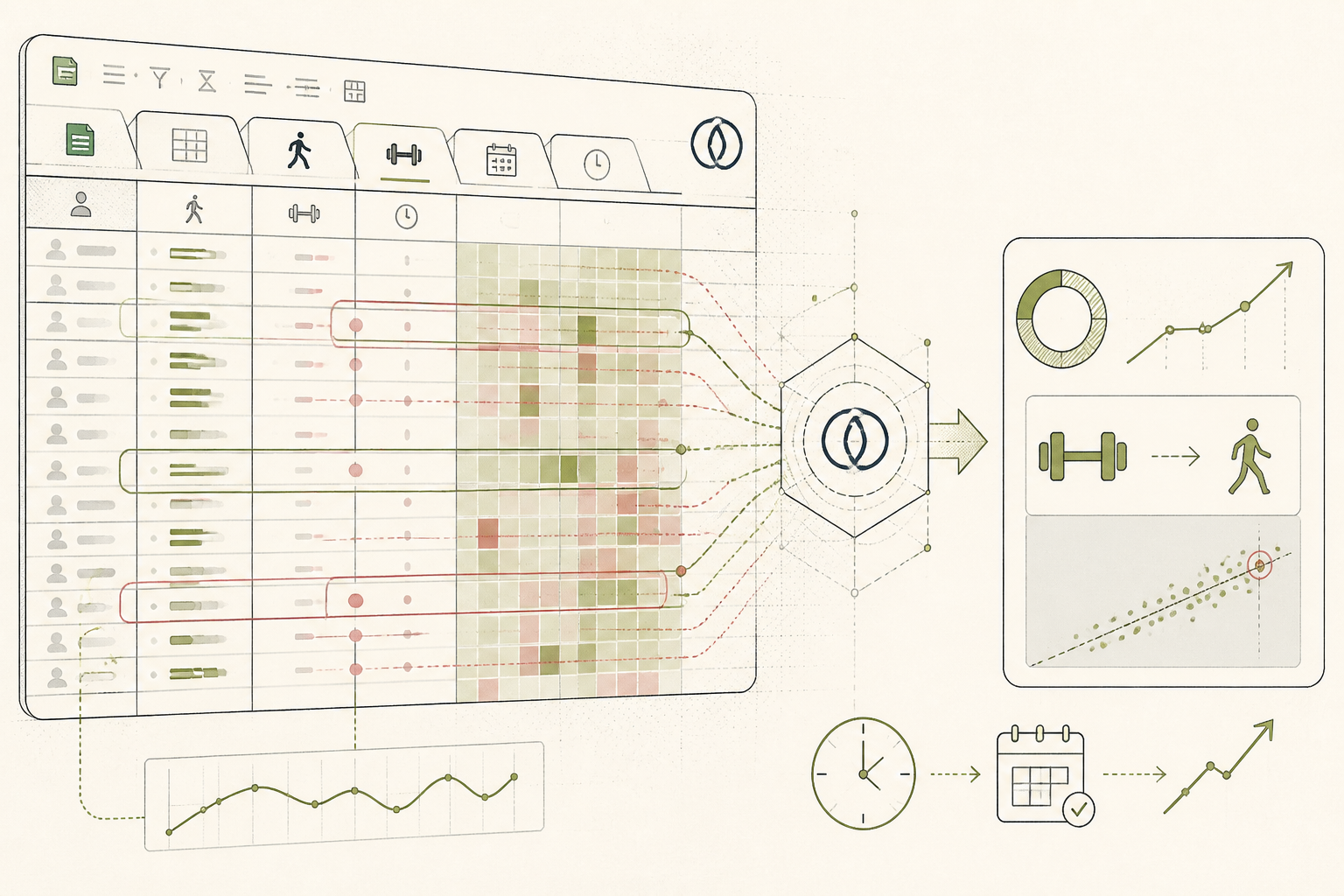
From Haphazard to Harmonised: Movement Coaching with AI
“"Your most active clients consistently log 15% more non-exercise activity (NEAT) on days when they engage in structured strength training, suggesting a synergistic effect rather than displacement."”
Disparate client movement logs, unclear patternsIntegrated movement insights for targeted coaching
Tools used
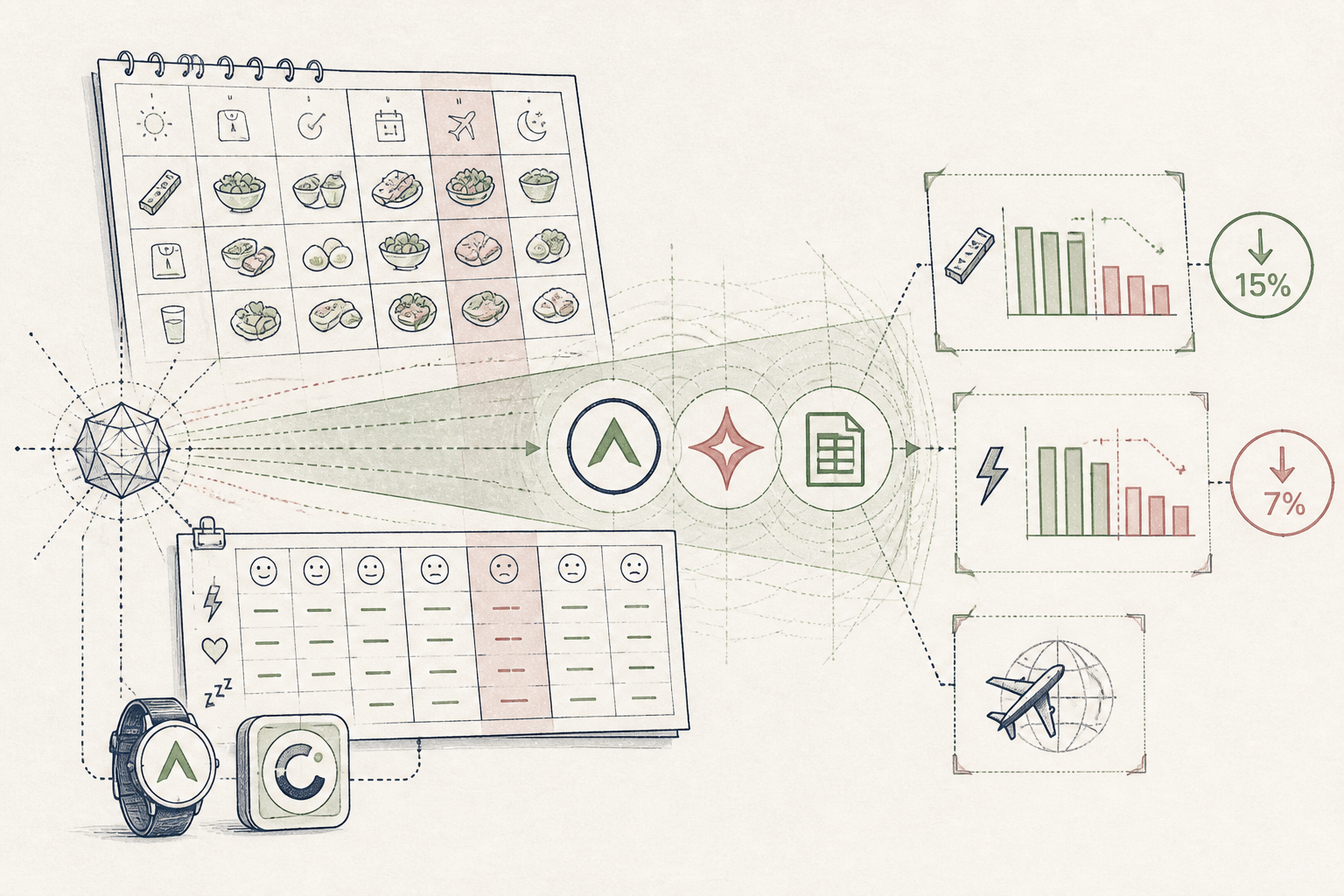
Weekly Trends Over Time
“Your average weekly protein intake consistently dropped by 15% on weeks following international travel, correlating with a 7% decrease in reported energy levels.”
Vague nutritional goals, inconsistent trackingData-driven weekly nutrition adjustments
Tools used
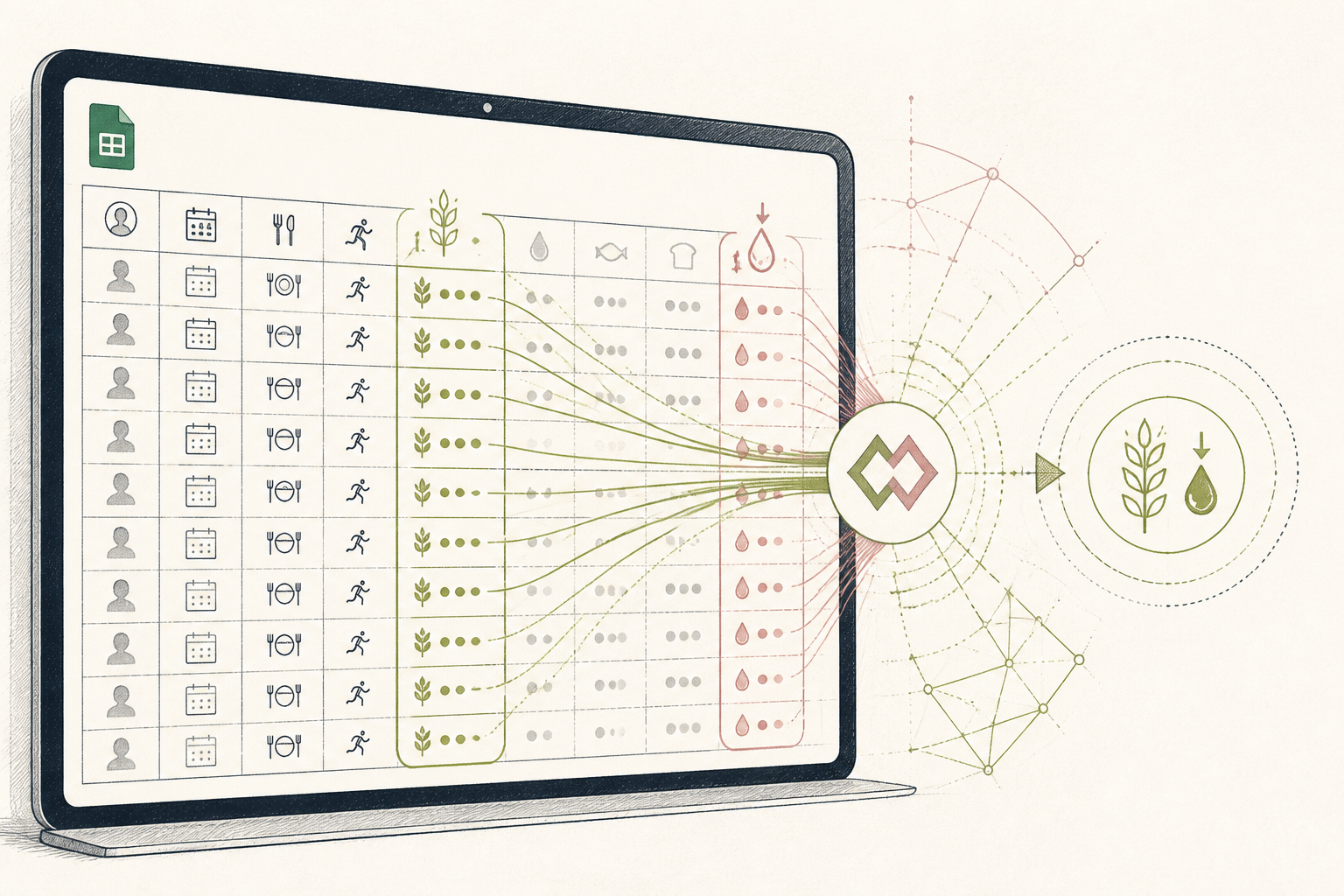
From Scattered Notes to Targeted Blood Sugar Insights
““Clients consuming over 35g of fibre daily consistently exhibit a 15% lower average fasting glucose compared to those below 25g, a stronger correlation than any specific macronutrient ratio.””
Client notes scattered across appsActionable, data-backed dietary insights
Tools used
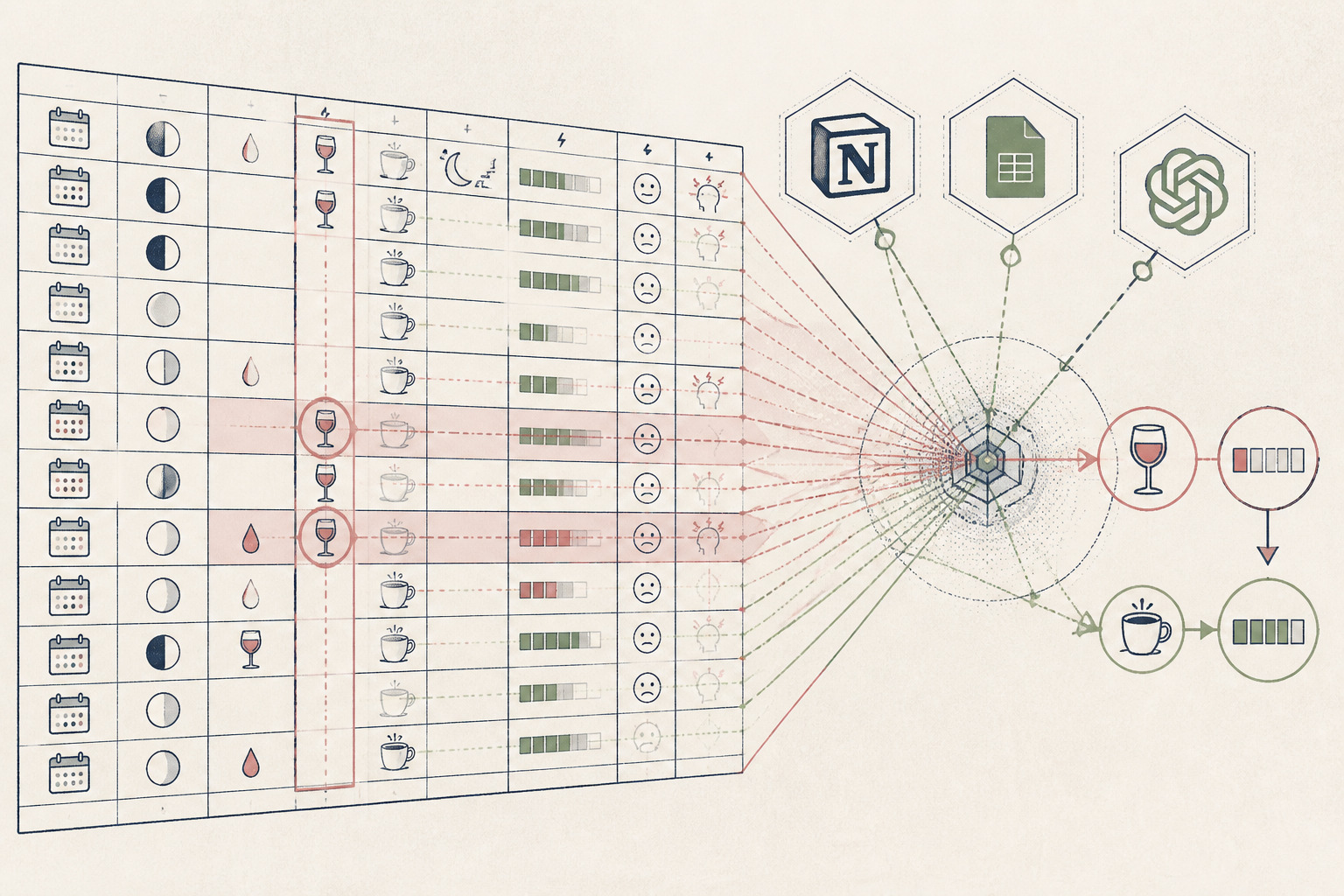
One Hormone Cycle AI Audit
“AI found that your lowest energy days consistently followed evenings with red wine consumption, while your assumed trigger, caffeine, showed no statistically significant correlation.”
Disorganised symptom notes and unproven assumptionsActionable insights for targeted weekly hormone support
Tools used
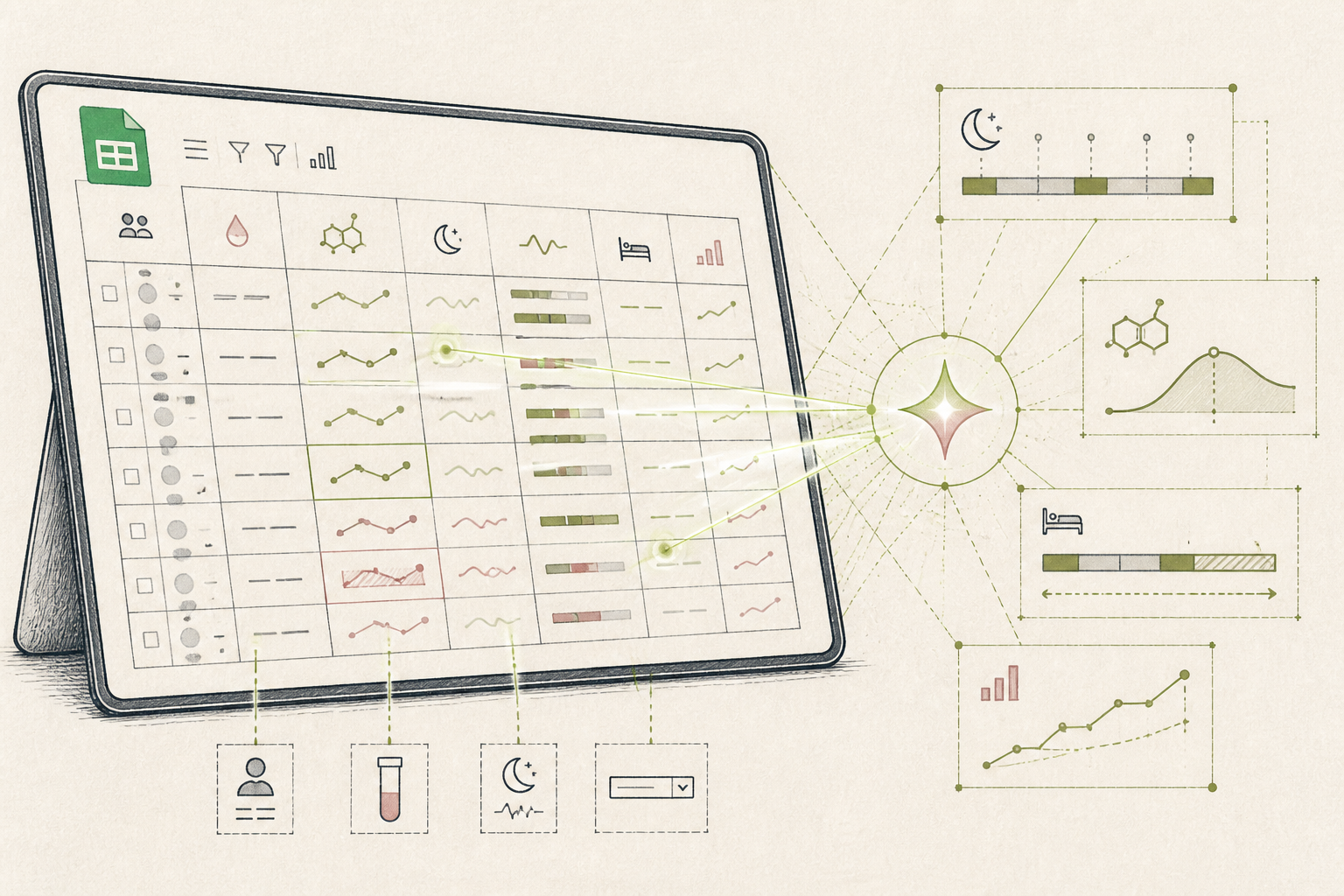
AI identifies unexpected correlation between patient hormone levels and sleep patterns
“AI found that a significant drop in reported evening progesterone symptoms (9pm-11pm) correlated with an average of 45-minute increased REM sleep duration the following night across 70% of clients.”
Disparate patient data across spreadsheets and anecdotal reportsUnified insights driving personalised patient recommendations
Tools used
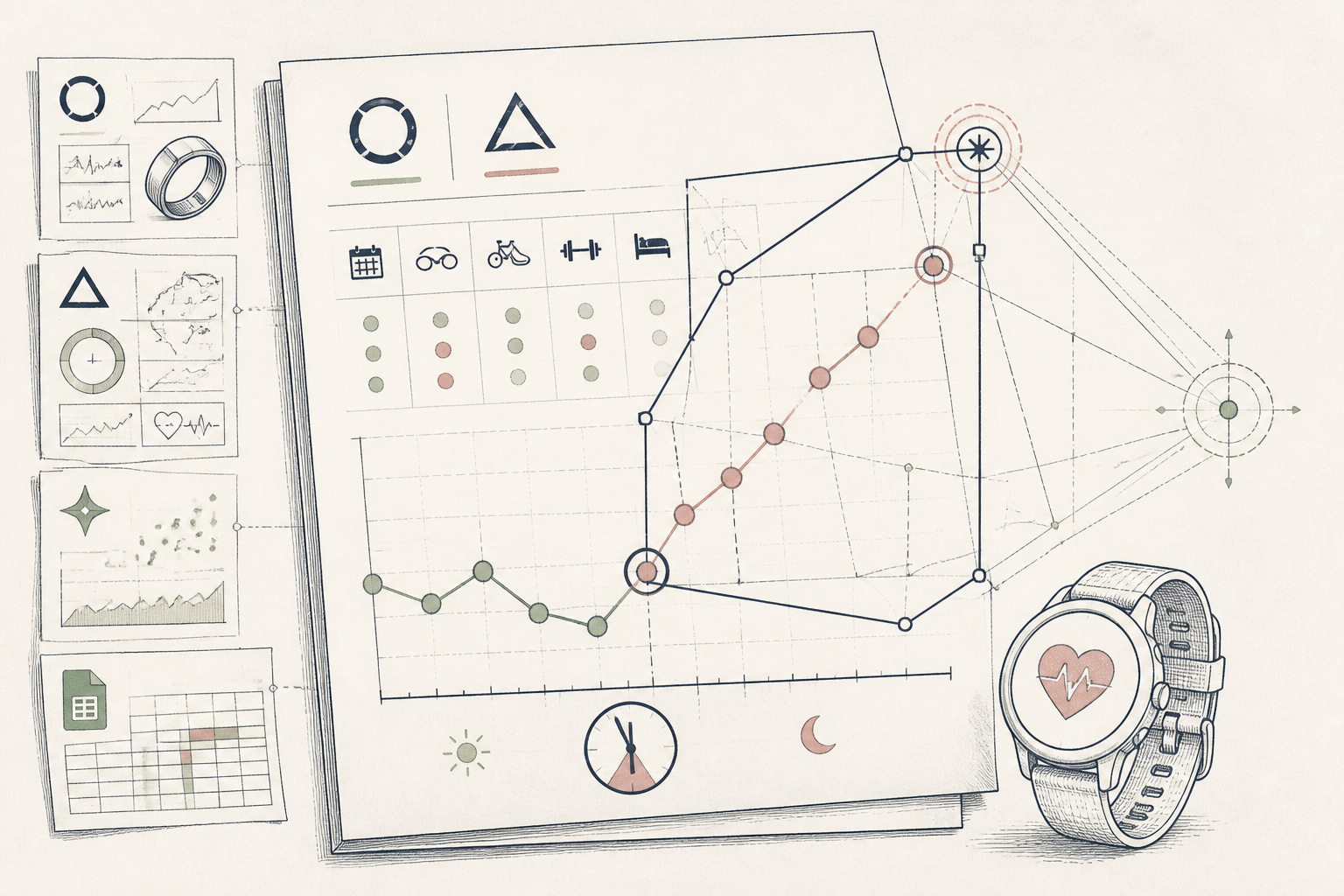
Weekly Recovery Check-ins: From Scattered to Structured
“Your recovery heart rate has been, on average, 9 BPM higher on days following evening interval sessions after 7 PM, compared to earlier training times.”
Ad Hoc Training Log & Vague FeelingsStructured Weekly Recovery Insights
Tools used
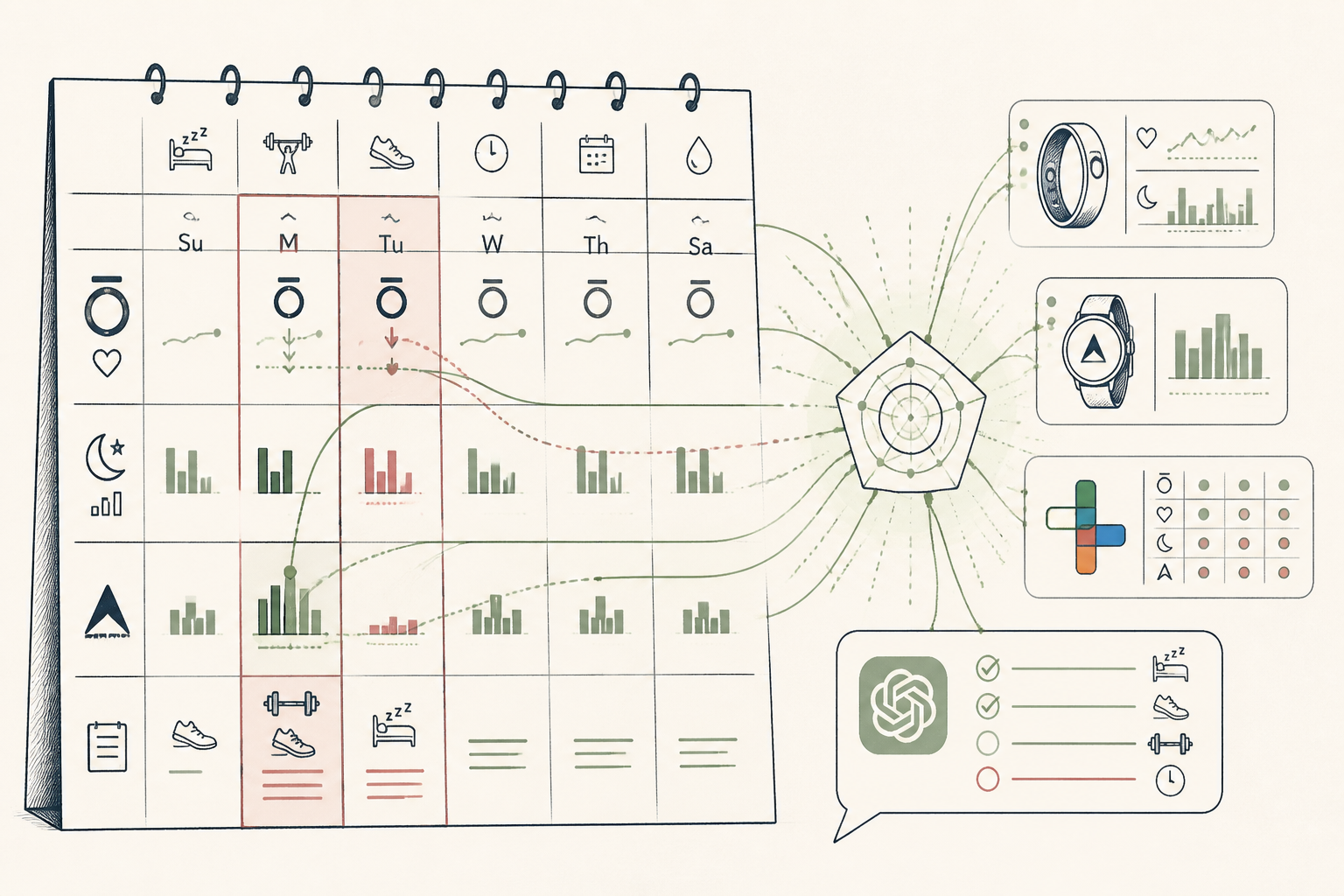
A Cyclist’s New View on Recovery
“Your lowest HRV scores consistently appear on Tuesdays, particularly after Monday interval training sessions, averaging 18ms lower than your weekly mean, suggesting over-reaching early in the week.”
Disparate daily metrics, no clear recovery planIntegrated weekly recovery insights, data-driven adjustments
Tools used
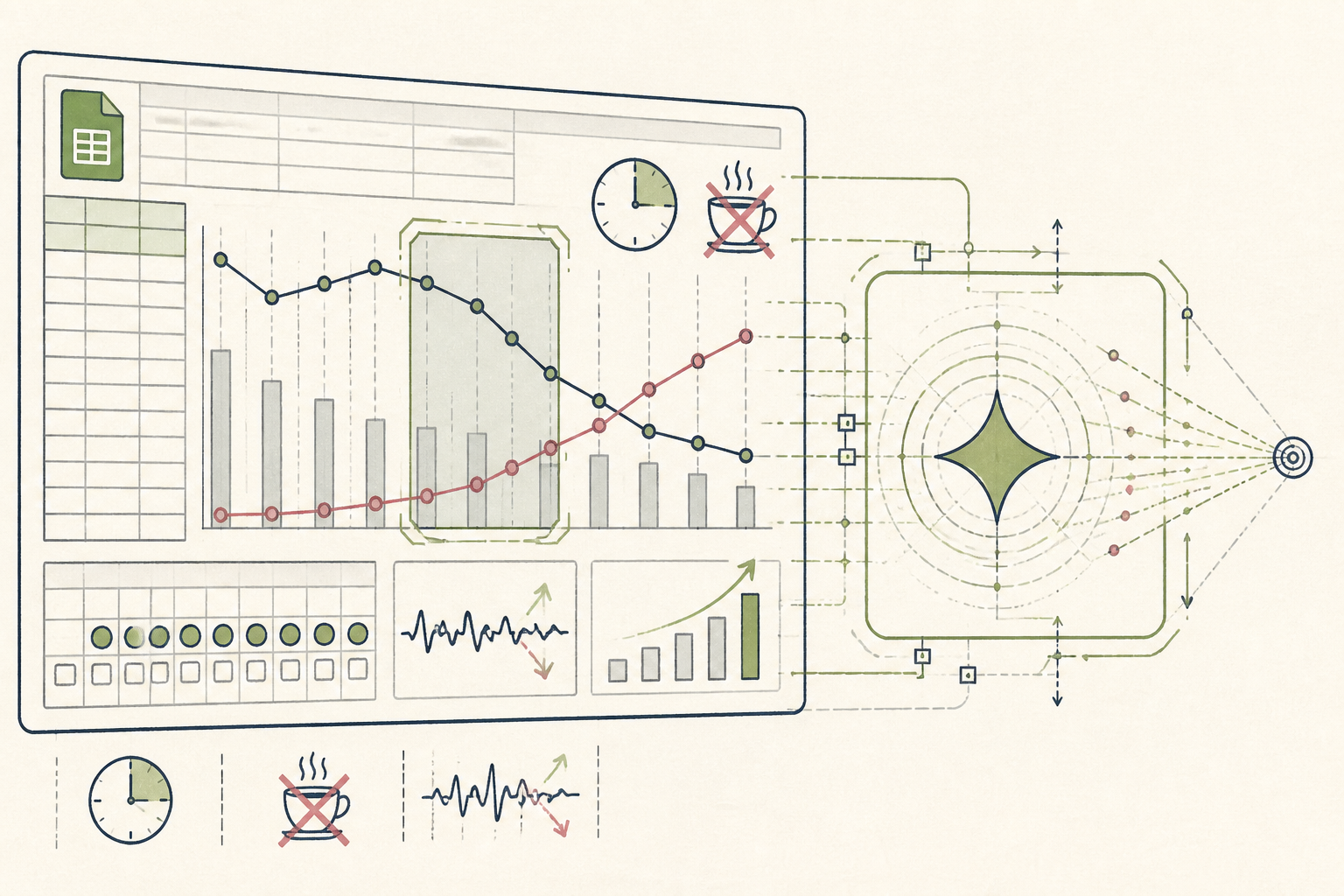
From Hazy Mornings to Clear Cognition
“Your most productive morning blocks (9-11 am) consistently show a 25% drop in focus after your second cup of coffee, indicating an overstimulation threshold rather than a need for more caffeine.”
Unstructured WFH mornings and escalating coffee intakeStructured mornings with 30% less coffee, improved focus
Tools used
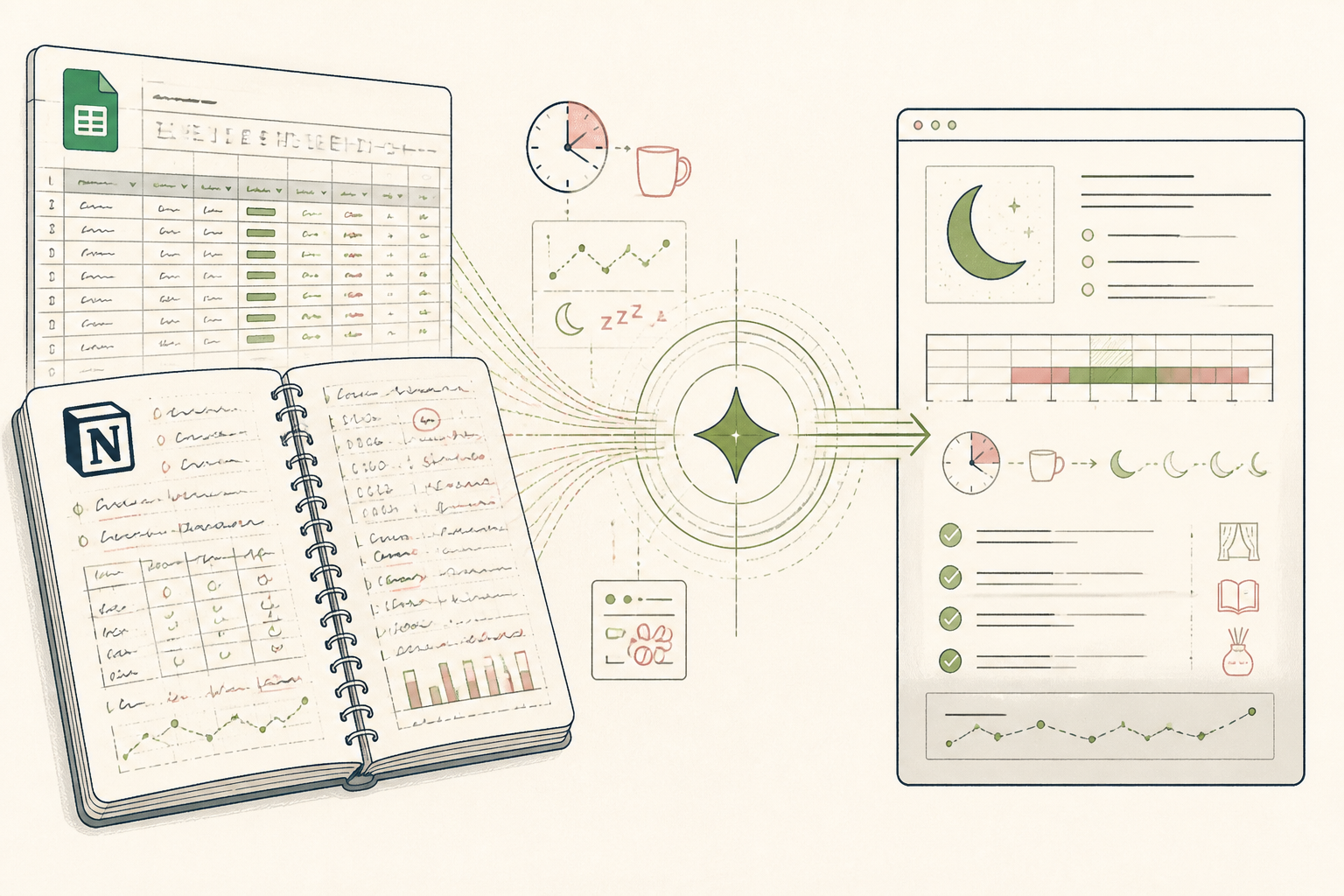
From Scattered Notes to Targeted Sleep Protocol
“The AI observed: 'Client (A.S.) shows a significant sleep latency correlation with late-day caffeine intake, specifically an average 37-minute increase in time to fall asleep when caffeine is consumed after 3 PM.'”
Ad-hoc client notes, vague advicePersonalised sleep protocols by appointment
Tools used
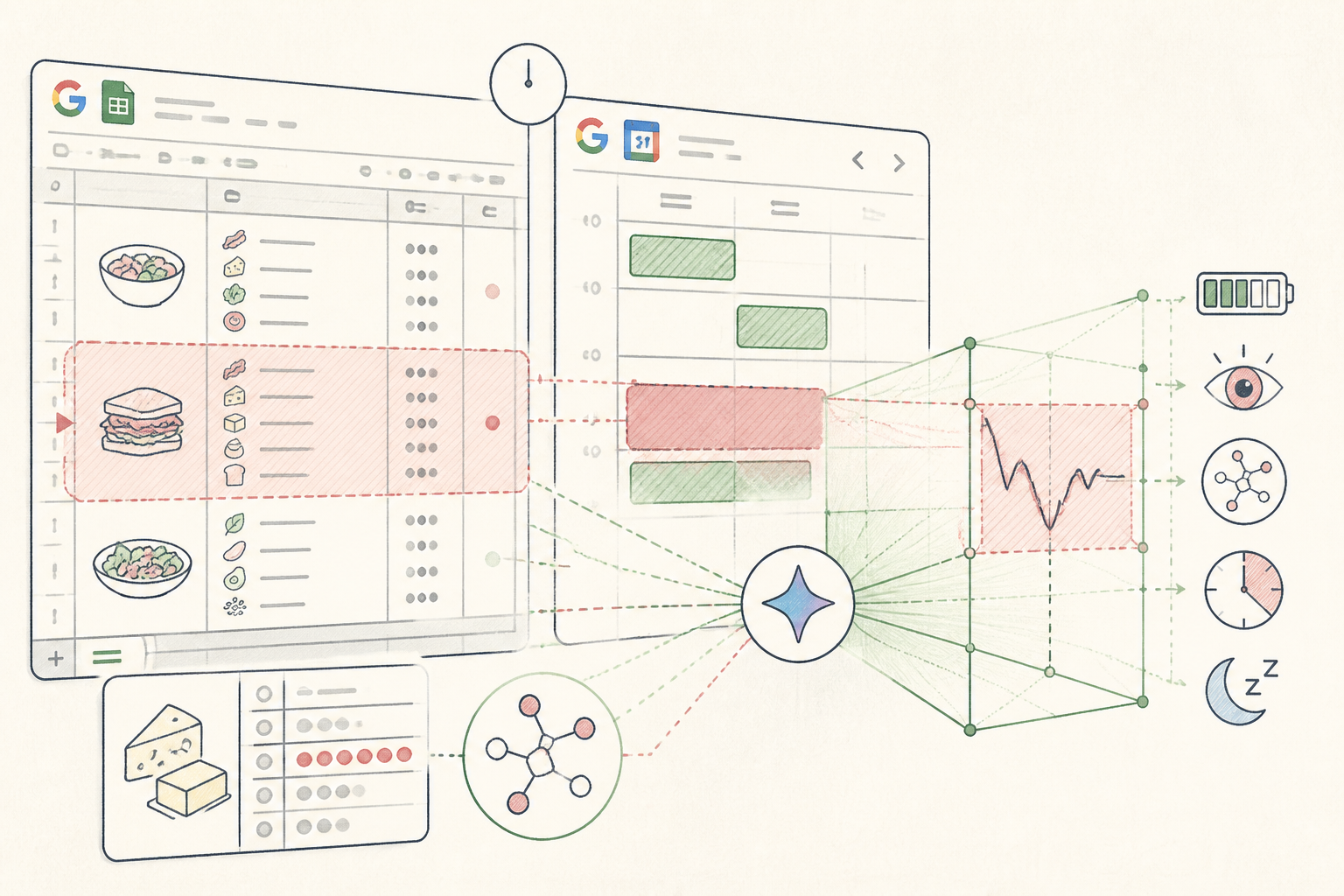
AI-Powered Energy Audit Reveals Hidden Drain
“Your post-lunch energy crashes coincide with meals containing more than 25g of saturated fat, impacting your perceived energy by 30-40% within two hours.”
Vague fatigue, endless guessesClear energy insights, targeted changes
Tools used
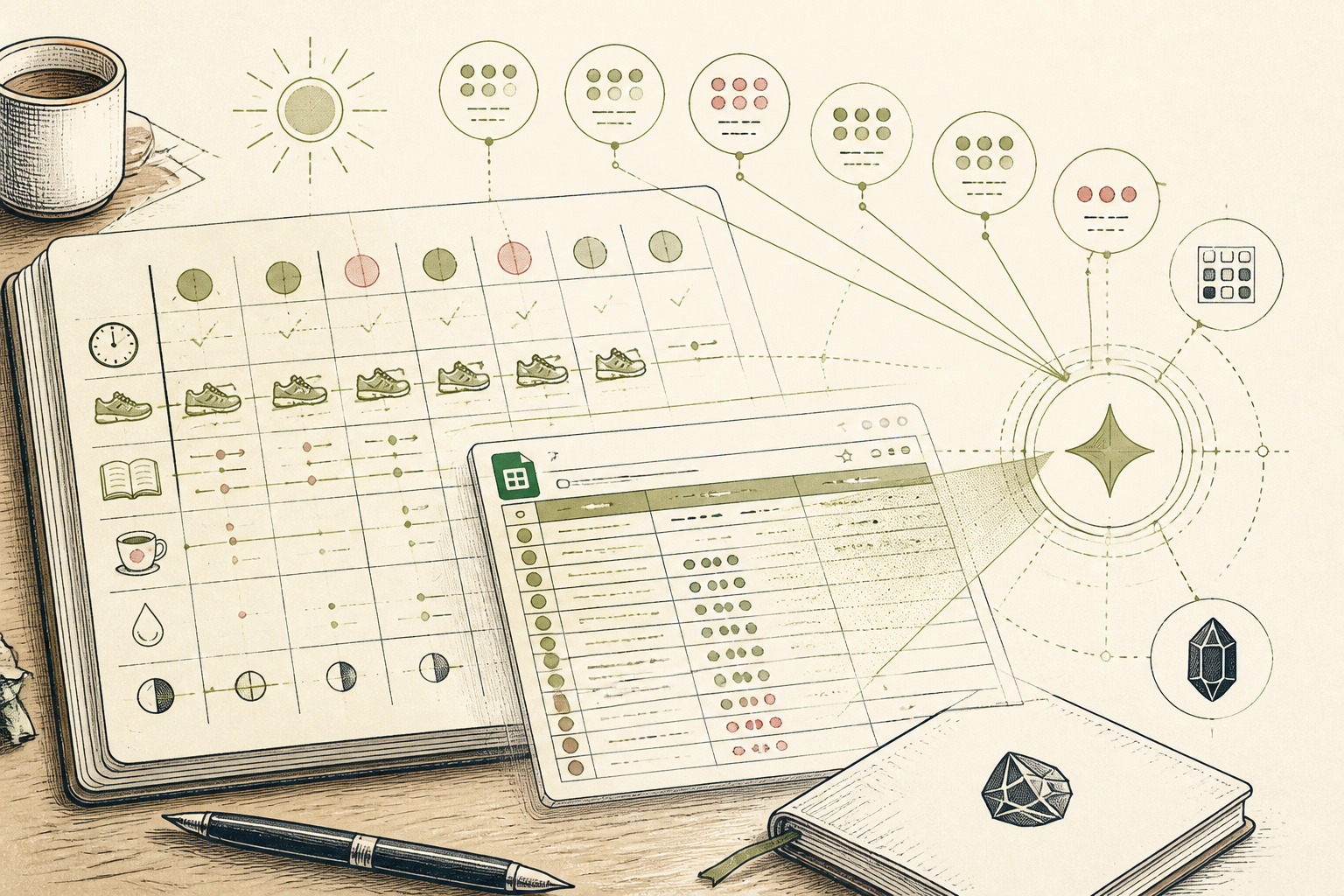
Weekly cognitive function review
“Your top three days for focused work by flow state scores consistently involved a 20-minute morning walk, leading to an average 15% increase in concentration over days without a morning walk.”
Subjective daily notes, rarely reviewedQuantified impact of morning walks on focus
Tools used
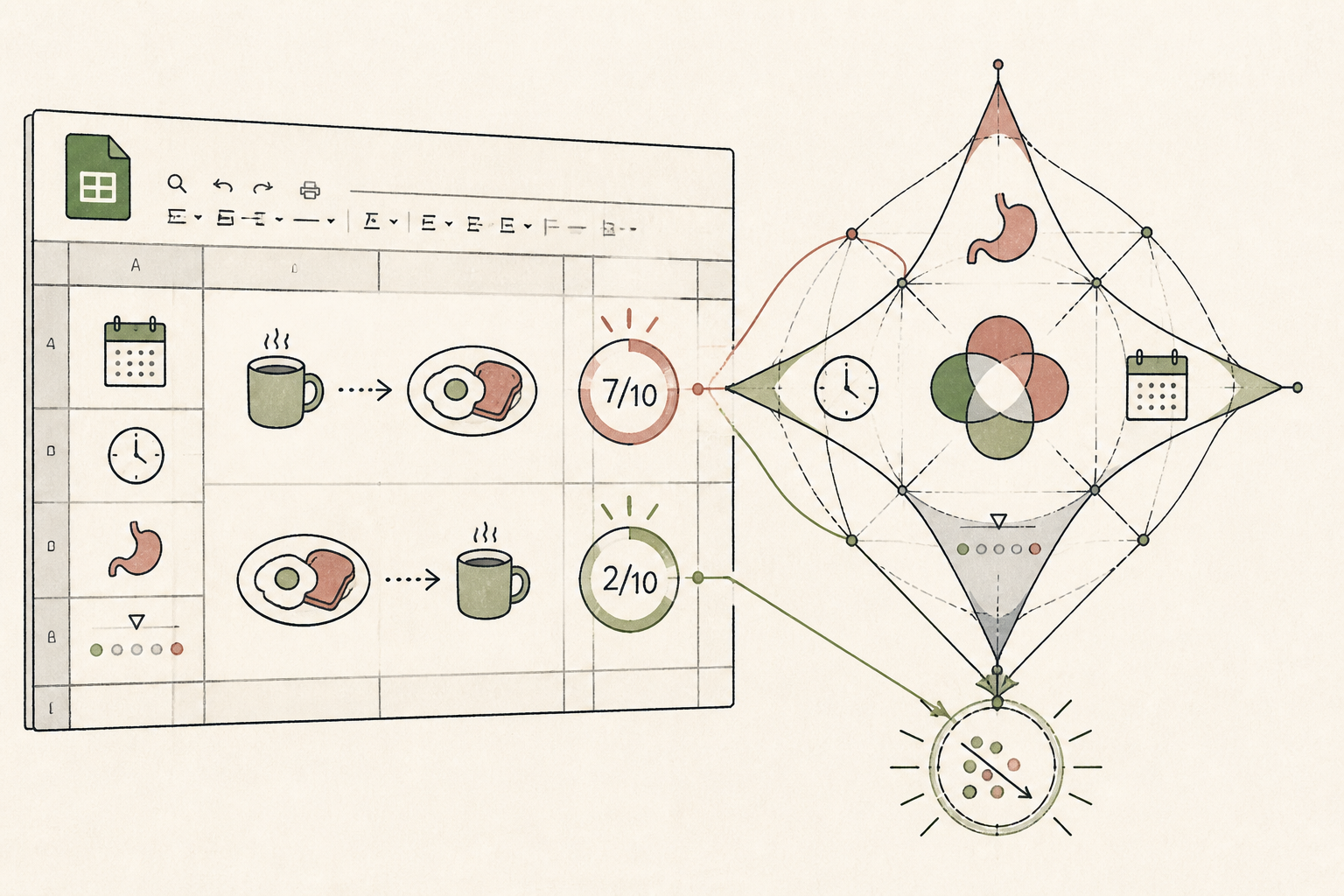
One Small Shift, Clearer Gut Signals
“Your stomach discomfort scores average 2.5 points higher on days when you consume coffee before any solid food, compared to days coffee follows breakfast.”
Haphazard morning routine, vague symptomsInformed morning choices, clearer gut data
Tools used
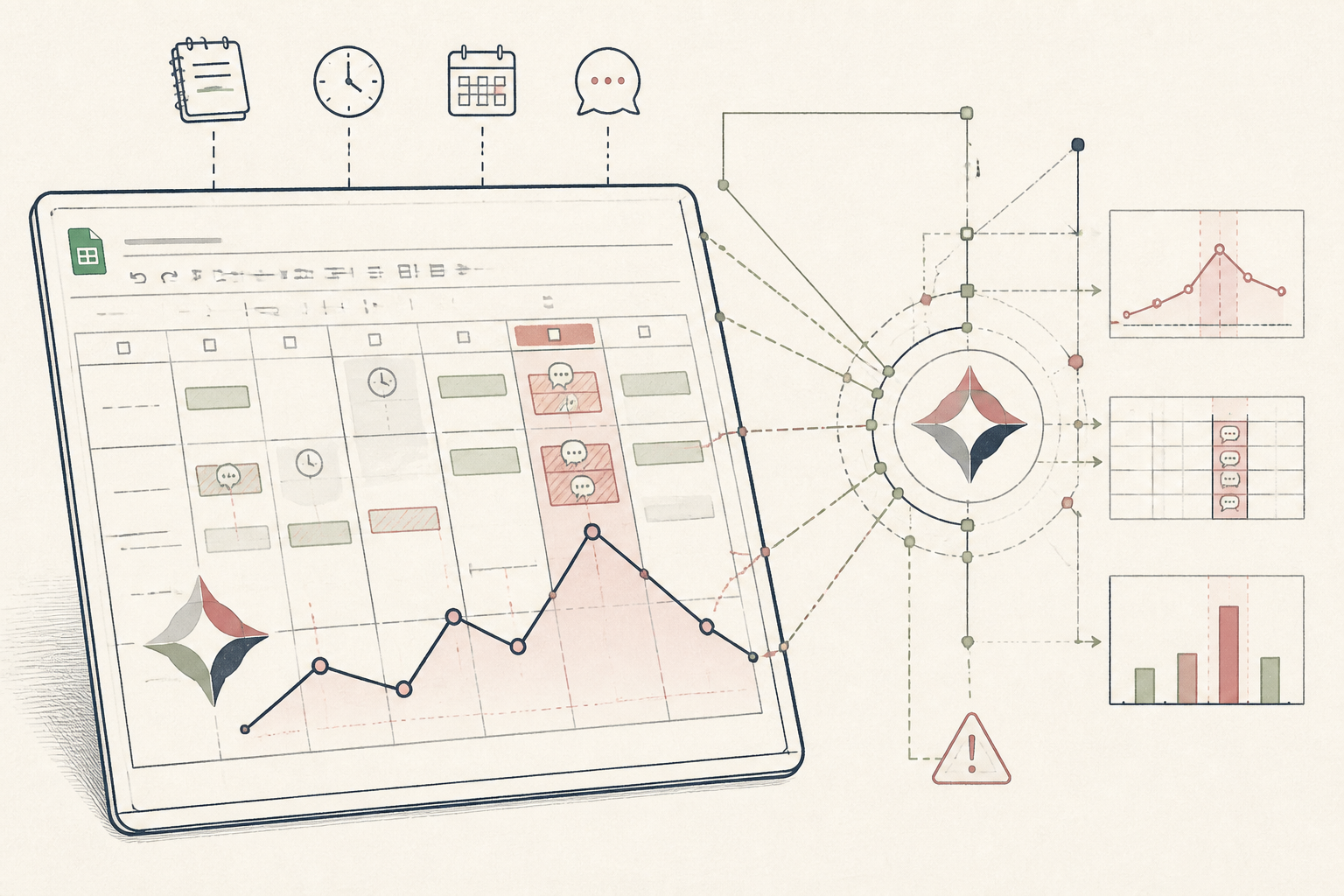
Weekly Stress Patterns Identified
“Your stress peaks consistently on Thursdays, not Mondays, and is 40% higher on weeks with more than three evening meetings.”
Disorganised daily notes, vague anxietiesClear weekly stress report with actionable insights
Tools used
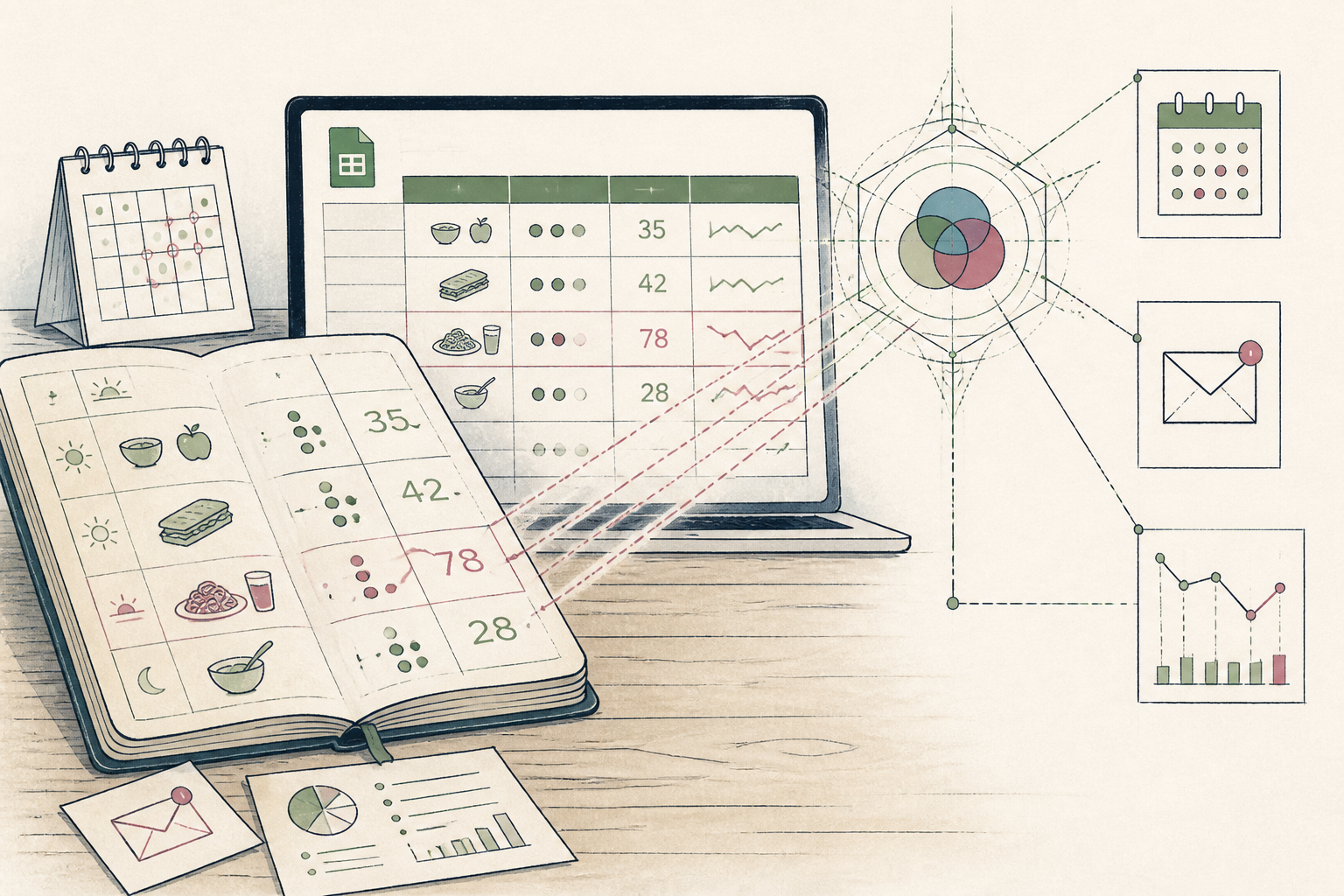
From Hazy Notions to Concrete Actions for Energy
“The AI observed, 'Your client's energy dips most significantly (average 2.5/10 on an energy scale) on days following evening meals with more than 60g of carbohydrates, irrespective of total caloric intake.'”
Vague advice; client inconsistentTargeted recommendations, improved adherence
Tools used
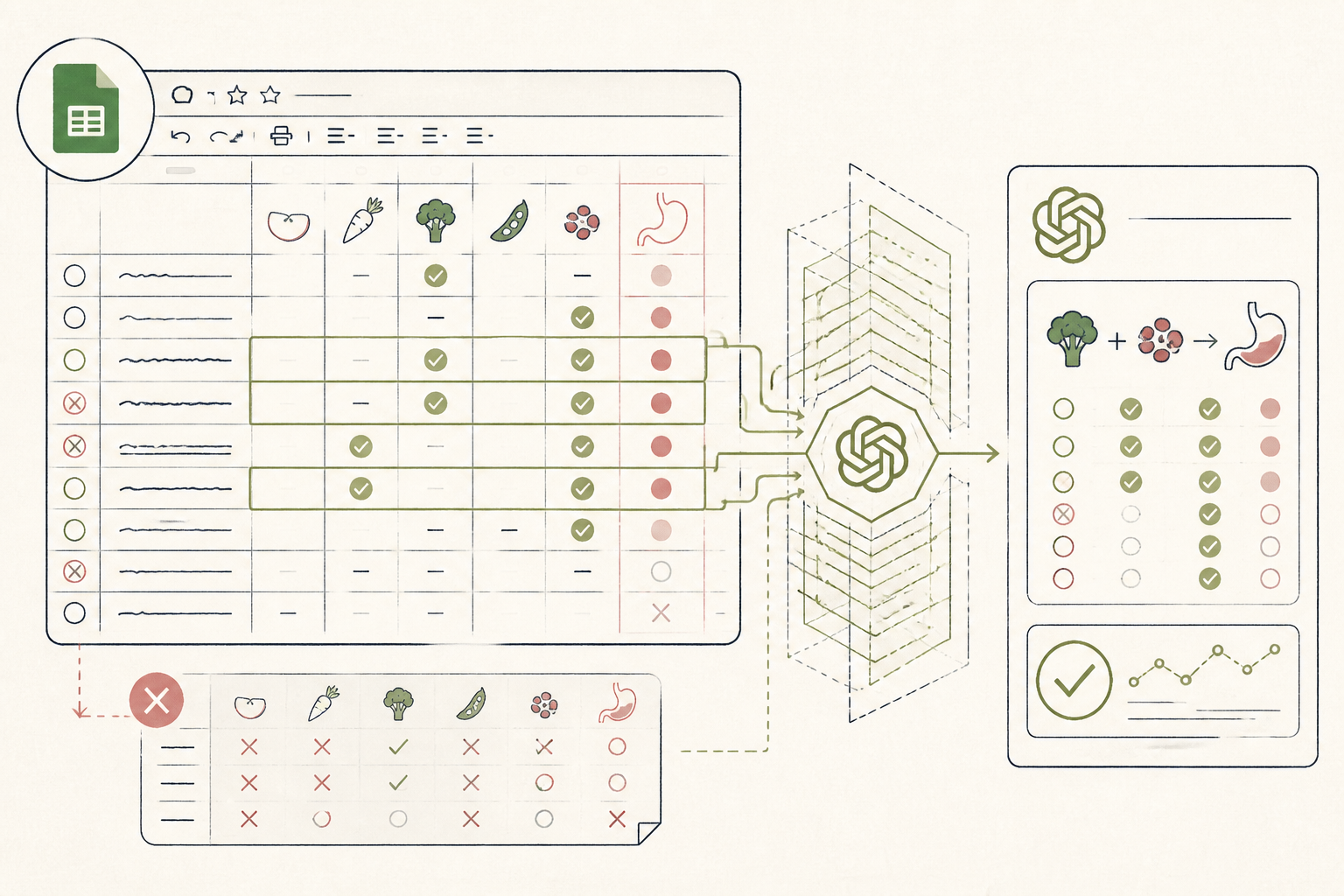
Comparing client meal logs to symptom reports
“The AI observed that 7 out of 9 clients reporting 'bloating' also consumed a specific combination of cruciferous vegetables and legumes within 4 hours of onset, a pattern missed in manual review.”
Hours reviewing scattered client notesActionable, data-driven client insights in minutes
Tools used
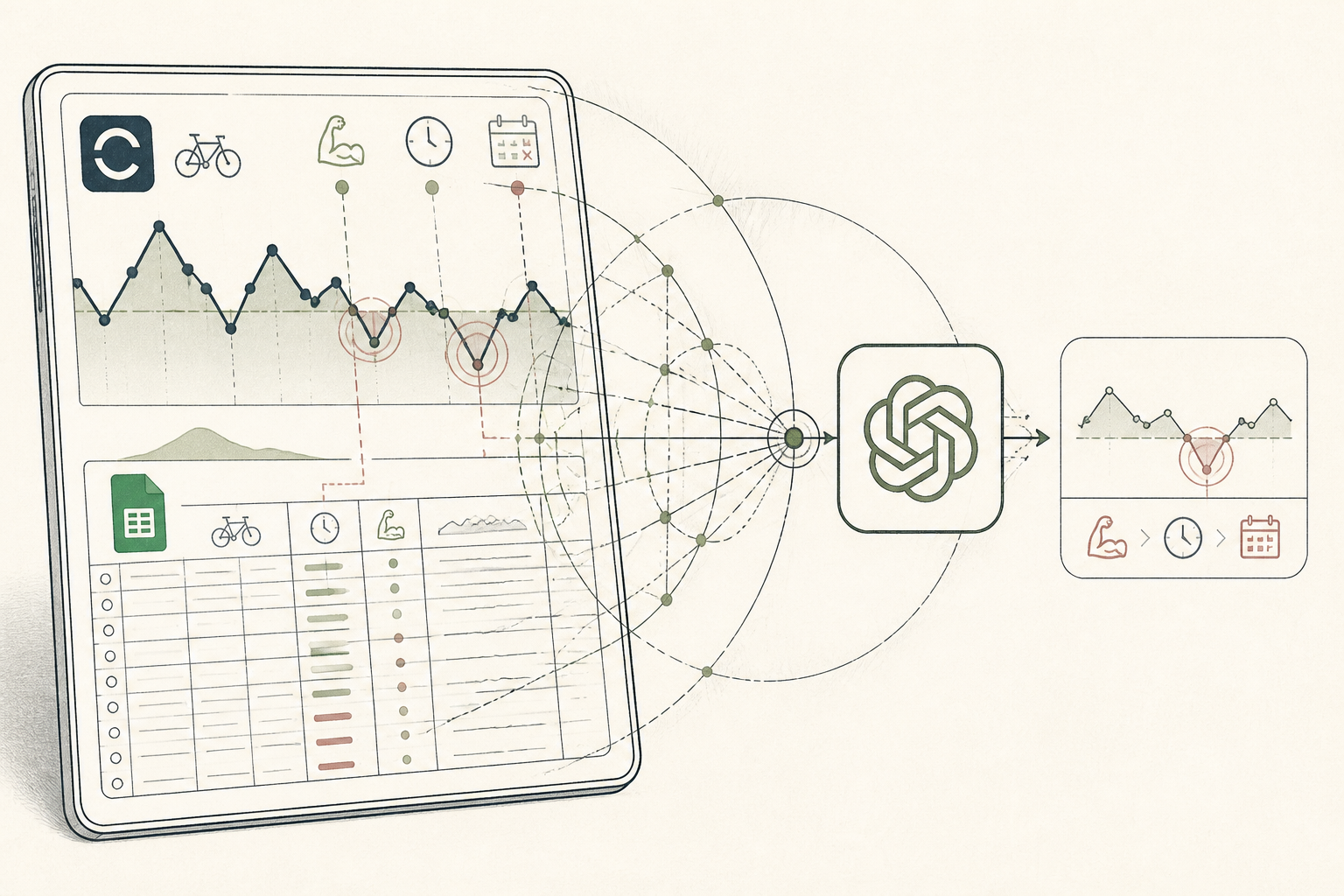
One Small Change, Big Impact on Cycling Stamina
“Your average long-ride power output consistently dropped by 18 watts when you performed core strength training within 24 hours of a long-distance cycling session. This correlation was not observed with other strength training types.”
Ad-hoc training, inconsistent performanceTargeted conditioning, 18W average power gain
Tools used
Personalised
More for you
Based on what you've been reading — always learning.
Want the system that produced these?
Success stories show what changed. Here’s how to build it.
The method, the tools and the setup that made each of these happen — start free, or go straight to the course.