Pillar · Health OS
Your health OS isn't an app. It's the layer that runs across all of them.
One method, three free tools, every device you already own. No installation, no migration, no lock-in.
May 2026 · the news
The decade prediction is here. The agency layer isn't.
Population-scale AI now predicts disease decades out. The papers landed this spring; the venture rounds followed within weeks. A new generation of preventive-health platforms is racing to package those predictions into a single consumer surface, and the predictions inside those apps are getting sharper every quarter.
None of that hands you the dials. The model still lives in someone else's product. The probability still sits in someone else's dashboard. The next time the model updates, you start over inside their UI.
A health OS is the layer you actually own. You read the predictions with your own labs and your own history. You decide which signal is worth a 14-day test. The apps stay where they are; the judgement moves to you.
What a health OS is
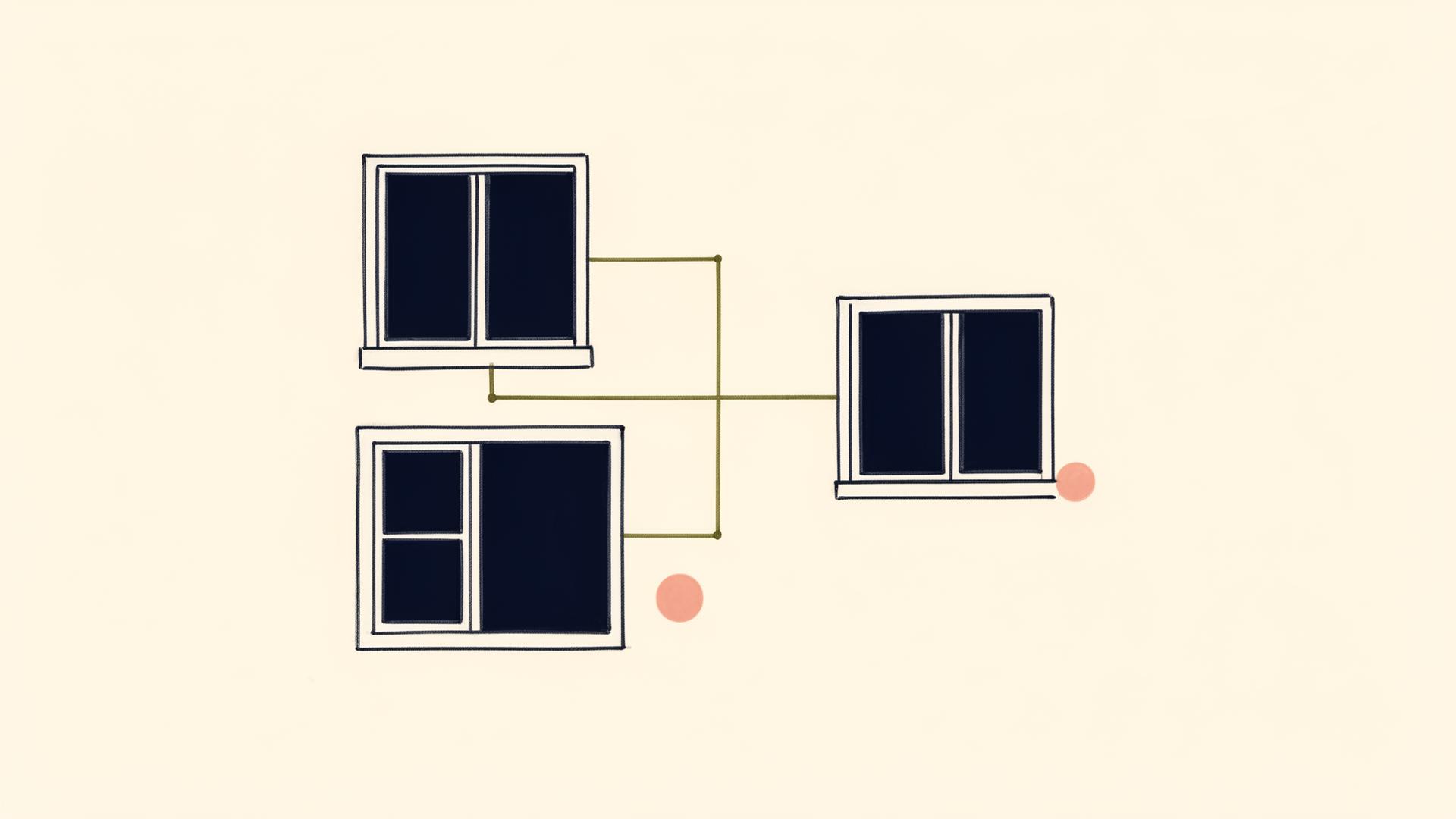
An operating system runs across everything. So does a health OS. It is the literacy that connects your sleep tracker, your last lab panel, your supplement notes, your training log and your symptom journal — and lets you reason across them in one calm conversation.
The OS is composed of three free, general-purpose AI tools doing three different jobs (research, ledger, protocol). The tools change over time; the OS does not. That is the point of treating it as an operating system rather than an app.
Why "OS" — and what an app cannot do
- An app sees only its own data. Your health OS sees everything you bring to it.
- An app gates upgrades behind subscriptions. Your health OS upgrades whenever a free chat model improves.
- An app holds your data in its cloud. Your health OS holds it where you choose.
- An app dies when the company pivots. A method outlives any single product.
The three OS modules
01 · Research module
A sourced-search AI (Perplexity, Gemini Deep Research) for evidence work. Cites studies, ranks claims, surfaces meta-analyses.
02 · Ledger module
A long-context AI ( Claude in particular) that holds months of journals, exports and labs in one continuous thread.
03 · Protocol module
A conversational AI for drafting calm, single-variable tests, daily check-ins, and end-of-period read-outs. You decide; the AI drafts.
The four jobs your OS does
Each one is a free, repeatable loop you run on top of the data you already have. Two of them ship as paid, self-contained workbooks for when you'd rather skip the assembly.
How a health OS feels in practice
- You paste your last 30 nights of sleep export into your ledger conversation.
- You ask the research module: "what's the current evidence on body-temperature drops and sleep latency?" — and get a sourced page back.
- You ask the protocol module to draft a 14-day single-variable test, a one-line daily check-in, and a clear success rule.
- Two weeks later, you paste the new data into your ledger and ask: "did it work?"
That loop is the operating system. No app required.
Trust
Built in the EU. Yours forever.
- GDPR-first by design. No silent ingestion, no shadow profile.
- Your ledger lives in tools you can export, delete and audit.
- We never train models on your notes and never resell your conversations.
- When the next prediction model launches, your method moves with you for free.
Frequently asked
- What is a health OS?
- A health OS — short for personal health operating system — is the layer that sits across every health-related app, device and document you already own and gives them a single, sovereign interface. The OS itself is not an app you install; it is a method built from three free chat tools: a sourced-research AI, a long-context ledger AI, and a conversational protocol AI.
- Why call it an OS instead of an app?
- An app does one thing inside its own walls. An operating system runs across everything. Your health OS runs across your wearable, your lab results, your symptom journal, your medications and your training log. The pattern-matching happens in your conversation, not in someone else's database.
- Do I need to be technical to run a health OS?
- No. If you can use ChatGPT, you can run a health OS. The free 10-Day Challenge teaches the entire system in roughly 15 minutes a day, with no installation and no credit card.
- Is my data private with a health OS?
- More private than any app-based alternative. You choose what to paste into a chat, you delete history when you wish, and you keep portable copies of your ledger. Wellness & AI is EU-built and GDPR-first by design.
- How is this different from a health dashboard or a copilot?
- Dashboards and copilots are products. A health OS is a literacy. You learn it once and you keep using it when the next model, device or service launches. That portability is the entire point.
- Does a health OS replace preventive-health apps?
- No — it sits above them. Preventive-health platforms package population-scale prediction into a single product surface. A health OS reads those outputs, holds them next to your own data, and lets you decide what to do. The apps stay where they are; you keep the agency.
- Is this the same as AI disease prediction?
- No. AI disease prediction is a model that runs on population data and produces a probability. A health OS is the literacy that lets you interrogate those probabilities with your own labs, wearable trends and history. We do not build prediction models — we teach you to read them.
- What happens when a new prediction model launches?
- Your OS upgrades for free. The method is portable: a better research module, a longer-context ledger, a sharper protocol prompt — all swap in without losing a single note. Apps die when companies pivot. Methods do not.
Install your OS
Build it in 10 days, free.
Roughly 15 minutes a day. No credit card. You keep what you build.
Adjacent reading
- Personal Health Stack — the same idea, framed as a stack.
- The 3-Layer Method — the curriculum.
- Methodology — the principles behind the system.
- Glossary