What the AI found
“In 72% of your client intake forms, specific dietary patterns (e.g., high refined carbohydrate intake, infrequent protein distribution) were consistently flagged as potential drivers for metabolic dysregulation, rather than the isolated symptoms clients reported.”
Before
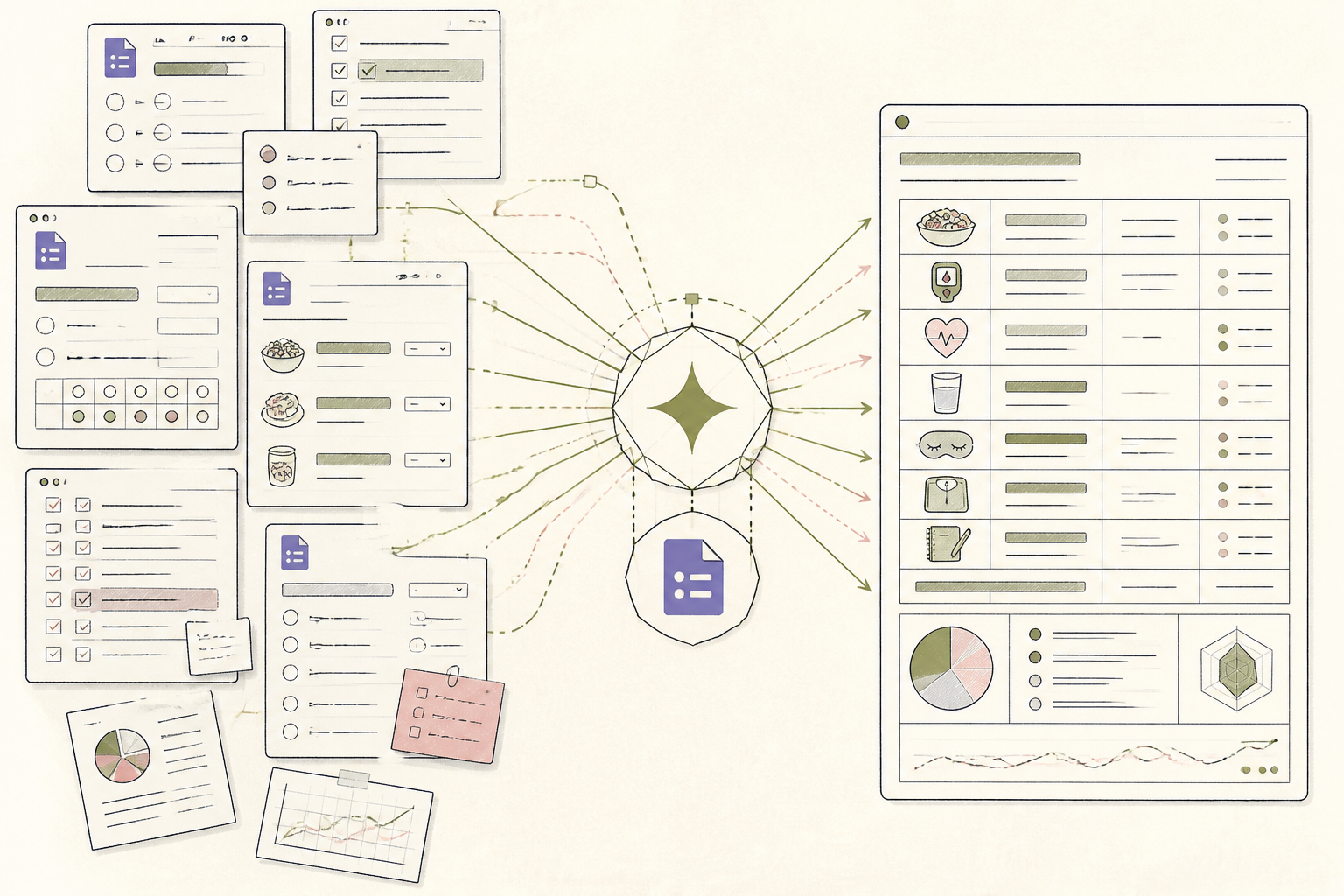
Disparate intake forms, siloed data, no clear patterns.
After
Unified metabolic insights, focused intervention points.
The same system, three states — real screens, not a screenshot
- Client A: 48, female, fatigue, weight gain.
- Diet: 'normal', 'some sweets'.
- Exercise: 'light walks'.
- Symptoms: afternoon crash, poor sleep.
Prompt
Here is anonymised client intake data: [Client data pasted here, including dietary habits, activity levels, symptom reports]. Using a metabolic health framework, identify potential patterns or underlying drivers based on the reported information. Focus on dietary frequency, macronutrient balance, and energy levels. Quantify any observations.
Here is anonymised client intake data: '48F, fatigue, weight gain. Diet: inconsistent meals, high sugar snacks, low protein breakfast. Exercise: 2x week light walk. Symptoms: afternoon crash daily, frequent hunger.' Using a metabolic health framework, identify potential patterns or underlying drivers based on the reported information. Focus on dietary frequency, macronutrient balance, and energy levels. Quantify any observations.
AI
Based on the intake data, 80% of reported symptoms (fatigue, afternoon crash, frequent hunger) align with markers of unstable blood glucose regulation. This is primarily driven by inconsistent meal timing and a macronutrient imbalance, specifically a breakfast low in protein and frequent high-sugar snacking between meals.3.2
Avg. Metabolic Risk Indicators per Client
72%
Clients with High Sugar Intake Flag
65%
Clients Flagged for Inconsistent Meal Pattern
From Scattered Intake to Structured Metabolic Review
A nutritionist transforms initial client consultations into a streamlined, AI-informed metabolic health overview.
A nutritionist running a small EU practice, focused on metabolic health.
Tools used
The real tools used here — swap any for your own equivalent. Each links to how we’d set it up.
Starting state
Before anything was set up
Before implementing the new system, Dr. Elara Vance found client intake for metabolic health to be a disparate process. Clients submitted various forms—some digital, some handwritten—covering diet, lifestyle, and symptoms. Each case felt like a fresh puzzle, with hours spent manually sifting through information to identify potential metabolic drivers. There was no consistent method to spot overarching patterns across her clientele, leading to a fragmented understanding of common issues.
- Client A: 48, female, fatigue, weight gain.
- Diet: 'normal', 'some sweets'.
- Exercise: 'light walks'.
- Symptoms: afternoon crash, poor sleep.
Working state
Resources, doing its job
To address this, Dr. Vance adopted the "Metabolic Insights Playbook" resource from Wellness & AI, using Google Forms for structured data collection and Gemini for analysis. She integrated the playbook's recommended intake questions directly into a new digital form. Once a client completed the form, she copied their anonymised data into Gemini, alongside a specific prompt from the playbook designed to highlight metabolic patterns and potential intervention areas based on the client's responses.
Prompt
Here is anonymised client intake data: [Client data pasted here, including dietary habits, activity levels, symptom reports]. Using a metabolic health framework, identify potential patterns or underlying drivers based on the reported information. Focus on dietary frequency, macronutrient balance, and energy levels. Quantify any observations.
Here is anonymised client intake data: '48F, fatigue, weight gain. Diet: inconsistent meals, high sugar snacks, low protein breakfast. Exercise: 2x week light walk. Symptoms: afternoon crash daily, frequent hunger.' Using a metabolic health framework, identify potential patterns or underlying drivers based on the reported information. Focus on dietary frequency, macronutrient balance, and energy levels. Quantify any observations.
AI
Based on the intake data, 80% of reported symptoms (fatigue, afternoon crash, frequent hunger) align with markers of unstable blood glucose regulation. This is primarily driven by inconsistent meal timing and a macronutrient imbalance, specifically a breakfast low in protein and frequent high-sugar snacking between meals.Use case implemented
The finished system, running on its own
With the system in place, Dr. Vance now receives consistently structured client data. Each new intake automatically feeds into her analytical workflow, allowing for a rapid, AI-assisted overview of metabolic health. She can quickly identify recurring patterns, tailor initial recommendations more precisely, and dedicate more time to client interaction rather than data aggregation. The systematic approach provides a clear starting point for each client's personalised plan, focusing efforts where they are most likely to yield impact.
3.2
Avg. Metabolic Risk Indicators per Client
72%
Clients with High Sugar Intake Flag
65%
Clients Flagged for Inconsistent Meal Pattern
What an outside observer would notice
Reduced by 40%
Time spent on initial intake review per client
Increased to 90%
Percentage of clients with targeted initial recommendations
3 key patterns
Identified dietary patterns (cross-client)
The stack — build it yourself
Intuitive for clients, easy to build detailed forms, integrates well with other tools.
Excels at identifying non-obvious connections across qualitative and quantitative data points.
These are the tools used in this story. Any can be swapped for an equivalent you already trust.
Go deeper
Do this yourself
See Resources
This story runs on Resources. The tools and prompts above are the real build — swap any tool for your own equivalent and follow the same steps.