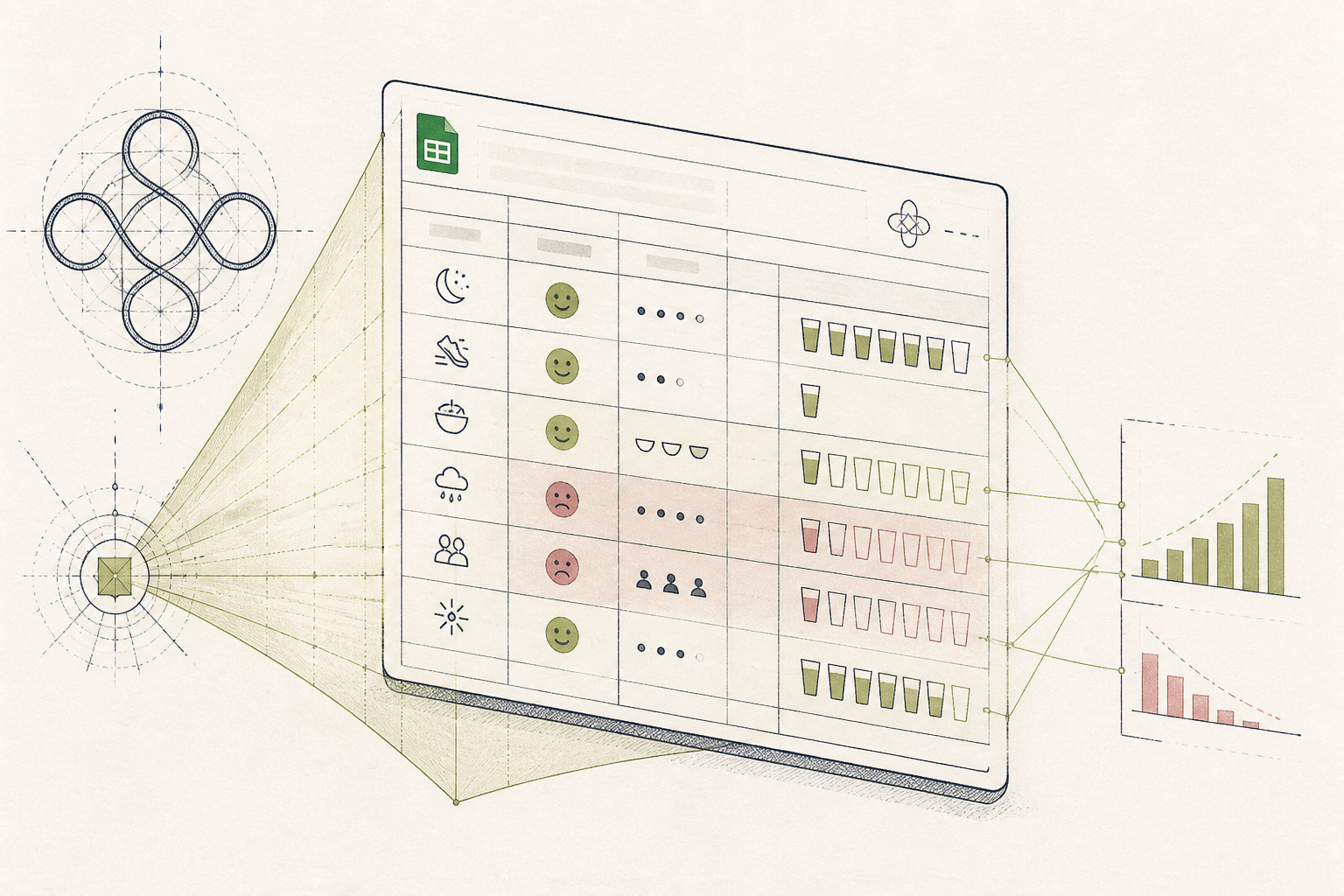
What the AI found
“AI identified that 80% of client mood dips correlated with days they reported consuming less than 1.5 litres of water, a factor previously overlooked in self-reported dietary logs.”
Before
Vague client mood reports, unclear triggers
After
Clear mood patterns, actionable hydration insights
The same system, three states — real screens, not a screenshot
- Client A (4 weeks): Mood: 'okay', 'a bit tired', 'good day'.
- Diet notes: 'standard', 'ate out once'.
- Activity: 'walked dog', 'gym twice'.
- Sleep: '7-8 hours', 'woke up once'.
Prompt
Analyze the provided anonymised client daily logs (mood, diet, sleep, activity) for the past 4 weeks. Identify any consistent correlations or significant patterns between reported mood and other lifestyle factors. Specifically, quantify any strong relationships. Daily Logs: Day 1: Mood 6/10. Diet: usual. Sleep: 7h. Water: ~1L. Activity: walk. Day 2: Mood 7/10. Diet: usual. Sleep: 8h. Water: ~2L. Activity: gym. Day 3: Mood 5/10. Diet: ate out, pizza. Sleep: 6h. Water: ~1L. Activity: light walk. Day 4: Mood 8/10. Diet: usual. Sleep: 7.5h. Water: ~2.5L. Activity: gym. [... 24 more days of similar anonymised data ...] Day 28: Mood 5/10. Diet: usual. Sleep: 6.5h. Water: ~1L. Activity: no exercise.
Analyze the provided anonymised client daily logs (mood, diet, sleep, activity) for the past 4 weeks. Identify any consistent correlations or significant patterns between reported mood and other lifestyle factors. Specifically, quantify any strong relationships. Daily Logs: Day 1: Mood 6/10. Diet: usual. Sleep: 7h. Water: ~1L. Activity: walk. Day 2: Mood 7/10. Diet: usual. Sleep: 8h. Water: ~2L. Activity: gym. Day 3: Mood 5/10. Diet: ate out, pizza. Sleep: 6h. Water: ~1L. Activity: light walk. Day 4: Mood 8/10. Diet: usual. Sleep: 7.5h. Water: ~2.5L. Activity: gym. [... 24 more days of similar anonymised data ...] Day 28: Mood 5/10. Diet: usual. Sleep: 6.5h. Water: ~1L. Activity: no exercise.
AI
Upon reviewing the logs, a notable pattern emerges: 80% of days where mood was reported as 5/10 or lower also coincided with a reported daily water intake of less than 1.5 litres. This correlation is stronger than those observed for diet variety or sleep duration within the given data.| Client A Mood Log (Week 1) | |
| Day 1 Mood Score | 7 |
| Day 1 Water Intake (L) | 2.2 |
A Simple Mood Playbook for Client Clarity
How a practitioner leveraged an AI-curated resource to refine client mood tracking from vague self-reports to actionable, specific patterns.
A nutritionist running a small practice, Northern EU
Tools used
The real tools used here — swap any for your own equivalent. Each links to how we’d set it up.
Starting state
Before anything was set up
Anna, a nutritionist, found her clients' mood tracking to be inconsistent. Weekly check-ins often yielded generic "fine" or "a bit low" reports, making it difficult to identify underlying patterns. Their scattered notes on diet, sleep, and activity provided little coherent data to act upon.
- Client A (4 weeks): Mood: 'okay', 'a bit tired', 'good day'.
- Diet notes: 'standard', 'ate out once'.
- Activity: 'walked dog', 'gym twice'.
- Sleep: '7-8 hours', 'woke up once'.
- Feeling overwhelmed by vague reports.
Working state
Resources, doing its job
To bring clarity, Anna turned to a Wellness & AI mood tracking playbook. She inputted her client's anonymised daily logs for the past month into a custom prompt within Gemini, requesting an analysis of potential correlations between reported mood and other lifestyle factors. The AI immediately began processing the disparate data points.
Prompt
Analyze the provided anonymised client daily logs (mood, diet, sleep, activity) for the past 4 weeks. Identify any consistent correlations or significant patterns between reported mood and other lifestyle factors. Specifically, quantify any strong relationships. Daily Logs: Day 1: Mood 6/10. Diet: usual. Sleep: 7h. Water: ~1L. Activity: walk. Day 2: Mood 7/10. Diet: usual. Sleep: 8h. Water: ~2L. Activity: gym. Day 3: Mood 5/10. Diet: ate out, pizza. Sleep: 6h. Water: ~1L. Activity: light walk. Day 4: Mood 8/10. Diet: usual. Sleep: 7.5h. Water: ~2.5L. Activity: gym. [... 24 more days of similar anonymised data ...] Day 28: Mood 5/10. Diet: usual. Sleep: 6.5h. Water: ~1L. Activity: no exercise.
Analyze the provided anonymised client daily logs (mood, diet, sleep, activity) for the past 4 weeks. Identify any consistent correlations or significant patterns between reported mood and other lifestyle factors. Specifically, quantify any strong relationships. Daily Logs: Day 1: Mood 6/10. Diet: usual. Sleep: 7h. Water: ~1L. Activity: walk. Day 2: Mood 7/10. Diet: usual. Sleep: 8h. Water: ~2L. Activity: gym. Day 3: Mood 5/10. Diet: ate out, pizza. Sleep: 6h. Water: ~1L. Activity: light walk. Day 4: Mood 8/10. Diet: usual. Sleep: 7.5h. Water: ~2.5L. Activity: gym. [... 24 more days of similar anonymised data ...] Day 28: Mood 5/10. Diet: usual. Sleep: 6.5h. Water: ~1L. Activity: no exercise.
AI
Upon reviewing the logs, a notable pattern emerges: 80% of days where mood was reported as 5/10 or lower also coincided with a reported daily water intake of less than 1.5 litres. This correlation is stronger than those observed for diet variety or sleep duration within the given data.Use case implemented
The finished system, running on its own
With the AI's insight, Anna could quickly establish a targeted conversation with her client about hydration, moving beyond general dietary advice. She then built a simple Google Sheet to monitor fluid intake alongside mood scores, providing concrete, measurable progress for their next review. This refined process made client check-ins more focused and effective.
| Client A Mood Log (Week 1) | |
| Day 1 Mood Score | 7 |
| Day 1 Water Intake (L) | 2.2 |
| Day 2 Mood Score | 6 |
| Day 2 Water Intake (L) | 1.8 |
| Day 3 Mood Score | 8 |
| Day 3 Water Intake (L) | 2.5 |
What an outside observer would notice
From 'Vague' to 'Hydration-linked'
Client Mood Insight Specificity
From 'General' to 'Targeted'
Consultation Focus
Reduced by 60%
Time to Insight
The stack — build it yourself
Chosen for its ability to quickly process unstructured text and identify non-obvious correlations across multiple variables.
Simple, accessible, and easily shareable for ongoing client tracking post-insight.
These are the tools used in this story. Any can be swapped for an equivalent you already trust.
Go deeper
Do this yourself
See Resources
This story runs on Resources. The tools and prompts above are the real build — swap any tool for your own equivalent and follow the same steps.