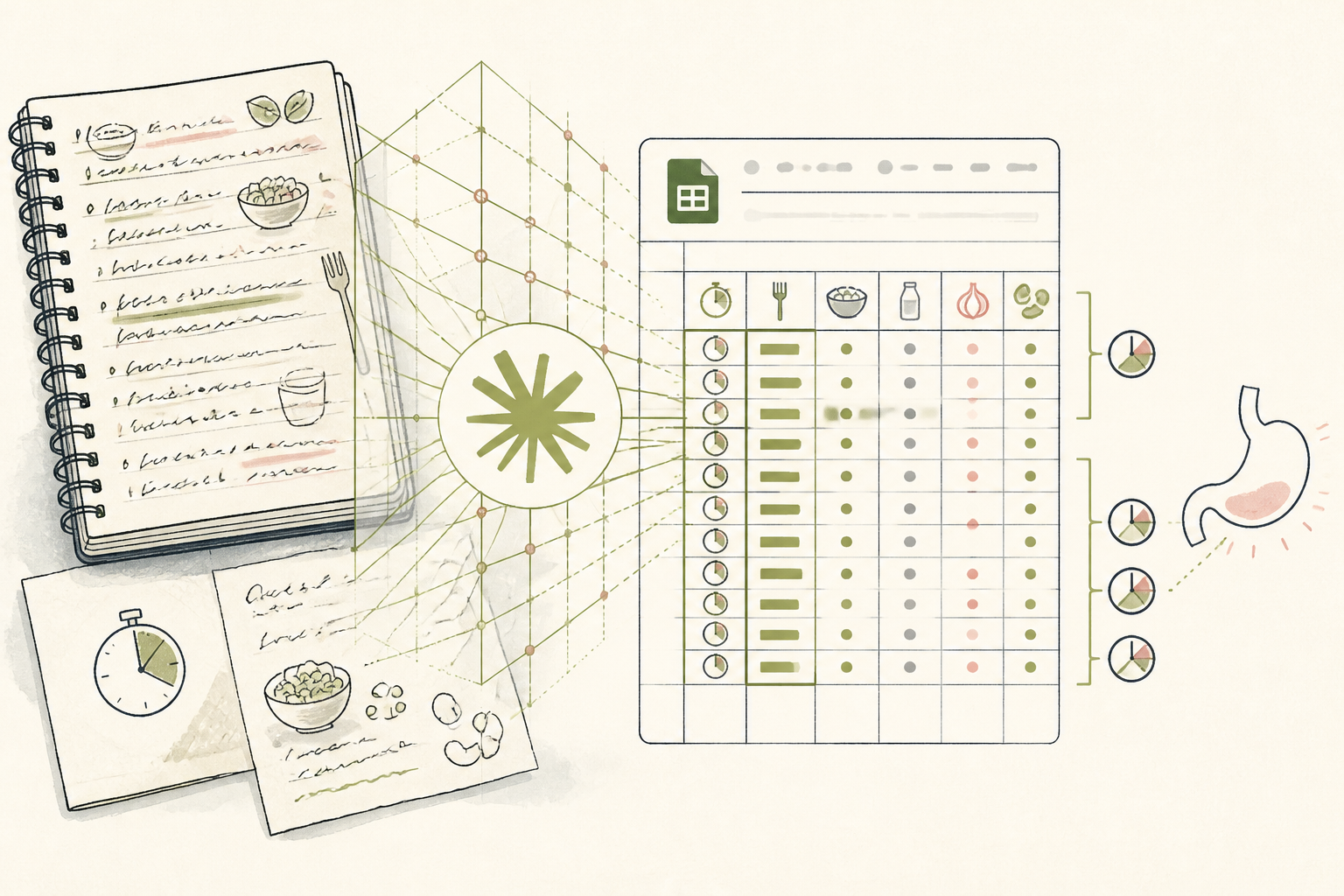
What the AI found
“The reported evening bloating clustered on days with desk lunches under 18 minutes, regardless of whether meals contained dairy, alliums, or legumes.”
Before
40 unformatted food logs arriving over WhatsApp
After
6-minute Monday synthesis before consultations
The same system, three states — real screens, not a screenshot
- Client J: photo of handwritten diary (illegible lunch Mon)
- WhatsApp voice note: "felt heavy again after dinner Thursday"
- Suspected: dairy, gluten, chickpeas (no pattern confirmed)
- 42 minutes spent deciphering timestamps before session
Prompt
Here are 3 weeks of unformatted client meal entries and symptom ratings. Clean the chronology, group entries by meal interval and pace, and identify any correlations with evening bloating scores above 6/10.
Here are 3 weeks of unformatted client meal entries and symptom ratings. Clean the chronology, group entries by meal interval and pace, and identify any correlations with evening bloating scores above 6/10.
AI
Analysis complete across 21 days. The reported evening bloating clustered on days with desk lunches under 18 minutes, regardless of whether meals contained dairy, alliums, or legumes. Evening scores averaged 7.8/10 on rushed days (n=11) versus 2.1/10 on days with seated lunches over 25 minutes (n=10).6 min / client
intake pre-sort
3 primary leads
pattern clarity
100% normalized
unstructured text
Turning messy client food logs into structured consultation insights
How a nutritional therapist turned fragmented client journals into clear consultation briefings.
A private practice registered nutritional therapist, Northern Europe
Tools used
The real tools used here — swap any for your own equivalent. Each links to how we’d set it up.
Starting state
Before anything was set up
Her Sunday evenings were swallowed by transcription. Clients texted photos of paper diaries, sent fragmentary voice memos, and pasted ragged lists of dinners into email threads. She spent forty minutes per client transcribing disjointed notes into a spreadsheet, attempting to cross-reference reported abdominal distress against suspected FODMAP triggers. By Monday morning, she was exhausted before the first client arrived, still holding no clear hypothesis.
- Client J: photo of handwritten diary (illegible lunch Mon)
- WhatsApp voice note: "felt heavy again after dinner Thursday"
- Suspected: dairy, gluten, chickpeas (no pattern confirmed)
- 42 minutes spent deciphering timestamps before session
Working state
10-Day Challenge, doing its job
On day five of the challenge, she pasted three weeks of a client's unstructured notes directly into Claude using a dedicated prompt template. She asked it to normalize the timestamps, separate food ingredients from behavioral pace, and isolate high-symptom evenings. In seconds, the model highlighted an inverse relationship between lunch duration and evening discomfort, bypassing her original suspicion of food intolerances.
Prompt
Here are 3 weeks of unformatted client meal entries and symptom ratings. Clean the chronology, group entries by meal interval and pace, and identify any correlations with evening bloating scores above 6/10.
Here are 3 weeks of unformatted client meal entries and symptom ratings. Clean the chronology, group entries by meal interval and pace, and identify any correlations with evening bloating scores above 6/10.
AI
Analysis complete across 21 days. The reported evening bloating clustered on days with desk lunches under 18 minutes, regardless of whether meals contained dairy, alliums, or legumes. Evening scores averaged 7.8/10 on rushed days (n=11) versus 2.1/10 on days with seated lunches over 25 minutes (n=10).Use case implemented
The finished system, running on its own
By day ten of the challenge, she runs a quiet, standardized Monday morning ritual. Exported client food journals pass through Claude to yield a one-page consultation briefing. The document separates raw dietary inputs from pacing and work-context variables. She enters client reviews with clear discussion leads, spending session time probing behavioral contexts rather than manually deciphering handwritten dinner times or parsing contradictory self-reports.
6 min / client
intake pre-sort
3 primary leads
pattern clarity
100% normalized
unstructured text
What an outside observer would notice
from 42m to 6m
intake prep time
meal pacing identified
pattern recognition
The stack — build it yourself
Handles long, irregular blocks of prose without losing chronological sequence.
Clean, private repository to standardize meal times, pace, and symptoms.
These are the tools used in this story. Any can be swapped for an equivalent you already trust.
Go deeper
Do this yourself
Build your own intake pipeline
This story runs on 10-Day Challenge. The tools and prompts above are the real build — swap any tool for your own equivalent and follow the same steps.