What the AI found
“Your afternoon cognitive drop coincides with mornings containing three consecutive 45-minute intakes, regardless of lunch composition or total sleep.”
Before
afternoon brain fog blamed on light lunches
After
one 4-minute calendar audit before clinic starts
The same system, three states — real screens, not a screenshot
- 14 Oct: 15:00 fog again. Had chicken broth, slept 7.5 hrs.
- 16 Oct: 15:30 exhausted, head heavy. Tried fasting lunch.
- 19 Oct: 14:45 low focus, lost train of thought mid-session.
- Hypothesis: post-prandial dip or food intolerance?
Prompt
Here are my last 14 days of appointment timestamps alongside my 1-5 afternoon focus ratings and lunch notes. Identify any correlation with my 3pm focus drops.
Here are my last 14 days of appointment timestamps alongside my 1-5 afternoon focus ratings and lunch notes. Identify any correlation with my 3pm focus drops.
AI
Your afternoon cognitive drop coincides with mornings containing three consecutive 45-minute intakes, regardless of lunch composition or total sleep. On days with a 15-minute gap between intakes, your 3pm focus averaged 4.4/5; on back-to-back days, it dropped to 1.8/5.15 min set
Intake buffer
Admin only
Post-lunch block
4.2 / 5.0
3pm focus score
Auditing Clinical Focus with a Ten Day Calendar Protocol
How a physical therapist isolated schedule density—not diet—as the source of cognitive fatigue.
A 39-year-old sports physiotherapist running a private clinic, Northern Europe
Tools used
The real tools used here — swap any for your own equivalent. Each links to how we’d set it up.
Starting state
Before anything was set up
Three afternoons a week, mid-way through clinical assessments, a persistent mental haze set in. Sentences stalled, recall slowed, and charting lagged into the evening. The practitioner assumed nutrition was the culprit. He swapped carbohydrate-heavy lunches for light broths, shifted coffee windows, and logged disjointed notes on his phone. Yet on random Thursdays his mind felt razor-sharp, while on Tuesdays he could barely concentrate through basic range-of-motion reviews. The records sat scattered across appointment software and phone memos, entirely unexamined.
- 14 Oct: 15:00 fog again. Had chicken broth, slept 7.5 hrs.
- 16 Oct: 15:30 exhausted, head heavy. Tried fasting lunch.
- 19 Oct: 14:45 low focus, lost train of thought mid-session.
- Hypothesis: post-prandial dip or food intolerance?
Working state
10-Day Challenge, doing its job
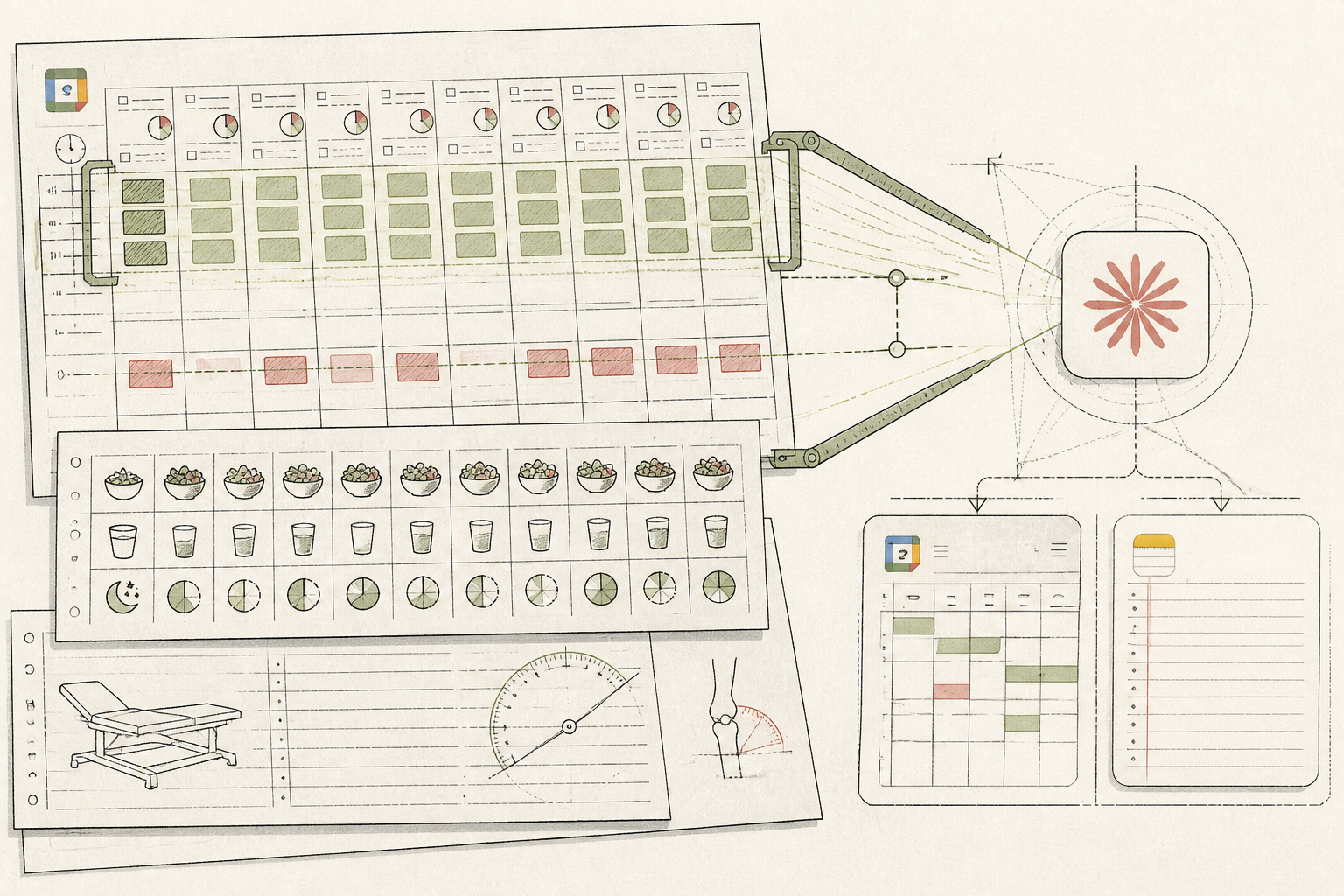
On day four of the challenge, the practitioner exported two weeks of appointment timestamps into a clean text file alongside his focus scores. Following the course template, he ran the data through Claude to inspect correlations between meal timings, sleep totals, and mental endurance. Within thirty seconds, the model highlighted a variable he had not tracked intentionally: the clustering of initial client consultations. Heavy days did not drain him; back-to-back cognitive shifting without a reset did.
Prompt
Here are my last 14 days of appointment timestamps alongside my 1-5 afternoon focus ratings and lunch notes. Identify any correlation with my 3pm focus drops.
Here are my last 14 days of appointment timestamps alongside my 1-5 afternoon focus ratings and lunch notes. Identify any correlation with my 3pm focus drops.
AI
Your afternoon cognitive drop coincides with mornings containing three consecutive 45-minute intakes, regardless of lunch composition or total sleep. On days with a 15-minute gap between intakes, your 3pm focus averaged 4.4/5; on back-to-back days, it dropped to 1.8/5.Use case implemented
The finished system, running on its own
By day ten, the practitioner had established an automated morning review. A brief calendar audit runs at 08:15 alongside Apple Health sleep baselines. Instead of overhauling meals or leaning on caffeine, the clinic template now enforces a mandatory fifteen-minute charting buffer between back-to-back consultations. The regular mid-afternoon mental slump receded once consultation density was capped at two consecutive sessions, leaving cognitive capacity intact for the final appointments of the day.
15 min set
Intake buffer
Admin only
Post-lunch block
4.2 / 5.0
3pm focus score
What an outside observer would notice
Down 68%
Afternoon focus drop
4 mins
Daily review time
15 mins
Between-client buffer
The stack — build it yourself
Handles large exports of unstructured session notes and calendar timings without data leaks.
Standard practice tool that outputs raw appointment timestamps cleanly to CSV.
Zero friction for entering a single number and quick note between appointments.
These are the tools used in this story. Any can be swapped for an equivalent you already trust.
Go deeper
Do this yourself
Start the free 10-day sprint
This story runs on 10-Day Challenge. The tools and prompts above are the real build — swap any tool for your own equivalent and follow the same steps.