Workspace · Setup in 8 min· Setup Pass
Set up DeepSeek to draft client protocols in 8 minutes
Use the high-reasoning R1 model to turn raw notes into a structured client protocol, ready for clinical review.
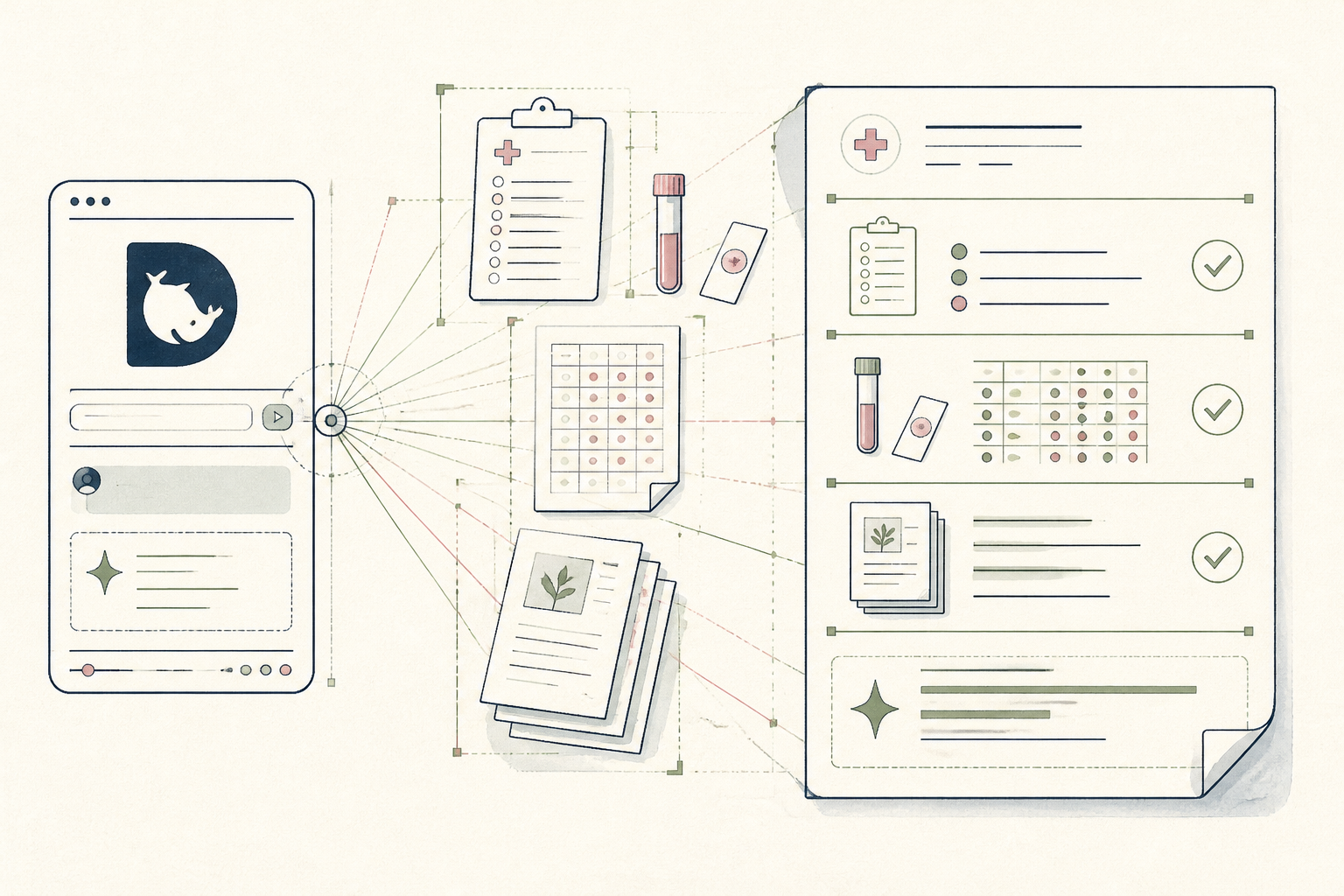
Turning a client's intake form, lab results, and your own research into a coherent, actionable protocol is a core task for any practitioner. This setup uses DeepSeek's R1 model to create a strong first draft, structuring your notes and saving several hours of administrative work per client.
Before you start
- A DeepSeek account
- A client's anonymized intake notes or lab data
- 8 quiet minutes
The steps
- 01
Select the Right Model
Log in to your DeepSeek account and select the DeepSeek-V2 or R1 model. These models have the strongest reasoning capabilities, which are necessary for interpreting health data and structuring it logically. Avoid the lighter 'chat' version for this task.
- 02
Create Your Protocol Template
In the chat window, paste a simple markdown template for your desired output. Include headings like ## Patient Summary, ## Key Observations, ## Proposed Interventions (Diet, Supplement, Lifestyle), and ## Further Testing. This gives the model a clear structure to follow.
- 03
Prime the Model with Your Research
Paste in the key studies or mechanisms you're using to inform the protocol. For example, if you are recommending a specific form of magnesium, provide a sentence on its mechanism, like 'Magnesium L-threonate has been shown to cross the blood-brain barrier (Shen et al., 2019)'. This grounds the model's output in your evidence base as part of the Research layer of the 3-Layer Method.
- 04
Input the Anonymized Client Data
Copy and paste the client's raw, anonymized information below your research and template. This can include symptom journals, lab markers (e.g., 'Hs-CRP: 2.8 mg/L'), or intake form notes. Ensure all personally identifiable information is removed before pasting.
- 05
Generate and Refine the Draft
Use a clear, direct prompt like: 'Using the provided template, research, and client data, generate a draft protocol. For each intervention, cite the specific observation that justifies it.' Review the output, then use feedback to refine it—for example, 'Good. Now, re-write the diet section to be more specific, listing 5-7 approved foods'.
Honest note
DeepSeek's reasoning is strong for a free model, but it is not a clinical decision-making tool and has no access to a real-time, curated medical database. It can invent plausible-sounding justifications for its recommendations or misinterpret lab values. Every word of the output requires your clinical review and editing before being shared with a client.
Want the whole stack, not just one tool?
The free 10-Day Challenge wires these together. Or join the free 45-min live workshop and watch me build it end-to-end.