Voice · Setup in 8 min· Setup Pass
Set up Abridge for Clinical Notes in 8 minutes
Configure the leading AI scribe to automatically structure patient conversations and create draft clinical notes for review.
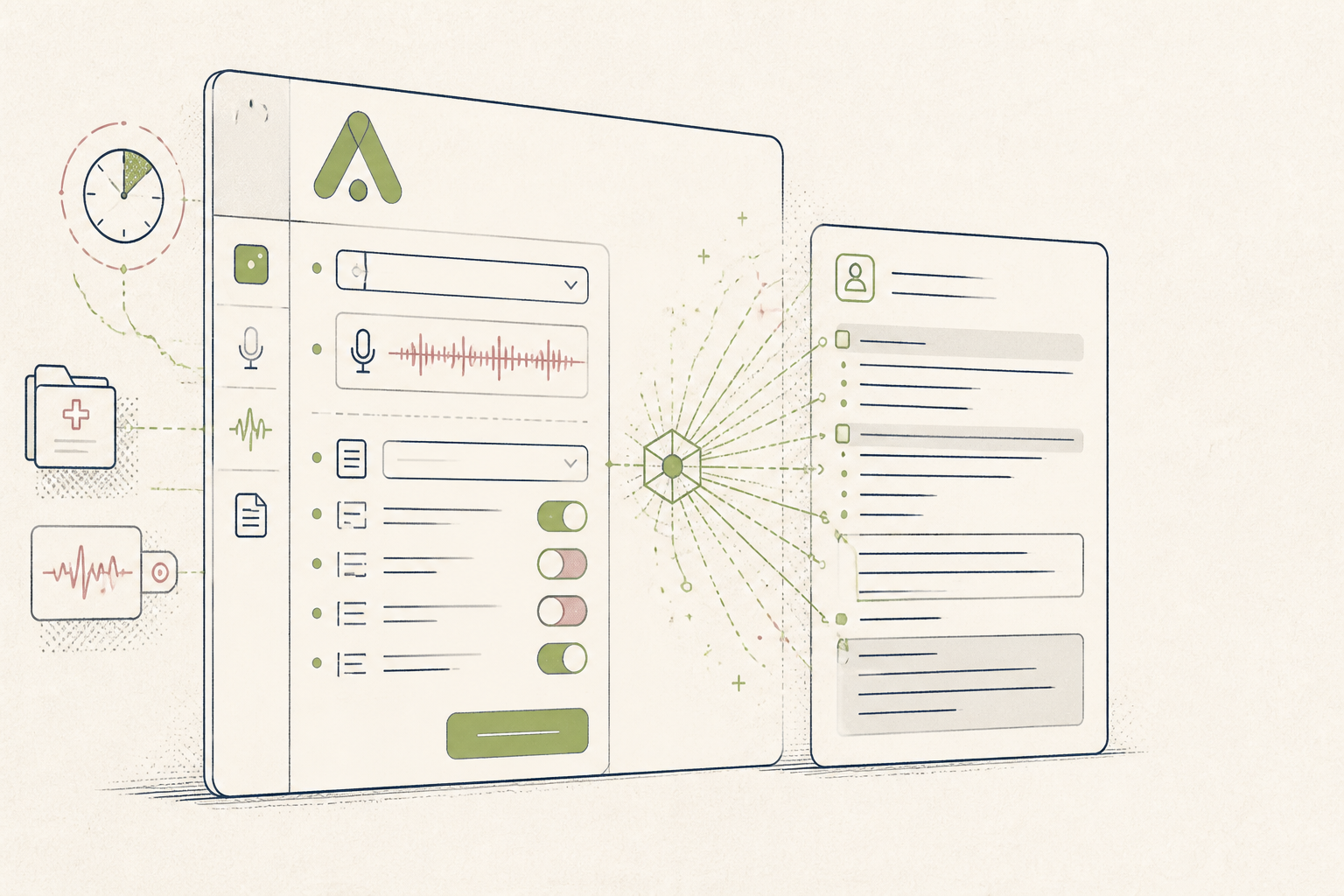
The time spent on administrative work is a significant drain on any practice. This setup configures Abridge to record a patient conversation, transcribe it, and structure it into a standard clinical note, reducing documentation time without sacrificing detail.
Before you start
- An Abridge account
- Licensed practitioner credentials
- A quiet room for recording
The steps
- 01
Record a mock patient dialogue
Before using Abridge with patients, test it. Open the app, press the '+' symbol to start a new conversation, and record yourself role-playing a 2-minute patient intake. Use a few clinical terms and a non-linear story to see how it performs.
- 02
Select your note format
After the recording, Abridge generates a transcript and a structured note. In the note view, find the format selector (e.g., 'SOAP Note') and select it. This is the primary output you will work with.
- 03
Review the AI-generated structure
Examine the draft SOAP note. Check how Abridge mapped your mock dialogue to Subjective, Objective, Assessment, and Plan sections. This draft is a first-pass Ledger artifact; your job is to verify and refine it, not to accept it wholesale.
- 04
Add custom people and places
To improve accuracy, go to account settings and find the 'Custom phrases' or equivalent section. Add the names of local clinics, referring doctors, and specific labs you frequently use. This teaches the model proper nouns it might otherwise misspell.
- 05
Push your first note to your EHR
Connect Abridge to your Electronic Health Record system via the integrations setting. Once linked, use the "copy" or "send to EHR" function on your mock note to see how the data transfers. Confirm the fields map correctly in the patient's chart.
Honest note
Abridge produces a draft, not a finished clinical document. It excels at structure but can miss nuance or misinterpret complex histories; it is not a replacement for clinical judgment. The practitioner is always the final editor and owner of the note.
Want the whole stack, not just one tool?
The free 10-Day Challenge wires these together. Or join the free 45-min live workshop and watch me build it end-to-end.