Sustainable AI for Health: Ethical Power & Precision
New energy-efficient AI models and DNA robotics promise powerful health diagnostics and delivery, necessitating a critical look at sustainable implementation and equitable access.
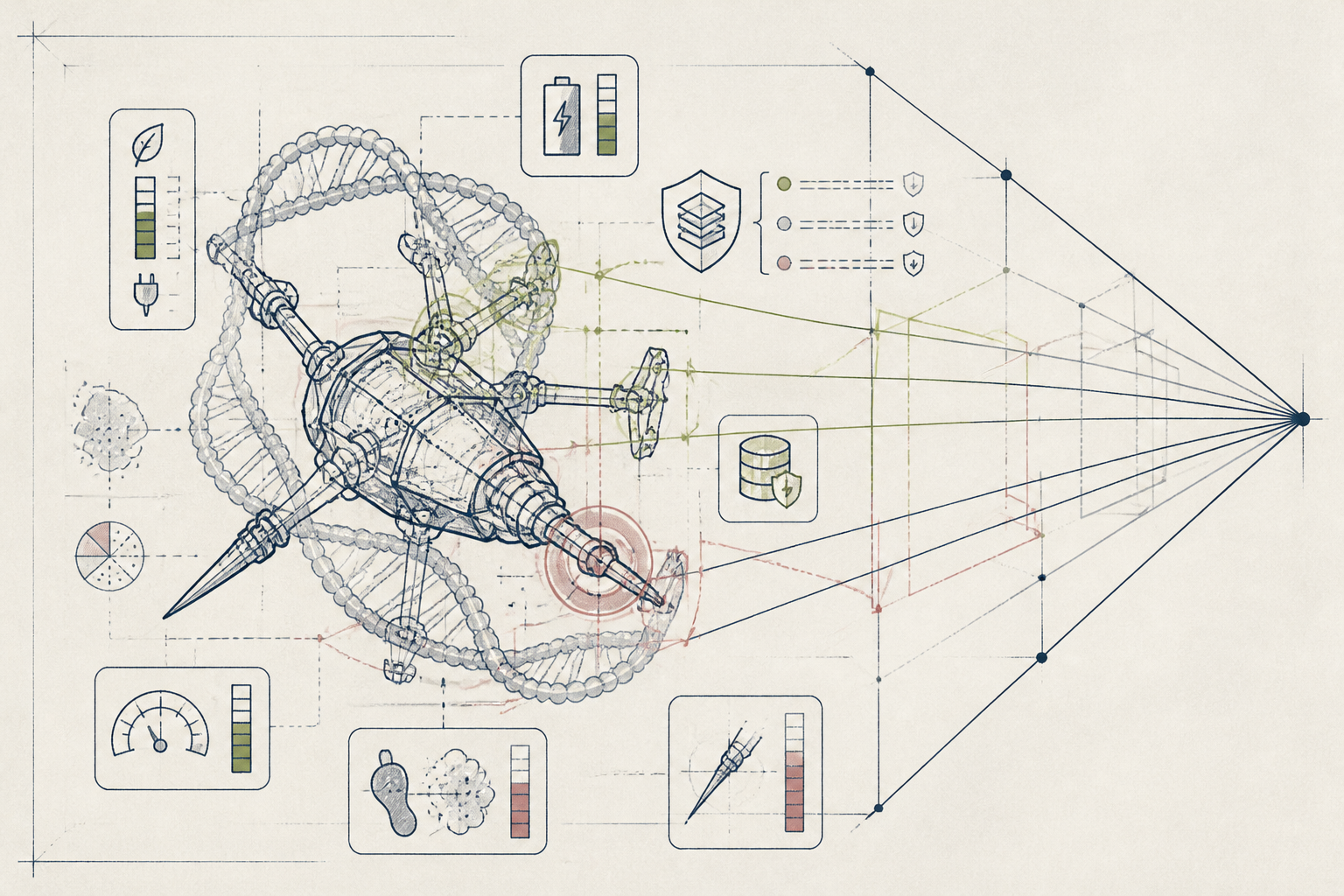
The integration of AI into health and wellness is rapidly evolving, with a new emphasis on not just what AI can do, but how it does it. Two distinct developments highlight this duality: the drive for energy-efficient models and the emergence of advanced biological applications like DNA robots.
A critical step forward is the development of AI models that significantly reduce energy consumption. By combining neural networks with symbolic reasoning, researchers have achieved up to a 100-fold reduction in energy use while enhancing diagnostic accuracy. This addresses a growing concern about the environmental impact of large AI systems.
This efficiency has profound implications for health diagnostics. It means AI can be deployed on smaller, more portable devices, making advanced diagnostics accessible in remote areas or personal health settings without relying on massive data centers. Imagine a new generation of wearables or home diagnostic kits with embedded, powerful AI that runs on minimal battery power.
Concurrently, the frontier of DNA robots represents a blend of molecular biology and AI principles, promising ultra-precise drug delivery and disease detection directly within the body. These tiny programmable entities are designed to navigate biological systems, offering a level of specificity previously unimaginable. This is an entirely new modality for intervention, not just data analysis.
The collision of these trends points to a future where AI-driven health solutions are both deeply integrated into the body and environmentally conscious. It replaces broad-spectrum treatments with highly targeted interventions, and energy-intensive computing with lean, efficient processing.
The concrete use cases are vast: energy-efficient AI could power next-generation portable devices for continuous health monitoring, identifying subtle physiological changes indicative of disease long before symptoms appear. Meanwhile, DNA robots could deliver highly localized drug doses, minimizing systemic side effects, or actively seek out and neutralize pathogens within the bloodstream.
The likely effect is a shift towards more proactive, less invasive, and potentially cheaper healthcare. However, the trade-off involves grappling with novel privacy concerns around in-body robotics and the ethical considerations of embedding AI directly into our physical selves. Also, ensuring equitable access to such advanced and potentially expensive technologies will be paramount.
The challenges here are significant. Beyond the technical hurdles, you must consider the governance of these new technologies. Who controls the data from in-body robots? How are the algorithms for energy-efficient diagnostics regulated? The benefits are clear, but the societal infrastructure must evolve alongside the technology.
You must remain critically engaged with how these powerful tools are developed and deployed. Demand transparency in the energy footprint of AI, question the ethical implications of in-body technologies, and advocate for policies that ensure these advancements are universally accessible and safeguard individual autonomy and data privacy.