Clinical AI Integration Redefines the Regulatory Boundaries of Wellness
The migration of diagnostic-grade intelligence into consumer hardware forces a reevaluation of where personal wellness ends and formal medicine begins.
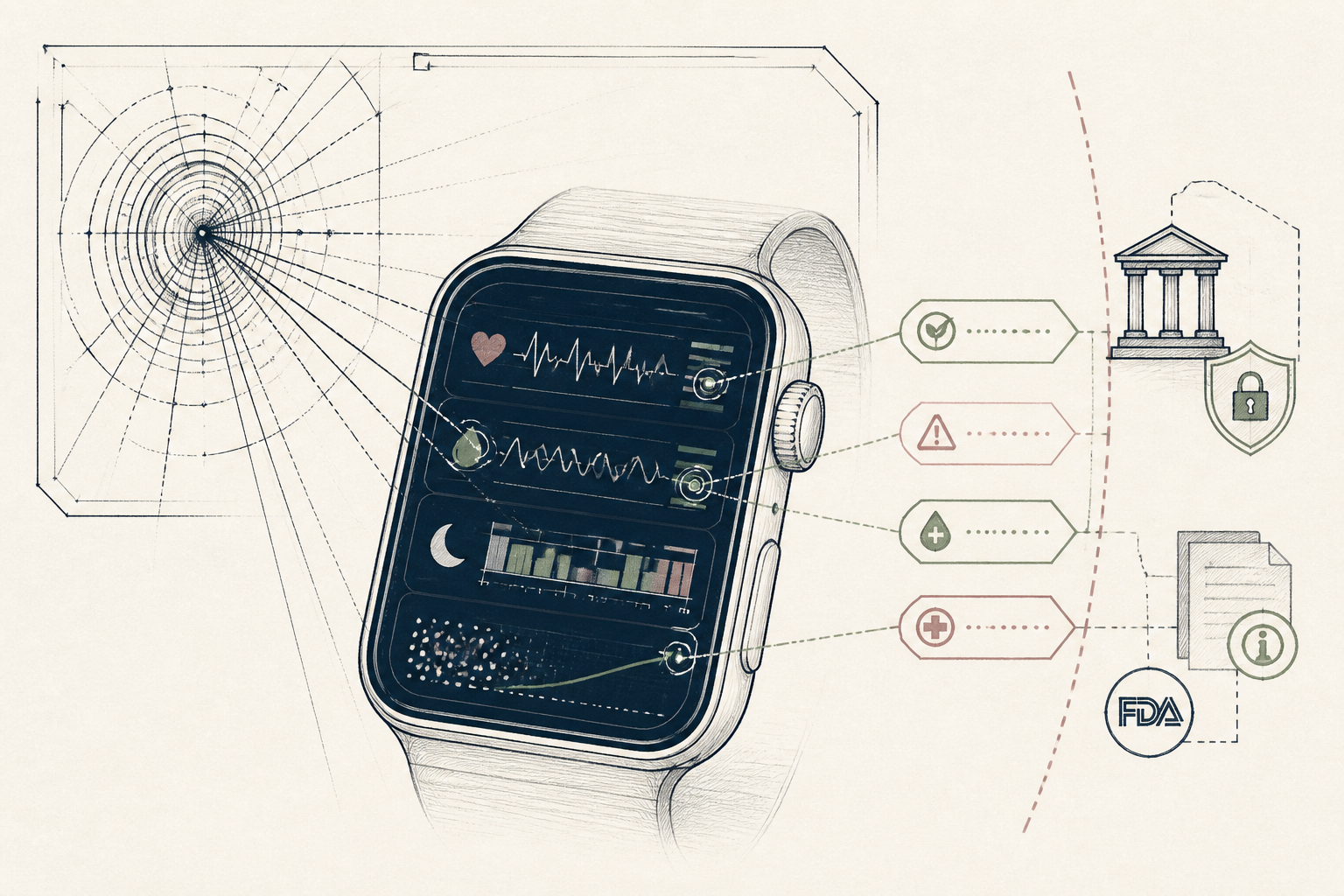
The conceptual wall between health maintenance and medical intervention is eroding. For years, wearable ecosystems existed in a regulatory safe harbor, classified as tools for 'general wellness.' However, the integration of advanced AI models capable of identifying cardiac arrhythmias, sleep apnea, and glucose fluctuations has shifted these devices from passive trackers to active diagnostic assistants.
The Taxonomy of Biometric Intelligence
Regulatory frameworks traditionally predicated oversight on intended use. A device meant to encourage movement was unregulated; a device meant to detect disease was scrutinized. AI complicates this binary. When an LLM-based health copilot interprets a week of cortisol and heart-rate variability data to suggest a physiological stress state, it assumes an advisory role that mirrors clinical consultation.
The Accountability Gap
As practitioners increasingly rely on data generated outside the clinic, the burden of liability shifts. If a consumer-grade wearable misses a critical signal that an AI model was marketed to detect, the legal recourse remains opaque. Current governance is struggling to classify 'Software as a Medical Device' (SaMD) when that software resides within a lifestyle application.
“The sophisticated processing of health metadata is no longer a peripheral wellness feature; it is the core engine of modern preventive diagnostics, yet it operates largely outside the protections of traditional medical privacy laws.”
For the individual, the shift toward AI-mediated wellness demands a new kind of literacy. It requires an understanding that a 'wellness' tag is often a regulatory shield for the provider, not a quality guarantee for the user. While these tools offer a dense map of one's internal terrain, they do not provide a licensed guide.
True agency in this environment is found in discernment. Users and practitioners must treat AI-generated insights as high-probability indicators rather than absolute truths. By acknowledging the limitations of current regulatory frameworks, individuals can utilize these tools to inform their longevity strategies without surrendering their critical judgment to an unverified algorithm.