Quantum Tech Redefines Personalized Health Data Analysis
Advances in quantum computing and sensing promise a new era of highly individualized health insights, transforming how we understand and monitor the body.
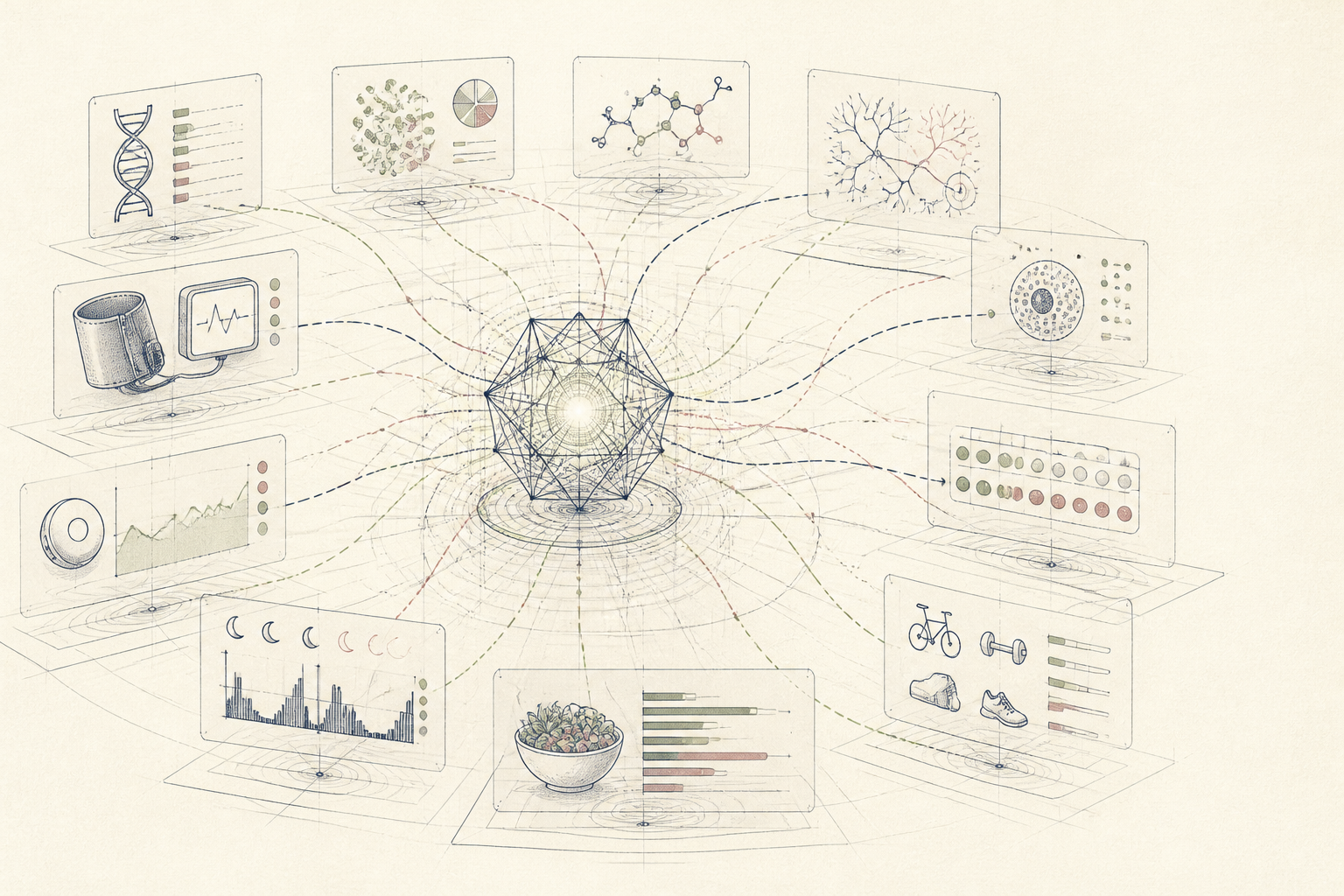
A significant leap in quantum computing is poised to redefine the capabilities of AI in health, allowing for the processing of data complexities far beyond current classical limits. This means AI models can integrate vastly more variables – genetic, environmental, lifestyle – to create a truly individualized health profile.
Simultaneously, the development of orbital quantum sensors indicates a future where diagnostic sensitivity reaches unprecedented levels. These sensors, once miniaturized and integrated, could offer real-time, highly granular insights into biological processes that are currently undetectable, fundamentally altering early disease detection and health monitoring.
From Population to Person: The Shift in Diagnostics
Currently, much of medical diagnostics relies on population-level data and generalized risk factors. With quantum-enhanced AI, the ability to model an individual's unique biological state becomes feasible. This could lead to diagnostic tools that predict disease onset years in advance based on subtle, personal biomarkers, rather than reacting to symptomatic presentation.
For practitioners, this translates to treatment plans that are not just tailored to a condition, but to the specific patient's physiology and response patterns. Imagine a physician receiving a quantum-AI-generated report that details not just a diagnosis, but the precise molecular pathways affected in *this specific patient*, along with predicted responses to various interventions. This replaces a significant portion of the current trial-and-error approach in therapeutics.
The effect on individuals will be a shift from reactive to proactive health management. Personalized prevention strategies, optimized nutrition, and lifestyle recommendations could be dynamically adjusted based on continuous, quantum-sensor-derived biological feedback, all processed by AI to identify minute deviations from individual baselines. This level of oversight, while offering immense potential for longevity and quality of life, also introduces profound questions about data ownership and surveillance.
The ethical and practical implications are considerable. The sheer volume and sensitivity of the data generated by orbital or advanced ground-based quantum sensors, combined with the processing power of quantum AI, will demand robust, perhaps even novel, data governance structures. Ensuring equitable access to these highly advanced diagnostic capabilities will also be a key societal challenge, as will preventing the weaponization or misuse of such intimate health profiles.
Prepare by understanding that your digital health footprint will become exponentially more detailed and valuable. Advocate for clear, auditable controls over how your most intimate biological data is collected, stored, and utilized. The power to understand your own body will increase, but so will the imperative to govern that knowledge responsibly.