Algorithmic Longevity Architectures for Genetic and Lifestyle Integration
The convergence of high-velocity nutritional data and genetic mapping through AI is replacing generalized aging advice with precise, code-based longevity roadmaps.
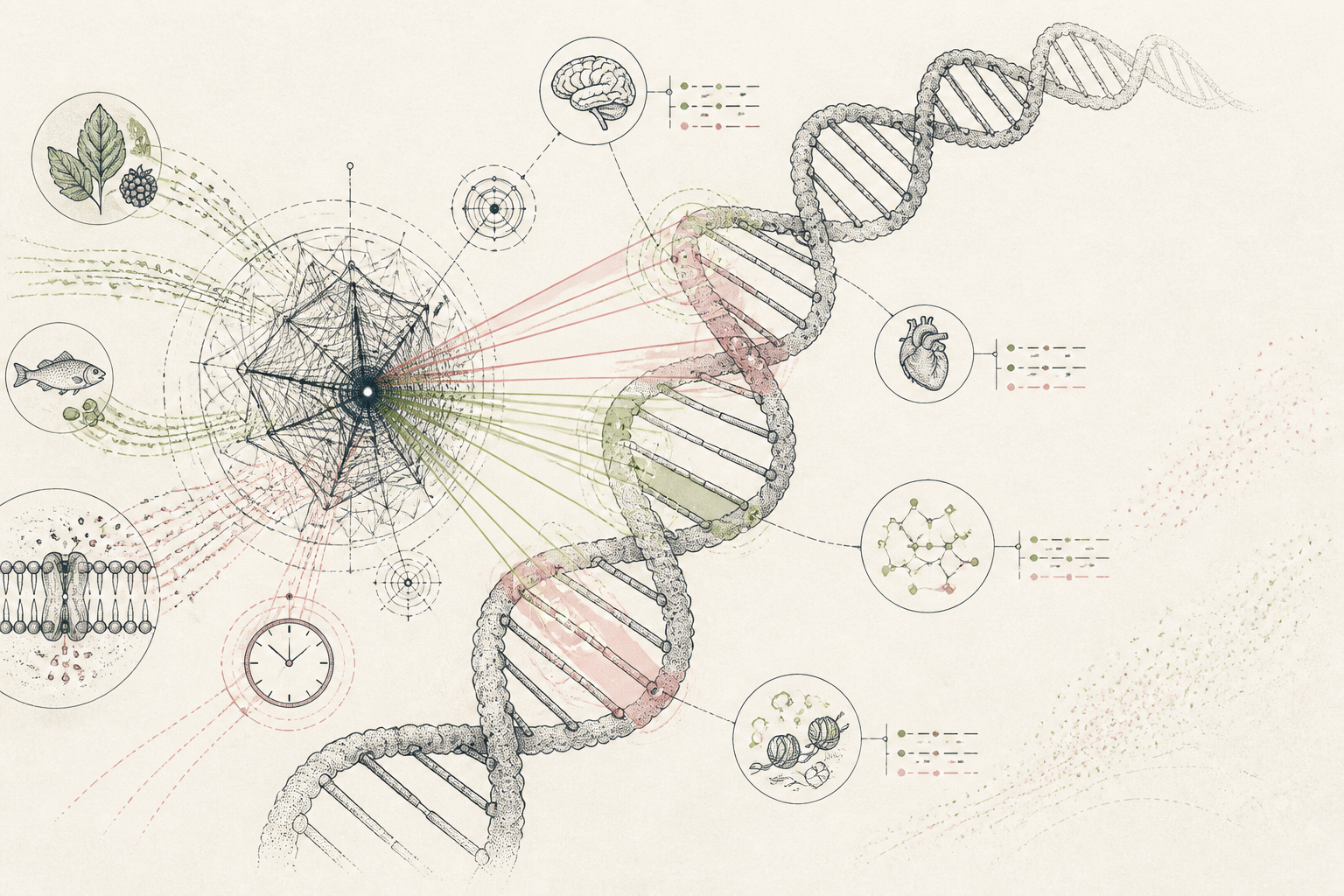
The Binary of Biological Destiny
Longevity has historically been viewed through two disparate lenses: the fixed lottery of genetic inheritance and the variable daily choices of lifestyle. However, computational analysis of long-lived cohorts suggests these are not parallel tracks but a single, integrated system of biological inputs. AI models are now capable of identifying the threshold where specific dietary fats trigger or suppress genetic predispositions toward metabolic health.
Lipid Signaling and Metabolic Flexibility
Recent investigations into centenarian populations have highlighted protective genetic variants that govern how the body processes fats. While these variants provide a baseline advantage, the presence of specific fatty acids in the diet acts as a toggle for gene expression. This suggests that the 'longevity effect' is a result of a specific handshake between genotype and environment, one that is too complex for human intuition to manage without algorithmic assistance.
The trade-off for this precision is a total reliance on continuous monitoring. While the accuracy of these diagnostics facilitates unprecedented control over the aging process, it demands a constant stream of biometric data. Under GDPR-first frameworks, the challenge remains ensuring that this data serves the individual rather than being weaponized by insurance systems or health-data brokers seeking to price risk into premium tiers.
“Longevity is no longer a passive outcome of ancestral luck; it is an active orchestration of data points interpreted through the lens of human agency.”
From Statistical Averages to Individual Realities
Standardized nutritional guidelines are becoming obsolete. As AI models ingest larger datasets of individual responses to dietary variables, the focus shifts toward outliers. Understanding why one person thrives on a high-lipid intake while another develops arterial inflammation requires a shift from population-wide averages to N-of-1 trial methodologies supported by diagnostic software.
Ultimately, the power move for the individual is not in following the most sophisticated model, but in maintaining ownership of the underlying data. As these tools become more integrated into the daily life of clinics and personal wellness routines, agency is preserved by understanding how to read these outputs and when to override them based on subjective well-being. The hardware provides the map, but the individual remains the navigator.