Proactive Personal Longevity Requires Sovereign AI Data Stewardship
The shift from reactive clinical care to AI-driven predictive wellness necessitates a new framework where individuals manage their biological data as a strategic asset.
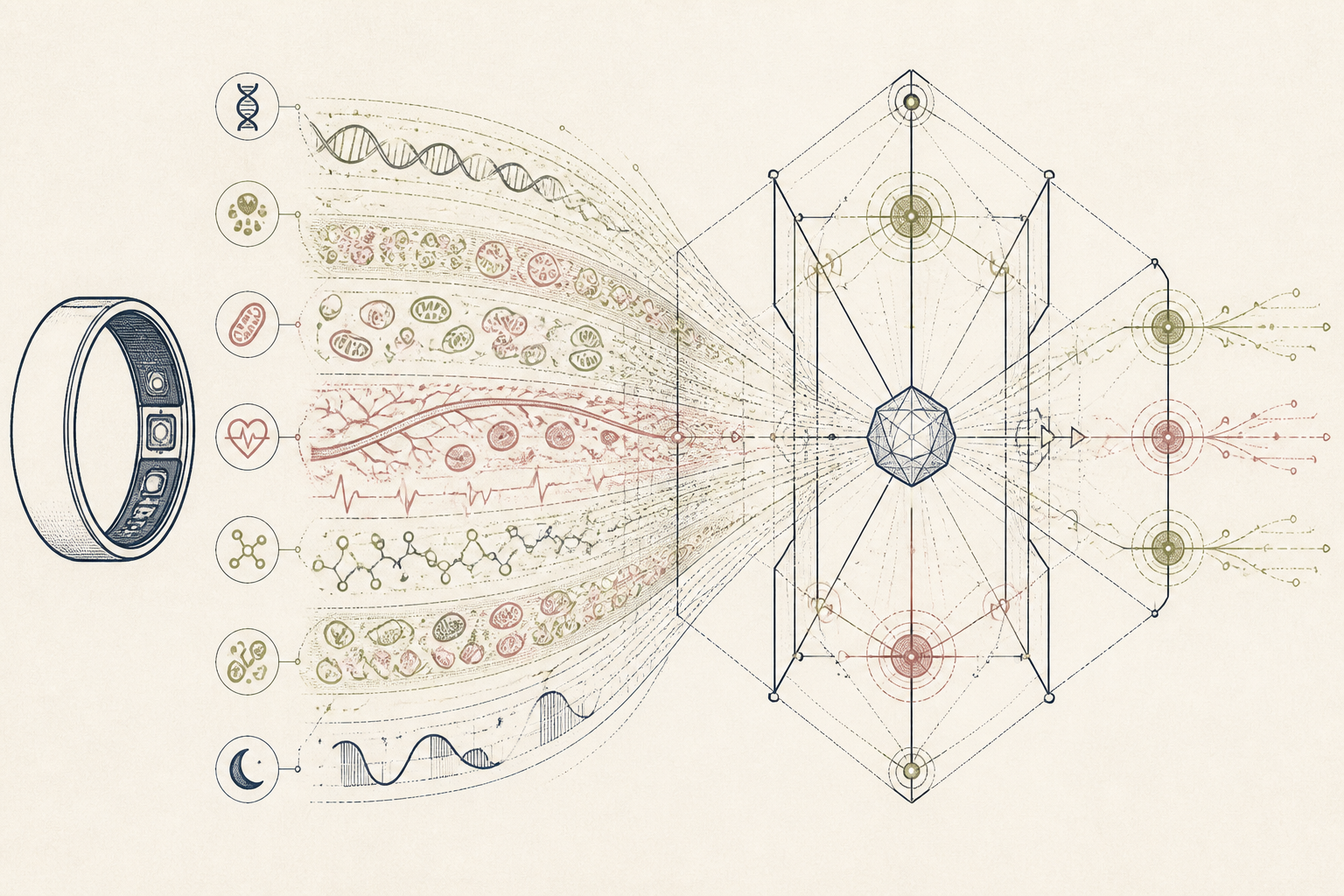
The traditional demarcations between medical diagnostics and daily wellness are eroding. Previously, high-resolution health data was the exclusive domain of clinical environments, captured in static intervals. Today, the continuous telemetry provided by wearable ecosystems and biometrics transforms the human body into a readable, longitudinal data set.
From Reactive Medicine to Predictive Optimization
When personal AI models are trained on years of heart rate variability, glucose fluctuations, and sleep architecture, they cease to be mere trackers. They become predictive engines capable of identifying physiological deviations long before symptomatic presentation. This transition shifts the burden of care from the practitioner to the individual, supported by automated insights.
A concrete application appearing in the industry involves the integration of wearable data with large language models to provide custom nutritional and recovery guidance. A downstream effect is the democratization of preventative care, potentially reducing the cost of chronic disease management by identifying metabolic risks years in advance.
“The value of health data resides not in its collection, but in its utility and the individual's right to direct its flow across the care continuum.”
The Sovereignty Trade-off
Honesty requires acknowledging the central trade-off: the more precision one demands from wellness AI, the more intimate the data exposure must be. While EU-centric data protections provide a baseline, they do not fully insulate the user from the risks of algorithmic bias or health-score profiling by insurers. The technical debt of legacy health systems often results in fragmented data that limits the accuracy of these new models.
Speculatively, we may see the rise of decentralized health vaults where individuals 'rent' their data to researchers or practitioners without surrendering ownership. This would move the industry away from the current model of data extraction and toward one of mutual stewardship.
Ultimately, the effectiveness of wellness AI is determined by user agency. Tools should be viewed as sophisticated mirrors, reflecting biological realities back to the user to inform better choices. True stewardship means having the literacy to interpret these outputs and the power to withdraw data from systems that do not serve one's long-term health objectives.