The follow-through layer: what health AI still needs
More advice is not always the missing ingredient. Daily execution, source clarity and honest completion records deserve attention too.
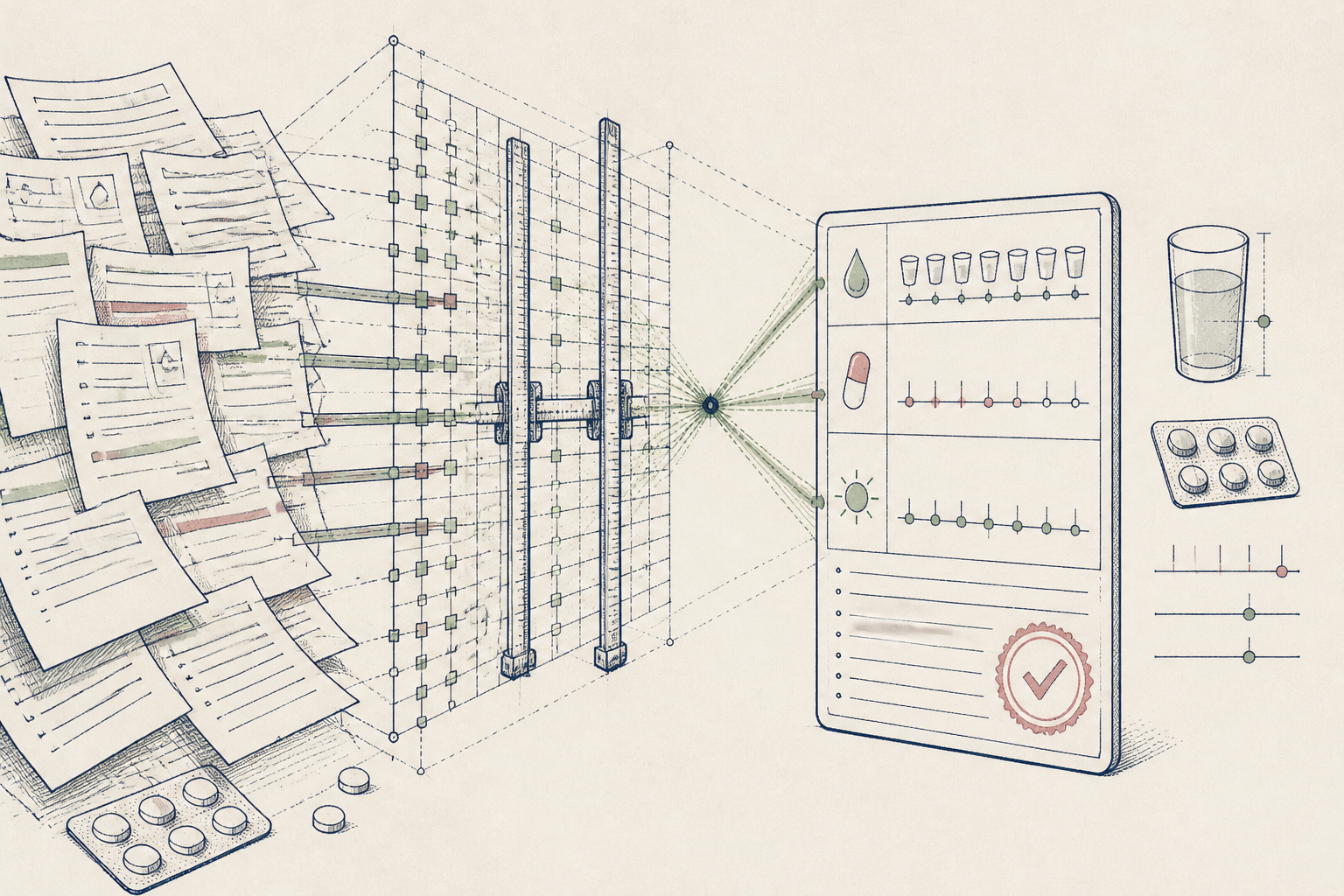
Health technology can collect more signals and produce more suggestions than a person can act on. A narrower question deserves attention: how does one agreed plan survive the week? We use 'follow-through layer' for the tools and routines that bridge those two things. It is our descriptive label, not an established medical category.
Mechanism: from instructions to a usable day
An instruction needs a clear action, timing, source and a way to record completion. Several plans may compete for the same time or contradict one another. A follow-through tool can organise that work; it should not silently resolve clinical conflicts or revise a prescribed dose.
Worked example: Protocols
Protocols combines plans from different sources into one daily list. Its self-reported check-in helps size the day, and its adherence view shows recorded completion over time. Individual, coach and clinic uses are described on the product's features page. These are product capabilities, not evidence that using the app improves a health condition.
The practical use is deliberately small: take an already agreed routine, make its steps explicit, record what happens, and bring that record to a human review. An AI-generated routine needs the same scrutiny as any other draft. The app does not diagnose, prescribe or change doses.
So what for people and practices?
For an individual, less list-switching may reduce the effort of remembering a plan. For a practice, a clear completion record may help explain what happened between visits. Both are plausible uses rather than measured outcomes. A day with low completion might indicate confusing instructions, cost, symptoms or a plan that needs changing—not a failure of motivation.
The governance trade-off
A unified daily list can concentrate sensitive information. Check consent, access controls, export options and the privacy terms. A coach should see only what a client has agreed to share. More completion data is not a reason to collect everything.
What would make the category credible?
Look for independent evaluation, clearly defined adherence measures, transparent handling of missed steps and evidence about outcomes rather than engagement alone. Completion can be useful feedback without being a health score. Our adherence-rate definition explains the distinction.
This is a direction to watch, not a prediction that every health tool will converge on one app. Read the practical deep-dive, set up one routine, or explore the Tools hub. Choose the least complicated system that lets you understand and review your own plan.