Quantum and Soft Materials Advance Ambulatory Monitoring
Recent advances in solid-state sensors and self-healing polymers point toward continuous physical therapy and neural tracking outside hospital cleanrooms. Concurrently, US regulators are structuring faster paths for both viral suppression and neurological diagnostics.
Theme 1
Resilient Hardware for Daily Movement
- Mechanism
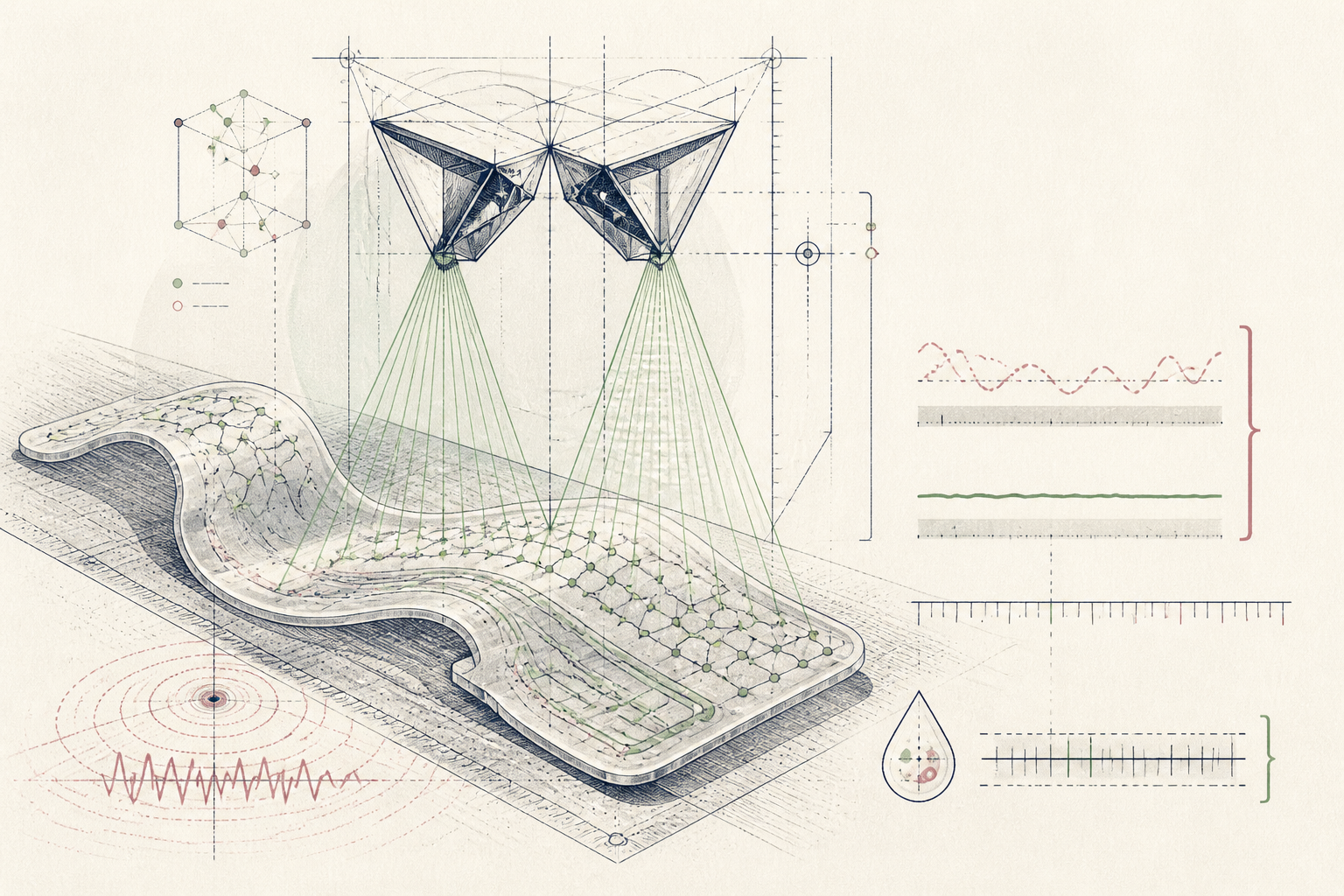
- Self-healing elastomers restore mechanical continuity after repetitive strain, while autonomous soft materials reproduce real-time muscle resistance curves directly on the skin.
- So what
- Physical therapists can eventually deploy soft exosuits that survive home wear without constant bench recalibration. Track tear-resistance metrics from pilot soft-robotic trials before buying early commercial units.
Theme 2
Drift-Free Biomarkers via Quantum Sensing
- Mechanism
- Nitrogen-vacancy diamond lattices and cold-atom interferometry capture weak magnetic fields and local acceleration without shielded rooms or external optical beacons.
- So what
- Clinicians gain access to hospital-grade gait and cortical recording in ordinary outpatient rooms. Watch whether diamond sensor yields can drop packaging costs to consumer wearable price points.
Theme 3
Compressed Timelines for Targeted Therapies
- Mechanism
- The FDA cleared bepirovirsen to silence viral RNA directly, while launching the NAIN program to accelerate neurological biomarker reviews using standardized validation channels.
- So what
- Specialists treating chronic viral hepatitis and progressive neurodegeneration face shorter validation cycles for molecular and computational tools. Review updated phase III trial criteria for antisense drugs and digital cognitive tests.