AI's Inner Monologue: The Future of Personalized Health Coaching
Self-talking AI models are poised to deliver highly adaptive and efficient personal health assistants, accelerating learning and tailoring support to individual needs with unprecedented precision.
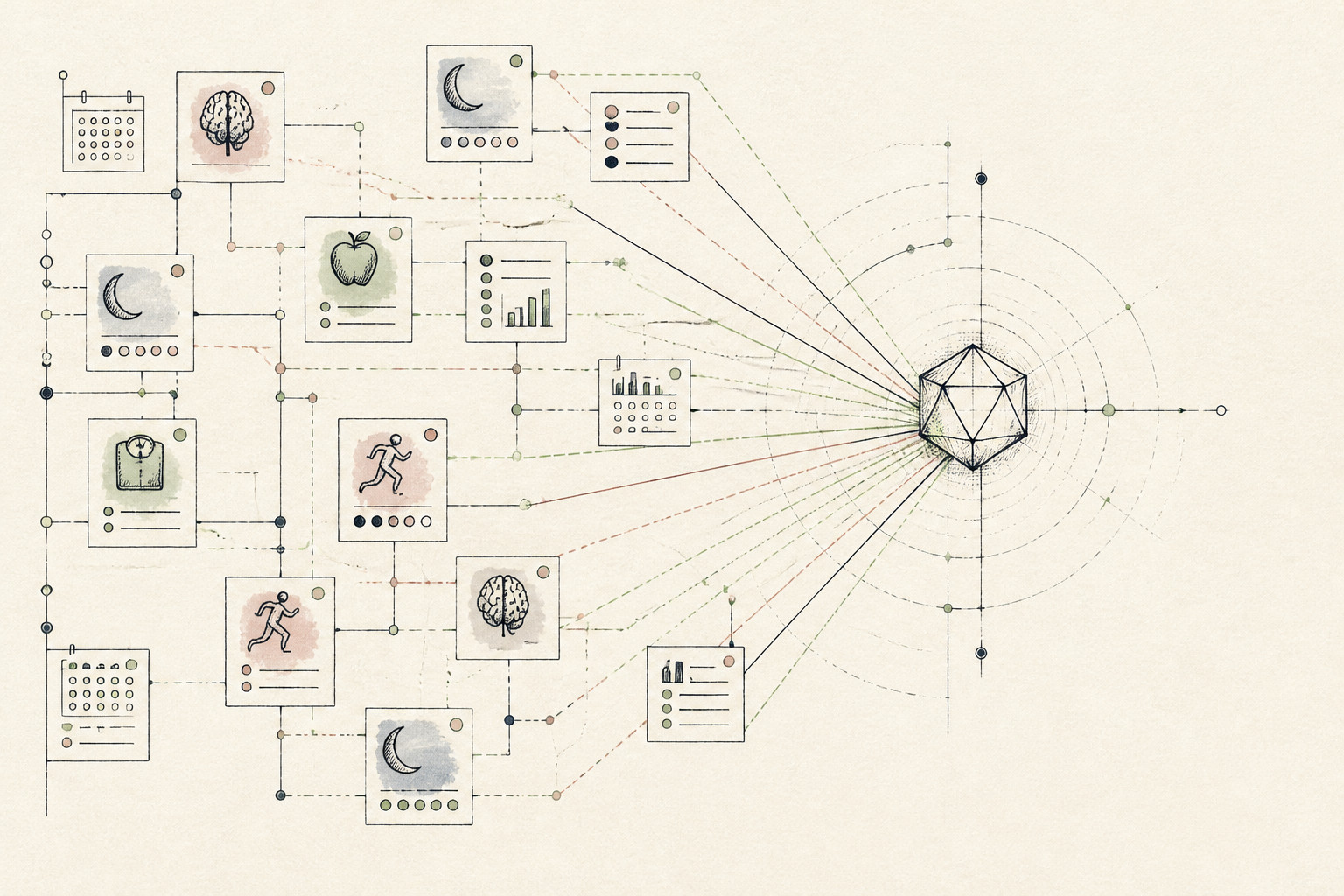
The advent of 'self-talking' AI models marks a significant evolution in personalized health support. These systems, by simulating internal reasoning and reflection, can process information and adapt their strategies with remarkable speed and efficiency. This moves beyond simple pattern recognition to a more nuanced understanding of individual health journeys.
For personal health, this means an AI assistant that learns your unique physiology, behavioral patterns, and preferences at an accelerated pace. Instead of requiring vast datasets for every new user, these models can leverage their internal reasoning capabilities to infer and adapt from smaller, more specific interactions, making personalization faster and more precise.
Consider an individual managing a chronic condition. A self-talking AI could rapidly understand their medication adherence challenges, dietary sensitivities, and exercise preferences. It could then generate highly tailored, context-aware suggestions, not just based on general guidelines, but on the AI's 'understanding' of that specific individual's past responses and current state.
This technology promises to make health coaching far more accessible and effective. It can offer round-the-clock support that continuously refines its approach, providing dynamic feedback on lifestyle choices, stress management techniques, or even cognitive exercises, as seen in the context of age-related memory concerns.
One concrete use case is in behavioral health. An AI that can 'reason' about a user's emotional responses or triggers could offer more empathetic and effective coping strategies. It could identify subtle shifts in mood or activity levels, then proactively suggest interventions or connect the user with human support, bridging gaps in care.
However, the intimate nature of this AI interaction raises important ethical questions. The AI's internal 'dialogue' and learning process, while efficient, must remain transparent. Users need to understand how the system is forming its conclusions and adapting its recommendations, ensuring they maintain agency and can challenge or override its suggestions.
The effect could be a reduction in the trial-and-error often experienced in personalized health plans. The AI's rapid adaptation means less time spent on ineffective strategies, leading to faster progress towards health goals and potentially improved adherence due to highly relevant guidance.
The trade-off lies in the potential for over-reliance. As these AIs become more sophisticated and seemingly intuitive, individuals might delegate too much decision-making autonomy. It is crucial that these tools are designed to augment human decision-making, not replace it, fostering critical engagement with health data and AI-driven insights rather than passive acceptance.