AI-Powered Diagnostics Redefine Urgent Care Speed and Accuracy
New AI systems are dramatically accelerating brain MRI interpretation, enhancing the speed and precision of urgent neurological diagnostics.
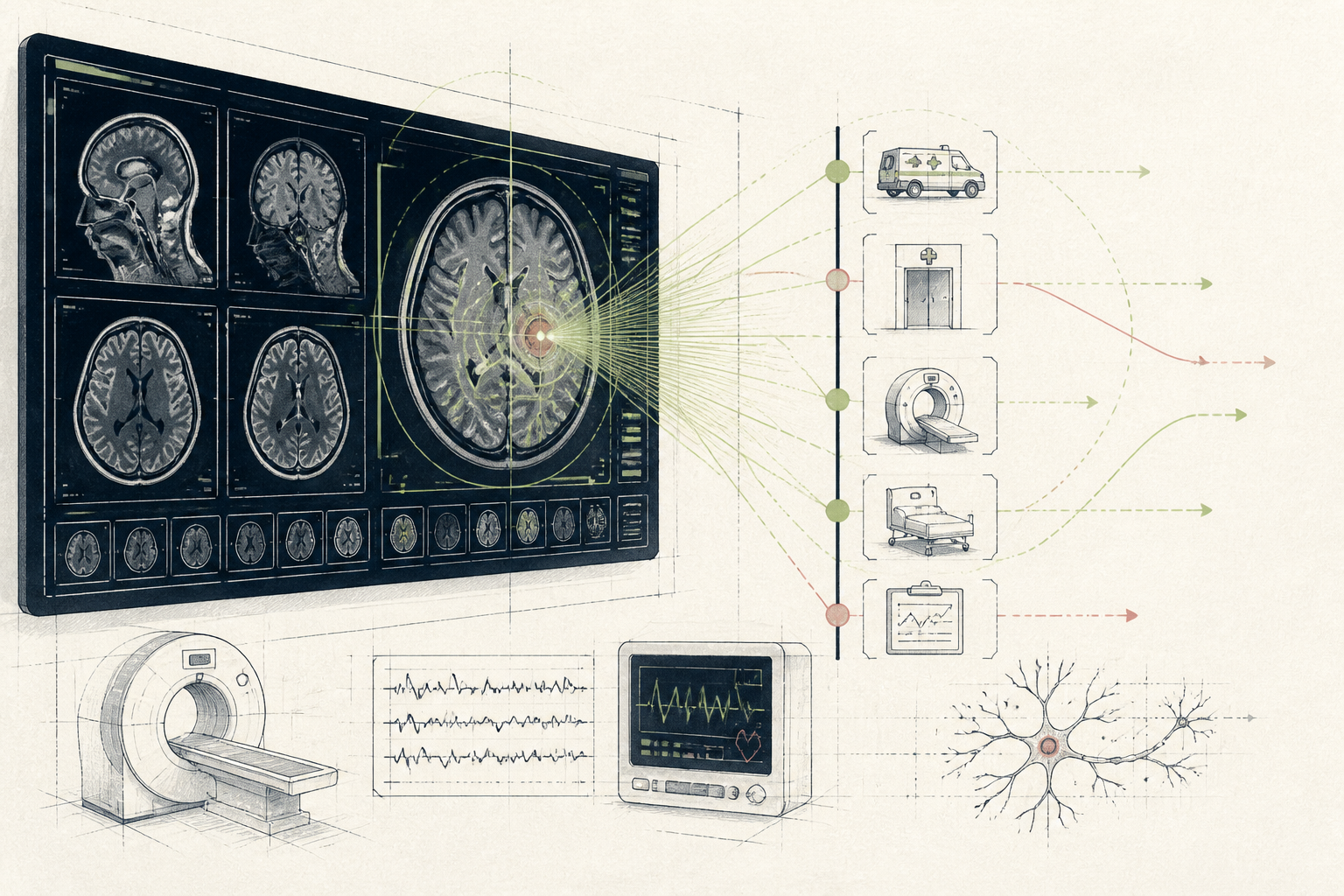
The intersection of AI and medical imaging is redefining urgent care, particularly in neurological emergencies. Traditional MRI interpretation, while highly effective, is a time-intensive process demanding expert human analysis. The bottleneck often delays critical decisions, with potentially severe consequences for patients.
Accelerating the Diagnostic Loop
A new AI system has demonstrated the ability to rapidly analyse brain MRI scans, significantly shortening the time from image acquisition to diagnosis. This speed is not merely a convenience; it is a clinical advantage. For conditions like stroke or intracranial haemorrhage, every minute saved in diagnosis can mean the difference between full recovery and permanent disability.
In practice, a radiologist can now receive a preliminary AI-generated report highlighting anomalies within minutes of a scan, rather than hours. This does not replace the human expert but augments their capacity, directing their attention to critical areas and reducing diagnostic fatigue.
The implications extend beyond just speed. AI models, when properly trained on vast datasets, can detect subtle patterns that might be missed by the human eye, especially under pressure. This could lead to improved diagnostic accuracy for early-stage diseases or less obvious conditions, enhancing proactive care.
However, this acceleration brings its own set of considerations. Dependency on AI for primary screening could introduce biases present in training data or create an over-reliance that dulls human interpretative skills over time. The ethical imperative remains for human clinicians to maintain the final interpretive authority, using AI as a sophisticated assistant.
For the individual, this means quicker access to treatment for time-sensitive conditions. For health systems, it promises efficiency gains and a reallocation of specialist resources. You should monitor how your care providers integrate such technologies, ensuring that the promise of speed does not compromise the necessity of thorough, human-validated diagnosis.